Tag: Food Sovereignty Stories

  • Resilience, Recovery, and Resistance in Puerto Rico

    “Food sovereignty is a struggle for life itself”

    When Hurricane María hit Puerto Rico, Organización Boricuá was ready to deploy one of its key tools for building food sovereignty: agroecology support brigades.The brigades use a model of collective work to develop agroecological food production at farms, schools, community gardens, and other spaces around Puerto Rico. And in the wake of Hurricane María’s devastation, they help producers rebuild. The three-decade-old organization, made up of a network of farmers, farmworkers, and activists, promotes agroecology as a foundation for food sovereignty in the archipelago.

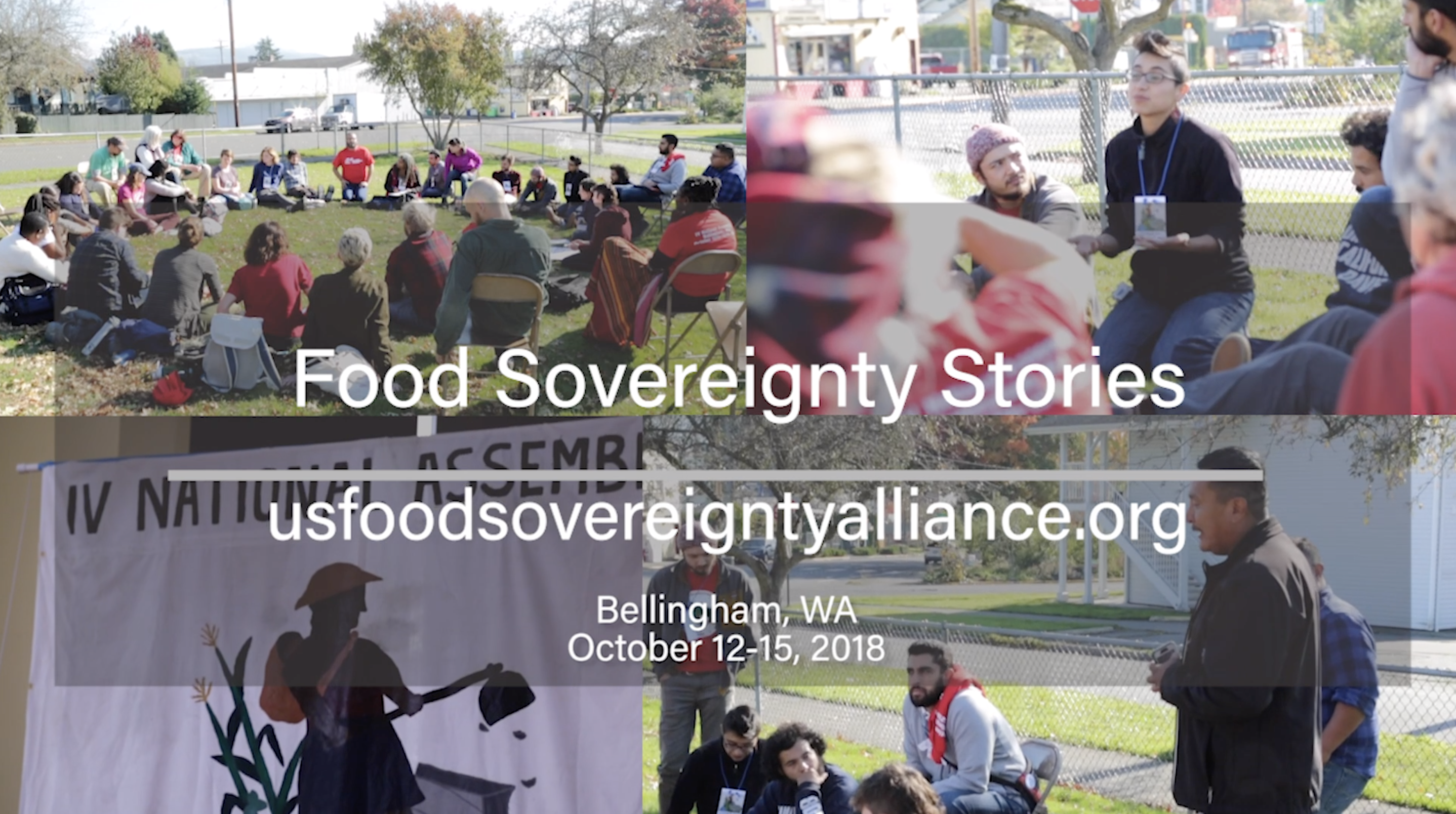
    “We believe that the struggle for food sovereignty must be based in collective processes,” Organización Boricuá’s Jesus Vázquez said during the US Food Sovereignty Alliance Assembly in Bellingham, Washington, in October 2018. “We move from farm to farm, plot to plot, community garden to community garden creating a support network for agricultural work,” Jesus explained, describing the mutual support model. “At the same time, we are also training ourselves on the farms and protecting the water, defending the land, and defending the rights of those who work the land.”

    Another part of Organización Boricuá’s work involves teaching agroecology to children through a school agriculture and environment program. Dalma Cartagena has been working with children to produce organic and agroecological food at schools for three decades. “For me, the most important are the skills in producing healthy food that the children learn and will be able to use in the future,” Dalma said. “And they have learned that what we do for our families and for our community also benefits our country and our entire planet Earth.” Organización Boricua received the USFSA’s 2018 Food Sovereignty Prize for its work promoting food sovereignty and agroecology through support brigades. “We say that the struggle for food sovereignty is a struggle for life itself,” Jesus said. “In the end, it’s about ensuring that food and the food system are in the hands of people, not corporations.”

    Food Sovereignty Stories is a video series exploring what food sovereignty can look like for diverse social movements across the United States. Share this video and follow USFSA for updates!
  • World March for Women: Linking Struggles from Across the Globe

    World March for Women: Linking Struggles from Across the Globe

    Sophie Ogutu is a feminist human rights activist who works with the Kenyan chapter of the World March of Women, an international feminist movement fighting to eradicate the causes of gender violence and poverty. 

    The World March of Women also embraces food sovereignty as a fundamental human right, with a particular focus on women.

    Women not only disproportionately bear the burden of hunger, they also at the foundation of the world’s food system. In sub-Saharan Africa, women produce up to 80 percent of all food, according to the UN Food and Agricultural Organization. At a global level, women produce more than half of all food grown.

    For Sophie, linking up struggles across the globe is a powerful part of her work. “I think it is very important that we were part of this because we were able to look at how our comrades from other parts of the world are dealing with their struggles and are making change,” she said during the US Food Sovereignty Alliance Assembly in Bellingham, Washington, in October 2018, which she attended with another activists from the World March of Women Kenya.

    “It’s a platform of strategy, it’s a platform of building our synergies. It’s a platform where we know that when we bring our minds together, we are facing a global struggle right now that we are all in,” she added.

    Sophie shared that she was struck by the stories she heard at the assembly of so many local communities facing food security challenges. “Coming here in the USA and seeing a lot of people also hungry in a very fast-growing economy country breaks my heart, but it also gives me a lot of hope when I see so many people to discuss and address those issues,” she said. “Without hope we have nothing.”

    She stressed that the alternatives that movements like the USFSA and the World March of Women strive to build are global in nature, calling for joining forces across borders. “We cannot do it in solitude,” she said. “For us, being here really strengthens and helps us to build this together.”

    Food Sovereignty Stories is a video series exploring what food sovereignty can look like for diverse social movements across the United States. Share this video and follow USFSA for updates!