Category: Food Justice

  • Member of the Month ~ Food In Neighborhoods Community Coalition

    [Español abajo] — Thanks to member organization, Community Alliance for Global Justice, for creating this first Alliance member profile!

    This month, we learn about the Food in Neighborhoods Community Coalition (FIN) whose mission is to build a just, healthy, and sustainable food system in Louisville, Kentucky.

    What led you and your organization to food sovereignty work?

    The Food in Neighborhoods Community Coalition centers equity and justice as the basis of everything we do, and we believe that those closest to the pain know their situation and the needed solutions best. We are a grassroots coalition composed of food justice and health equity activists, urban agriculturalists, farmers, citizen foresters, business owners, educators, cooperative extension and city employees, among others.

    FIN was around since the early 2000s but became an independent community coalition in 2012. One of our goals was to establish a community food policy council in Louisville, KY. We collaborated with the Mayor’s office for a short period of time, until disbanding the body due to attempts from local government to impose job creation priorities, rather than the food and farm justice focus desired by the council. Since these early experiences of FIN, we have continued to expand our membership and network of allies, particularly by strengthening FIN’s working groups such as the Urban Agriculture Coalition, Policy Action, and the Land Access and Protection group.

    We believe that food sovereignty is about democratizing and decentralizing the decisions that shape our food system. Along with our commitment to center Black and brown people and low-income people, our commitment to be inclusive, non-hierarchical, participatory and to address the structures that harm and oppress all bring us to embrace and work toward food sovereignty.

    What does food sovereignty mean to you and your organization?

    We are building a more equitable and sustainable local-regional food system. Specifically, we are creating a Food Vision 2030 strategic plan for the city that will be guided into reality by a community-driven Greater Louisville Food Council. The reality of food sovereignty that we are working toward prioritizes people – ensuring everyone has affordable, culturally appropriate and healthy food, guaranteeing that food providers are valued and fairly compensated, bringing providers and consumers closer together so they can make joint decisions and thereby putting more control into the hands of local people.

    The construction of food sovereignty requires a shift away from the industrial, extractive, and harmful food system that benefits powerful and distant corporations. FIN’s grassroots organizing and policy advocacy work aims to build local and democratic control, social justice, and ecological resilience. We see food sovereignty as a unifying concept for collective action toward meeting peoples’ needs, celebrating our resistance, and restoring ecosystems for the good of all.

    How can the rest of USFSA support and be in solidarity with your work?

    We are eager to learn from others about cooperative economics and programs that are effective and can magnify our individual, small-scale impacts. We also want to figure out best practices for rebuilding local-regional food webs that benefit those currently most neglected and hurt by the current corporate-driven food system.

    What are your hopes for USFSA in the coming year(s)?

    Regarding inter-organizational communication with global groups through the International Relations collective, connecting with the US Food Sovereignty Alliance could allow us to expand our horizons in terms of supporting national and global outreach strategies and informing our local work.


    [Español]

    Gracias a la organización miembro Alianza Comunitaria por la Justicia Global por crear este primer perfil de miembro de la Alianza. Este mes, conocemos la Coalición Comunitaria Alimentos en los Barrios (FIN), cuya misión es construir un sistema alimentario justo, sano y sostenible en Louisville, Kentucky.


    ¿Qué les llevó a usted y a su organización a trabajar por la soberanía alimentaria?

    La Food in Neighborhoods Community Coalition centra la equidad y la justicia como base de todo lo que hacemos, y creemos que quienes más cerca están del dolor son quienes mejor conocen su situación y las soluciones necesarias. Somos una coalición de base compuesta por activistas de la justicia alimentaria y la equidad sanitaria, agricultores urbanos, granjeros, silvicultores ciudadanos, empresarios, educadores, cooperativistas de extensión y empleados municipales, entre otros.

    FIN existía desde principios de la década de 2000, pero se convirtió en una coalición comunitaria independiente en 2012. Uno de nuestros objetivos era establecer un consejo de política alimentaria comunitaria en Louisville, KY. Colaboramos con la oficina del alcalde durante un breve periodo de tiempo, hasta que se disolvió el organismo debido a los intentos del gobierno local de imponer prioridades de creación de empleo, en lugar del enfoque de justicia alimentaria y agrícola deseado por el consejo. Desde estas primeras experiencias de FIN, hemos seguido ampliando nuestra membresía y red de aliados, en particular mediante el fortalecimiento de los grupos de trabajo de FIN, como la Coalición de Agricultura Urbana, Acción Política y el grupo de Acceso y Protección de la Tierra.

    Creemos que la soberanía alimentaria consiste en democratizar y descentralizar las decisiones que conforman nuestro sistema alimentario. Junto con nuestro compromiso de centrarnos en la gente negra y morena y en las personas con bajos ingresos, nuestro compromiso de ser inclusivos, no jerárquicos, participativos y de abordar las estructuras que perjudican y oprimen a todos nos lleva a abrazar y trabajar por la soberanía alimentaria.

    ¿Qué significa la soberanía alimentaria para usted y su organización?

    Estamos construyendo un sistema alimentario local y regional más equitativo y sostenible. En concreto, estamos creando un plan estratégico Visión Alimentaria 2030 para la ciudad, que se hará realidad gracias a un Consejo Alimentario del área metropolitana de Louisville impulsado por la comunidad. La realidad de la soberanía alimentaria por la que estamos trabajando da prioridad a las personas: garantizar que todo el mundo disponga de alimentos asequibles, culturalmente apropiados y saludables, garantizar que los proveedores de alimentos sean valorados y justamente compensados, acercar a proveedores y consumidores para que puedan tomar decisiones conjuntas y, de este modo, poner más control en manos de la población local.

    La construcción de la soberanía alimentaria requiere alejarse del sistema alimentario industrial, extractivo y dañino que beneficia a corporaciones poderosas y distantes. El trabajo de organización de base y de defensa de políticas de FIN tiene como objetivo construir el control local y democrático, la justicia social y la resiliencia ecológica. Vemos la soberanía alimentaria como un concepto unificador para la acción colectiva encaminada a satisfacer las necesidades de los pueblos, celebrar nuestra resistencia y restaurar los ecosistemas por el bien de todos.

    ¿Cómo puede el resto de USFSA apoyar y solidarizarse con vuestro trabajo?

    Estamos ansiosos por aprender de otros sobre economía cooperativa y programas que sean eficaces y puedan magnificar nuestros impactos individuales a pequeña escala. También queremos descubrir las mejores prácticas para reconstruir redes alimentarias locales y regionales que beneficien a los más desatendidos y perjudicados por el actual sistema alimentario corporativo.

    ¿Qué espera de la USFSA en los próximos años?

    En lo que respecta a la comunicación interorganizativa con grupos globales a través del colectivo de Relaciones Internacionales, la conexión con la Alianza por la Soberanía Alimentaria de Estados Unidos podría permitirnos ampliar nuestros horizontes en términos de apoyo a las estrategias de divulgación nacionales y globales y de información para nuestro trabajo local.
  • As COVID unfolds into hunger crisis, Food Sovereignty Prize recognizes transformative solutions

    FOR IMMEDIATE RELEASE   [ Español | Français ]

    Contact: Andrew Kang Bartlett, Presbyterian Hunger Program (PCUSA)
    Phone: (502) 608-5023
    Email: andrew.kangbartlett@pcusa.org

    As COVID unfolds into hunger crisis, prize recognizes transformative solutions

    Twelfth Annual Food Sovereignty Prize honors the Somali Bantu Community Association of Maine and the All Nepal Peasants’ Federation


    LOUISVILLE, KY, October 16, 2020 — As the COVID-19 pandemic adds 83–132 million people to the world’s hungry this year, the Food Sovereignty Prize highlights grassroots efforts meeting urgent needs while advancing transformative solutions. Organized by the US Food Sovereignty Alliance (USFSA), the Food Sovereignty Prize is announced on World Food Day. The Food Sovereignty Prize is recognized as a counterweight to the World Food Prize, which critics decry for its singular focus on food production based on Green Revolution approaches. 

    As explained by Lisa Griffith of the National Family Farm Coalition, a USFSA member organization, “Even before the pandemic struck last winter, global hunger had risen by 60 million people over the past five years, with 750 million people experiencing severe food insecurity in 2019, while most commodity crops have reached record production levels. As COVID-19 spread around the globe, it was community efforts – not the industrialized food system – that distributed food and protected farm and food workers. The World Food Prize perpetuates the myth that an industrialized system can produce its way out of hunger when a just and sustainable food system is what is truly needed.”

    Photo credit: Sijie Yuan

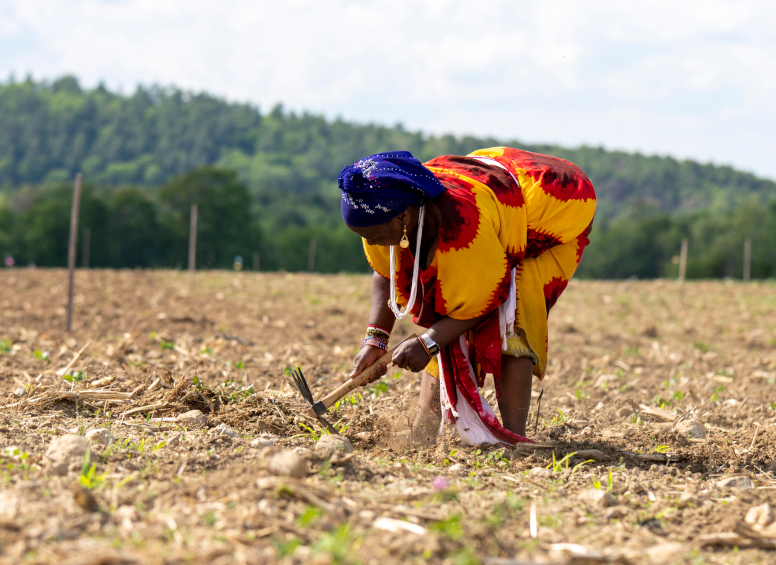
    The 2020 Food Sovereignty Prize awardees are the Somali Bantu Community Association (SBCA) of Maine and the All Nepal Peasants’ Federation (ANPFa). The Somali Bantu Community Association’s Liberation Farms have served as a lifeline of food and financial security to more than 200 refugee farmers whose communities are disproportionately hit by both COVID and hunger, while also serving the broader community, including provision of fresh, healthy foods to local schools.

    According to Jennifer Taylor of Lola’s Organic Farm in Georgia, also of the USFSA, “While leading the way in food systems transformation in Maine, the Somali Bantu Community Association has confronted both the pervasive structural racism exposed by the Black Lives Matter movement as well as inhumane immigration policies coupled with anti-immigrant sentiment. Particularly inspiring is SBCA’s new Little Jubba Central Maine Agrarian Commons, an innovative model of collective land ownership and farming, inspired by the traditional Somali ishkashito model of cooperative sharing.”

    Photo courtesy of ANFPa

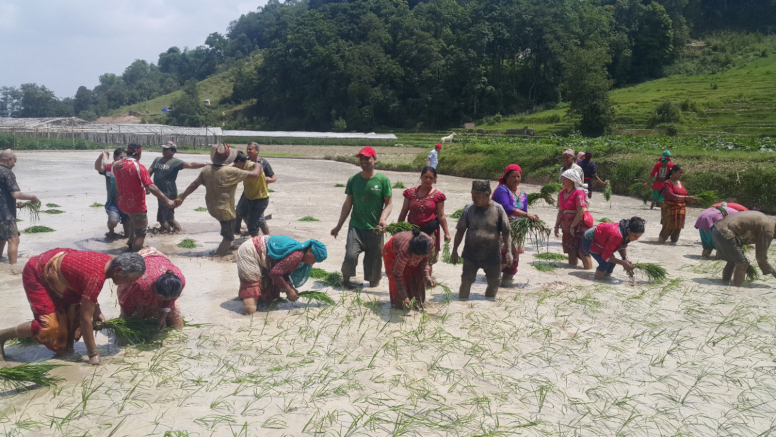
    Standing at over two million members, the All Nepal Peasants’ Federation is also on the cutting edge of food systems transformation. Just as SBCA is working to dismantle racism in the food system and beyond, ANFPa is working to dismantle casteism, as well as sexism and ageism, with special branches dedicated to the empowerment of Dalits (“untouchables” in the caste system), women and youth. Recognizing the realization of human rights as essential to ending hunger, ANFPa has played an active role in Nepal’s democratization process, achieving the enshrining of food sovereignty in the country’s new constitution. Nepal is now one of several countries in the world to have adopted food sovereignty into law, and ANPFa has been leading national efforts on implementation. ANFPa has also been active in COVID relief efforts, including distribution of relief materials, coordinating with local governments on managing food supplies, and policy advocacy work. 

    The Food Sovereignty Prize’s focus on collective action and movement building stands in stark contrast to the World Food Prize, according to Chung-Wha Hong of USFSA member Grassroots International, who adds: “In the face of COVID, social movements have been the most effective first responders, especially among communities most overlooked by governments, while also making visionary demands to overcome the structural injustices driving hunger.”

    The Somali Bantu Community Association and All Nepal Peasants’ Federation will be recognized at a virtual ceremony in early December, which will be open to the public. Further information on the honorees and the award ceremony are forthcoming at www.usfoodsovereigntyalliance.org and www.facebook.com/USFoodSovAlliance

    About the US Food Sovereignty Alliance

    The US Food Sovereignty Alliance (USFSA) is a US-based alliance of food justice, anti-hunger, labor, environmental, faith-based and food producer groups that upholds the right to food as a basic human right and works to connect our local and national struggles to the international movement for food sovereignty. The Alliance works to end poverty, rebuild local food economies and assert democratic control over the food system, believing that all people have the right to healthy, culturally appropriate food produced in an ecologically sound manner. Learn more at usfoodsovereigntyalliance.org.

    ###


  • A Just Transition Calls for Indigenous Food Sovereignty 

    A Just Transition Calls for Indigenous Food Sovereignty 

    For the Black Mesa Water Coalition, food sovereignty is one part of a broader effort to transform Navajo and Hopi communities and their economies by drawing on traditional knowledge to build sustainable alternatives to fossil fuel dependence.

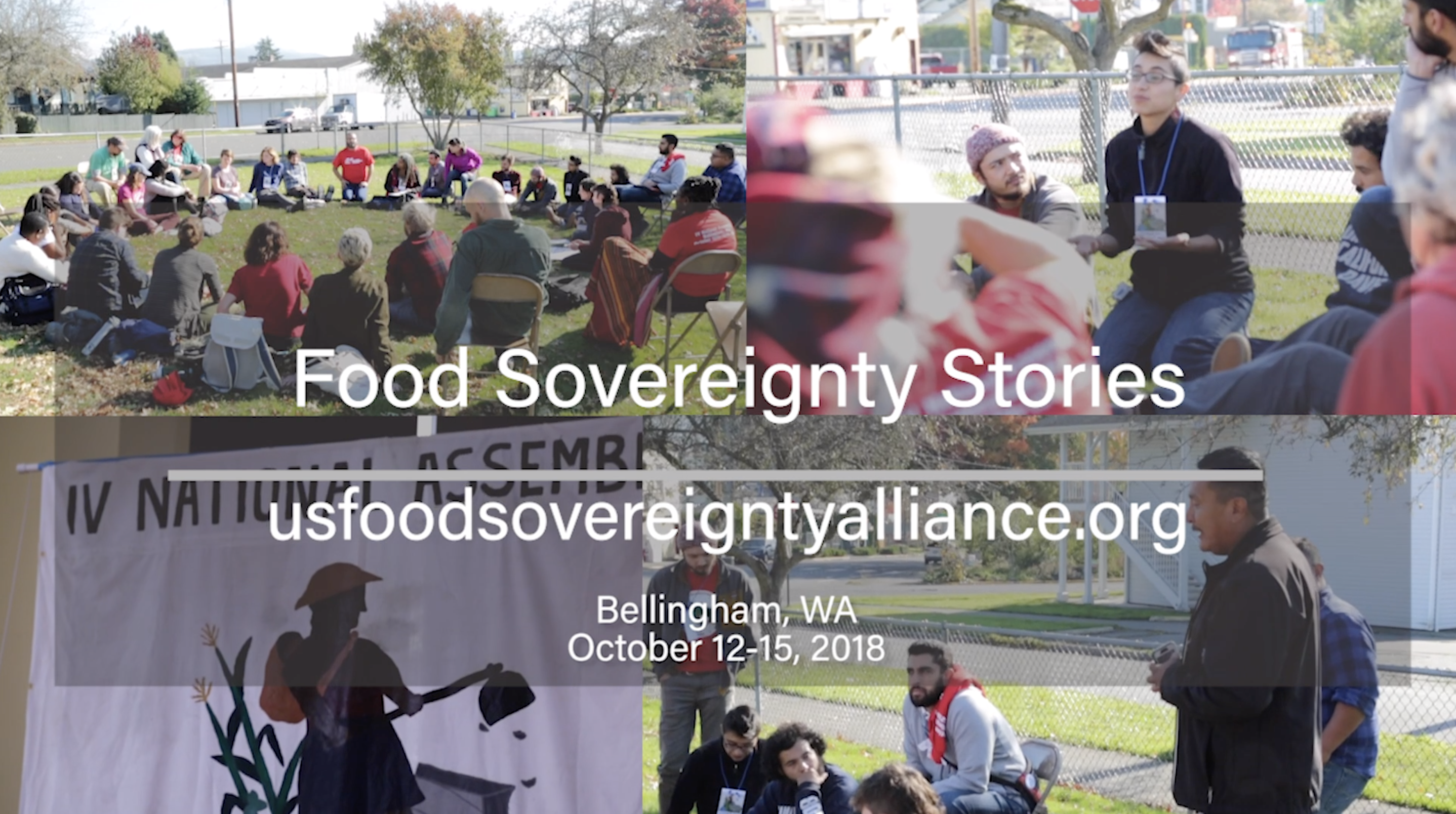
    “The just transition for us really came from the need to transition away from a fossil fuel-based economy, which our tribe is heavily dependent on, with royalties from the exploitation of coal, gas, and other resources,” said Black Mesa Water Coalition member Robert Nutlouis during the US Food Sovereignty Alliance Assembly in Bellingham, Washington, in October 2018. “Our call for the Nation is to move away from that type of development towards a more sustainable, regenerative economy.” 

    The organization, based in Arizona, formed in 2001 to confront the impacts of coal mining in Navajo and Hopi communities and tackle issues around water, natural resources exploitation, and health. Among other work, its projects have included regenerative water catchment systems, leadership development initiatives, and a “Food Sovereignty Project” using dry land agricultural techniques to produce food on a five-acre community farm. 

    “Food sovereignty for our community is really looking at our own traditional knowledge and the wisdom that our ancestors had developed and left for us and is still carried by our elders,” said Robert. “Really going back and seeing what this knowledge and wisdom say to us about how to revive and rebuild our food system.”

    The organization also works to build cultural awareness, including language preservation efforts and education around traditional seeds. 

    “There has to be a cultural shift from how we see things to how we interact with our environment,” Robert continued. “The land is sacred, the elements are sacred, and we have to understand it in that way.”

    Sheldon Natoni, a youth member of the Black Mesa Water Coalition, added: “It kind of gives me comfort that I’m going through the right path and I’m not being part of the extractive economy. It’s a healing property for me to become more grounded in who I am as a Dene.” 

    Black Mesa Water Coalition received the US Food Sovereignty Alliance’s 2018 Food Sovereignty Prize in the domestic category, recognizing its work in reclaiming Indigenous food sovereignty. Food Sovereignty Stories is a video series exploring what food sovereignty can look like for diverse social movements across the United States. Share this video and follow USFSA for updates! 

  • Advisory: USFSA to Award Food Sovereignty Prize TONIGHT, October 10 5:30PT

    For Immediate Release – October 10, 2019

    US Food Sovereignty Alliance to Award Food Sovereignty Prize TONIGHT, October 10

    FERGUSON, MO: The US Food Sovereignty Alliance (USFSA) will award the 2019 Food Sovereignty Prize to Urban Tilth (Richmond, CA) and Plan Pueblo a Pueblo (Plan People to People, Venezuela) this evening in Ferguson, Missouri. Interested press can view a livestream, and afterwards, a video of the ceremony at bit.ly/foodsovprize2019

    The Food Sovereignty Prize honors those committed to working for social change through collective action, and highlights those confronting oppression and corporate control over seeds, land, water, labor, knowledge, supply chains, and policy-making. 

    WHAT: 2019 Food Sovereignty Prize ceremony 

    WHO: US Food Sovereignty Alliance members, allies, and interested press

    WHEN: Tonight, October 10th at 5:30PT/ 8:30ET

    WHERE: A livestream of the Ferguson, Missouri ceremony at bit.ly/foodsovprize2019

    ###

    As a US-based alliance of food justice, anti-hunger, labor, environmental, faith-based, and food producer groups, the Alliance upholds the right to food as a basic human right and work to connect our local and national struggles to the international movement for food sovereignty. For more information, visit www.usfoodsovereigntyalliance.org.