Category: Popular Education

  • Reading Lists

    Food Crisis

    From Food Rebellions to Food Sovereignty: Urgent call to fix a broken food system

    By Eric Holt-Giménez, Ph.D., Social Scientist and Executive Director of Food
    First/Institute for Food and Development Policy. The real causes of the 2008 and 2011 food price crises were numerous, but the fact that our global agricultural system is dominated by corporations, free trade, and speculation was neglected by most media outlets.

    Harvesting Money – The Global Land Grab

    By Eric Holt-Giménez, Ph.D., Social Scientist and Executive Director of Food First/Institute for Food and Development Policy.The food and financial crises of 2008 ignited a massive round of “land grabbing” in the Global South, with foreign agribusinesses leasing and buying large tracts of land to produce both food and fuel crops for export.

    The World Food Crisis: What’s behind it and What we can do about it

    By Eric Holt-Giménez, Ph.D., Social Scientist and Executive Director of Food
    First/Institute for Food and Development Policy.

    Agroecology

    Can Sustainable Agriculture Feed the World?

    Sustainable Agriculture CAN feed the world, and it can protect the planet and end hunger and poverty.

    Agroecology and the Right to Food

    “The report therefore calls States for a fundamental shift towards agro-ecology as a way for countries to feed themselves while addressing climate and poverty challenges.”

    Food Sovereignty

    Declaration of Nyeleni

    “We, more than 500 representatives from more than 80 countries, of organizations of peasants/family farmers, artisanal fisherfolk, indigenous peoples, landless peoples, rural workers, migrants, pastoralists, forest communities, women, youth, consumers and environmental and urban movements have gathered together in the village of Nyéléni in Sélingué, Mali to strengthen a global movement for food sovereignty…”

    Food Sovereignty Booklet

    An accessible description of what food sovereignty is, who is affected, and why it is more important than ever. From the National Family Farm Coalition and Grassroots International.

    Food for Thought and Action: A Food Sovereignty Curriculum

    Our global food system is terribly broken. Together, we can fix it! In the Curriculum you will find modules, factsheets, and other materials to learn about food sovereignty from the perspectives of consumers, anti-hunger organizations, environmentalists, and Small Farmers and farmworkers.

    Theological

    The Daily Bread

    Short reflection on food sovereignty by Werner Fuchs, Lutheran pastor and translator, member of the CONSEA (National Council for Food Security of Brazil).

    Turning the Tables: People First

    One-page reflection on food sovereignty by Roberto Malvezzi, Pastoral Land Commission (Brazil).

    Corporate Control

    “Foodopoly”

    Watch the trailer to Foodopoly, the film and book from Wenonah Hauter of Food and Water Watch.

    The Urban and Northern Face of Global Land Grabs

    Taken from a presentation at the International Conference on Global Land Grabbing, Eric Holt-Gimenez of Food First and Annie Shattuck and Yi Wang explain how land grabs are affecting urban areas in the Global North, in addition to the rural land grabs in the Global South. This shared, universal threat requires immediate action and global solidarity

    Grabbing the Food Deserts: Large-scale land acquisitions and the expansion of retail monopolies

    Eric Holt-Gimenez, Annie Shattuck, and Yi Wang explain how food retail corporations are behind the urban and northern land grab in this Food First backgrounder.

    Anti-Racism

    The Color of Food

    From The Applied Research Center, “The Color of Food” reveals that racism and exploitation that exist in our food system and suggests ways to transform our food system into a vehicle of justice.

    Youth and Food Justice: Lessons from the Civil Rights Movement

    “Youth and Food Justice: Lessons from the Civil Rights Movement,” by Anim Steel Food First Backgrounder, 2010.

  • 2018 USFSA Bellingham Declaration

    2018 USFSA Bellingham Declaration

    The IV National Assembly of the US Food Sovereignty Alliance was held in Bellingham, Washington, and the following declaration and statement of solidarity was created. The Food Sovereignty Prize ceremony also took place during the Assembly. The press release can be found below.

    The Bellingham Declaration
    US Food Sovereignty Alliance
    October 2018

    PDF of Bellingham Declaration |  PDF de Declaración en Español

    The US Food Sovereignty Alliance (USFSA) held its IV National Assembly from October 12th thru 14th in Bellingham, Washington with the participation of 117 members, allies, and individuals from 71 organizations and 7 countries.  The theme “Defending Mother Earth for an Agroecological Life:  No Walls, No Capitalism” was enacted through art, drama, music, dance, organizing, debate, analysis, healthy locally-sourced food, and spirited “mística” ceremonies.

    Anchored by the farmworker-led organization Community to Community Development (C2C), the assembly overflowed with a joyous, intelligent, and diverse rainbow of origins, identities, and organizers of all ages from various sectors of the food system, including farmworkers, food chain workers, fishers, family farmers, urban agriculturalists, food providers, and social justice advocates fighting for their livelihoods, freedom, and dignity through food sovereignty, and an end to patriarchal, capitalist, and colonial ways of thinking and acting.  Building on regional assemblies in the Northeast, the South, the Midwest and the West, the IV National Assembly vibrated with an expanding and deepening energy!

    Challenged by the current political and ecological moment—characterized by the rise of right-wing, racist populism allied with neoliberal, corporate economics, coupled with massive impoverishment and oppression of peoples, and the threat of climate catastrophe—our motivation intensified.  Those assembled discussed and the Alliance’s national coordination proclaims the following solidarity positions of the USFSA:

    * In solidarity with La Via Campesina, we call on the United States and other members states to support the Declaration of Peasants Rights being pushed forward at the U.N.  The struggle for Food Sovereignty depends on the protection of the rights of peasants and small- and medium-sized family farmers.

    * We oppose the expansion of the H2A visa guest worker program, particularly when used as a means of displacing farmworkers organizing themselves into unions.  H2A workers tied to a single employer have not been able to unionize themselves, and are often subject to wage theft, extortion by labor contractors and foremen, and other abuses.  We denounce in the strongest terms efforts to expand and weaken existing safeguards and housing provisions in guest worker programs by establishing a proposed H2C visa, which would spread and intensify the defects of H2A to food processing industries.  We also support the boycott of Reynolds American Tobacco VUSE e-cigarettes until that corporation signs an agreement to guarantee the right to organize without retaliation to all farmworkers in the tobacco fields, whether H2A or undocumented.
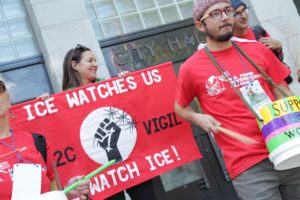
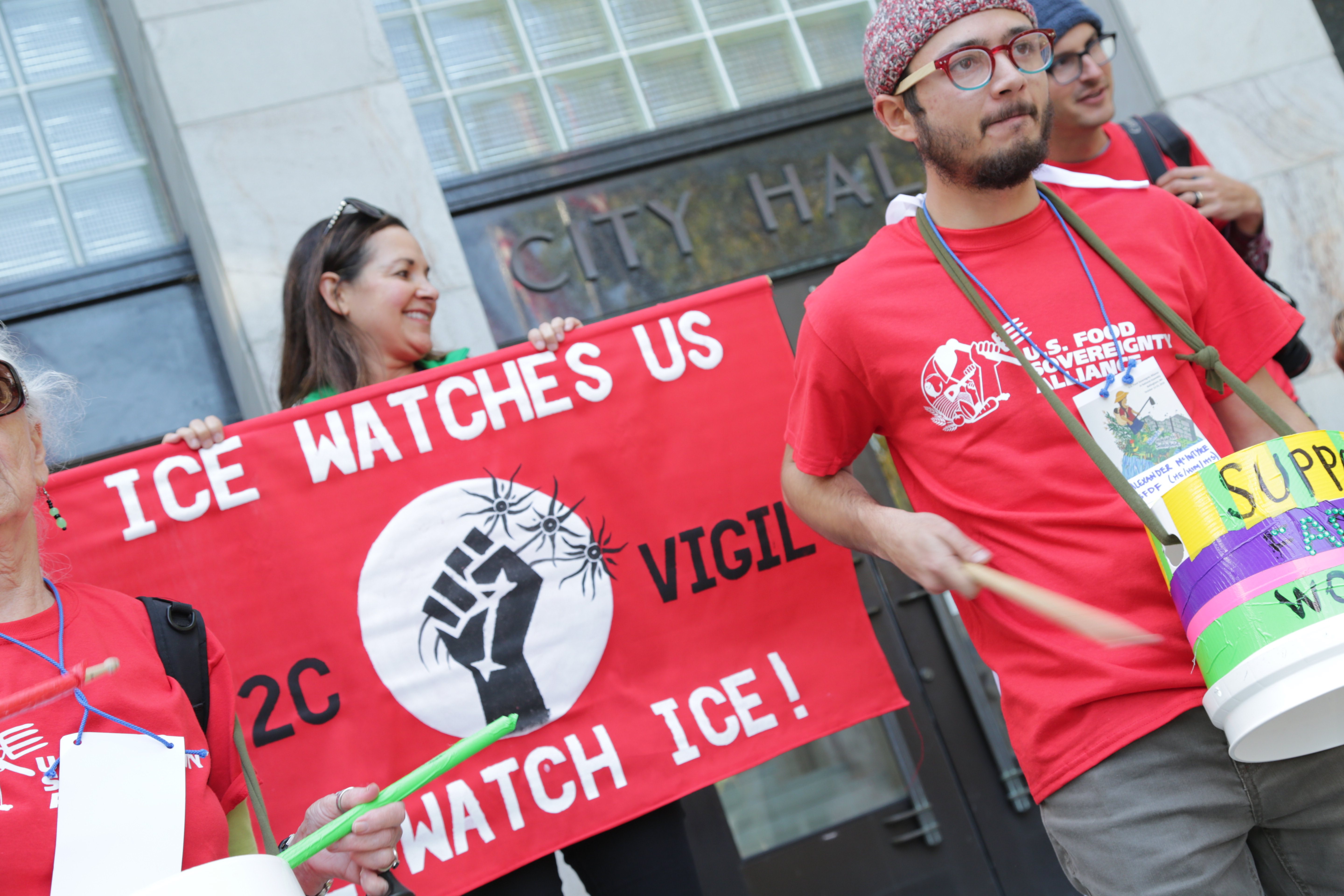
    * We denounce the actions of Immigration and Customs Enforcement (ICE) in implementing the racist policies of mass detention and deportation, and stand in solidarity with immigrant and refugee peoples currently residing and working in the U.S.

    * We add our collective voice to the Call to Protect Food Systems from Genetic Extinction Technology and call for a global moratorium on any release of engineered gene drives, which could contaminate ecological systems, species, and food webs with genetic traits designed to create species extinction.

    We denounce proposals in the Farm Bill that would increase work requirements for SNAP eligibility, end the Double Up Bucks farmers market program, defund critical conservation programs, and reduce support for beginning and socially challenged farmer programs.

    * We reject the King amendment in the House Farm Bill, which would give agribusinesses greater control and restrict state and local governments from regulating agricultural products, and could nullify the Food Sovereignty Ordinances passed in Maine, as well as laws that curb pesticide use, regulate farmworker safety, prevent cruel livestock practices, and label GMO foods.

    * We call for an expansion of agroecological practices and the protection of our agroecological biodiversity in food, fiber, forest and aquatic systems across the planet, as one of the essential solutions to the climate catastrophes humanity faces.  We know that small farmers, family fishers and foresters all cool the planet.  Agroecology cools the planet!

    * Lastly, the USFSA stands in solidarity with our global allies, particularly members of La Via Campesina, suffering the overthrow or threat of overthrow of popular, democratic governments.  Whether in Honduras, Paraguay, Colombia, Brazil, Nicaragua, Venezuela or elsewhere, these “soft coups” are a threat to democratic processes and to food sovereignty everywhere.
    ____________

    The IV Assembly debated and affirmed the formation of the following national Collectives:  Political Education, Agroecology: Land and Water, Narrative Strategy, International Relationships, and Youth.   These collectives together with the regional bodies will carry forward the work of USFSA, coordinated by representatives from grassroots organizations from the regions, with the help of grassroots support organizers.

    With our collective strength, we shout “No!” to injustices in the food system everywhere and “Yes!” to the people rising up to radically transform unjust systems and practices, for the betterment and survival of humanity and defense of Mother Earth.   And to the inspiring sister movements across the planet working for food sovereignty, we sing out a resounding ¡VIVA!  WE STAND WITH YOU!  WE ARE PART OF YOU! 


    During the Assembly, the winners of the Food Sovereignty Prize were acknowledged for their powerful work to promote food sovereignty. Here is the release:

    Grassroots Movements Celebrated for Building Solutions to Food and Climate Crises

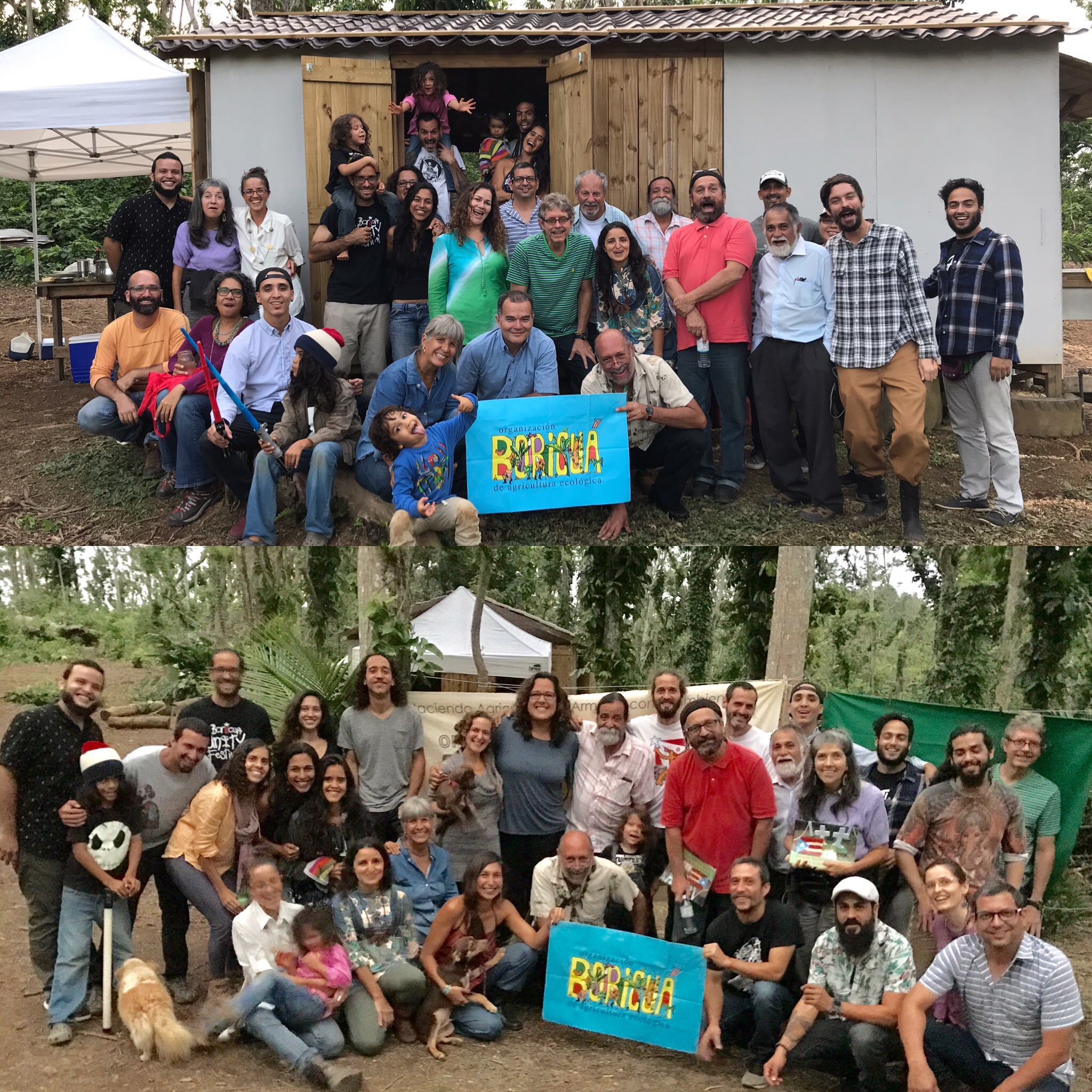
    Black Mesa Water Coalition, Organización Boricuá de Agricultura Ecológica de Puerto Rico Win the Food Sovereignty Prize
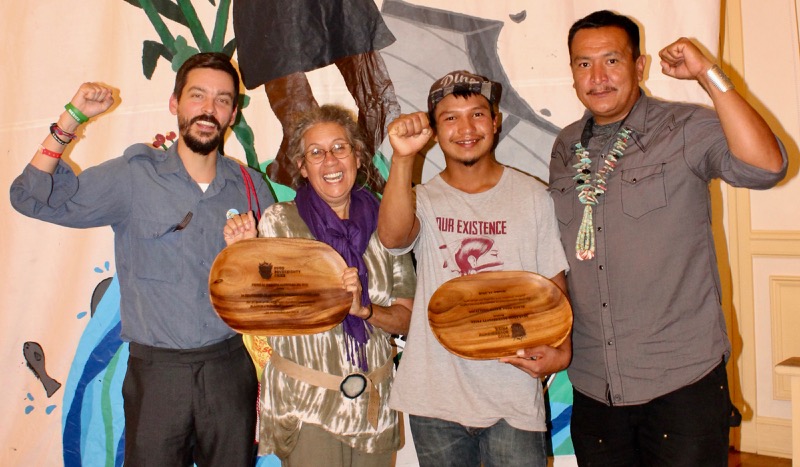
    FSP winnersJesus Vázquez and Dalma Colón from Organización Boricuá; Sheldon Natoni and Roberto Nutlouis from Black Mesa Water Coalition

    October 14, 2018 (Bellingham, Washington) – The U.S. Food Sovereignty Alliance (USFSA) honored Black Mesa Water Coalition and Organización Boricuá de Agricultura Ecológica de Puerto Rico on Sunday at the tenth annual Food Sovereignty Prize ceremony on Lummi and Nooksack land in Coast Salish Territory, in the city now called Bellingham, Washington.

    Black Mesa Water Coalition, the domestic honoree, was awarded the prize for restoring indigenous food sovereignty and uplifting youth leaders among Navajo and Hopi communities. Organización Boricuá de Agricultura Ecológica de Puerto Rico, the international honoree, was recognized particularly for mobilizing Food Sovereignty Brigades to assist farmers recover in the aftermath of Hurricane Maria.

    Presented as an alternative to the World Food Prize, the Food Sovereignty Prize honors steadfast commitment of food sovereignty. Social movements, community organizations, and activists around the world recognize the importance of the prize.

    “These grassroots organizations demonstrate how frontline communities most affected by social and ecological crises are the ones with solutions to society’s most pressing problems.” -Doria Robinson, Urban Tilth (coordinator of the Western Region of the US Food Sovereignty Alliance)

    Black Mesa Water Coalition utilizes green economic development and other diverse strategies, rooted in indigenous knowledge, to address issues of poverty, hunger, and environmental injustices driven by extractive industries and centuries of colonialism. “We need to notify humanity that we need to drastically change the way we do things, especially getting away from fossil fuels, and the food system is one way to begin that transition.” -Roberto Nutlouis, Black Mesa Water Coalition

    Organización Boricuá organizes farmers to transition to sustainable agriculture and sovereignty in Puerto Rico. “Agroecology as Puerto Ricans, coming from a colonial context, has given us a space to organize and deepen our struggles. This work is a vehicle of transformation for a sovereign, free, and just Puerto Rico.” -Jesus Vázquez, Organización Boricuá

    Media contacts:

    Liz Darrow (360) 220-9065, c2cmedia@foodjustice.org
    Ahna Kruzic, (510) 927-5379, ahna@panna.org

    www.usfoodsovereigntyalliance.org
  • Food Sovereignty and Energy Democracy in Just Transitions: Part 3

    Written by Tyler Short of Sustainable Agriculture of Louisville, this post is the third in a three-part series. 

    Introduction

    During the USFSA’s IV National Membership Assembly in Bellingham, WA (October 12–15), the Alliance will award the 2018 Food Sovereignty Prize to Black Mesa Water Coalition and La Organización Boricuá de Agricultura Ecológica de Puerto Rico. The ceremony will occur on Sunday, October 14 (5:30–7:30 PM Pacific). Please follow the USFSA’s Facebook page to view a livestream of the event.

    Below, I explore the notion of Just Recovery within the context of climate catastrophe. I highlight the effects of Hurricane Maria in Puerto Rico and the Just Transition-inspired work of activists, farmers, and educators affiliated with Organización Boricuá.

    This is the third post in a three-part series. Part One offered a background to Just Transition and Climate Justice Alliance. Part Two analyzed the energy democracy and food sovereignty projects of Black Mesa Water Coalition.

    Disasters Result from Natural and Social Forces

    “Disaster requires an ability to embrace contradiction… The possibility of paradise hovers on the cusp of coming into being, so much so that it takes powerful forces to keep such a paradise at bay. If paradise now arises in hell, it’s because in the suspension of the usual order and the failure of most systems, we are free to live and act another way.” Source: Solnit, Rebecca. A Paradise Built in Hell: The Extraordinary Communities That Arise in Disaster (2009). pp 7-15.

    Organización Boricuá formed almost thirty years ago to enhance the viability and impact of small-scale, ecologically-sound agriculture in Puerto Rico. Their work has inspired young people to actively engage with older generations to restore agroecology in the Caribbean. Under the banner of food sovereignty and in accordance with Just Transition principles, the organization has supported a base of family farmers to develop the capacity of diversified production and increase eaters’ access to healthy local products.

    The organization’s efforts intensified after Hurricanes Irma and Maria left more than three million people without access to electricity, clean water, and food. Flooding, structural damage, and debris shut down major ports and roads in coastal areas. Distribution of basic goods and emergency medical supplies were halted. An estimated three thousand people or more have died from the effects of Hurricane Maria.

    Leaders of Organización Boricuá argue that the social crises sparked by the hurricanes last year are rooted in colonial domination and economic inequality. During the Solidarity to Solutions Week (Sol2Sol; September 7–13) led by It Takes Roots, Jesús Vázquez, a national coordinator of Organización Boricuá, briefly described the post-Maria situation to me by noting the visible combination of militarization and neglect. He pointed to the influx of disaster capitalists seeking to profit from land grabs, development projects, and the privatization of social services amid growing debt problems.

    Organización Boricuá member Magha Garcia of Bosque Jardín Pachamama speaking during the Campamento Agroecológico de Formación Política (Agroecological Encampment for Political Formation) in 2016. Source: Laedlein, Corbin (2017). “Agroecology in Puerto Rico.”

    Vázquez also pointed out that, before Maria, Puerto Rico imported more than eighty percent of their consumed food. This figure rose to about ninety-five percent after the hurricaneVázquez then contrasted two opposing forms of agriculture. He said that conventional farmers lost up to three-quarters of total crop value. Small, biodiverse farms suffered to varying extents, but remarkably less than sites of industrial monocultures of coffee, sugarcane, plantain, and banana plantations. Agroecological farms’ adaptive designs and crop diversity made them considerably more resilient, thus allowing for producer families and their community members to maintain access to root vegetables and other staple foods.

    Agroecology Feeds the World and Cools the Planet

    How does the conceptual framework of Just Transition apply to the grassroots organizing work of Organización Boricuá in the countryside and cities of Puerto Rico?

    In the immediate aftermath of Hurricane Maria and the months that followed, Organización Boricuá anchored the Our Power Puerto Rico Campaign, which Climate Justice Alliance and UPROSE co-orchestrated with strong support from It Takes Roots, Greenpeace, and over twenty other ally organizations. Our Power PR has called for a Just Recovery and Transition away from the extractive economy imposed by the U.S. and multinational corporations. The campaign has focused on collecting, transporting, and distributing “resilient aid” such as water filters, seeds, agricultural tools, satellite phones, solar panels, chargers, radios, stoves, and bicycles with trailers. Multiple USFSA members – including Food First, Grassroots International, and WhyHunger – contributed funding and seeds to augment the capacity of agroecological producers.

    Members of Black Dirt Farm Collective participating in a Food Sovereignty Brigade in Puerto Rico. Source: Food First (2018). “Puerto Rican EcoFarms after María.”

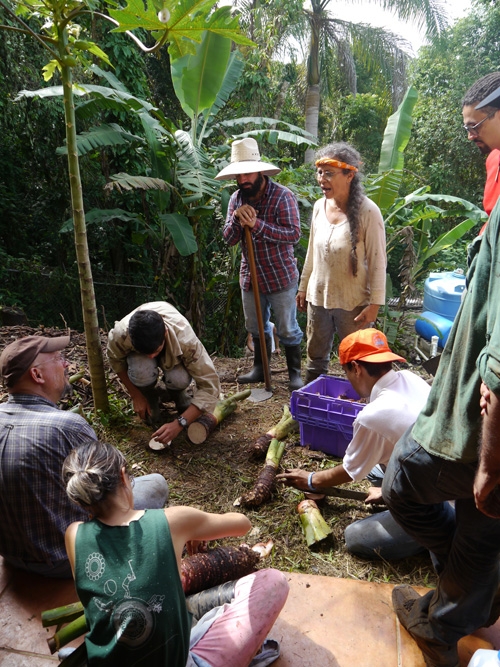
    Our Power PR amplified the Food Sovereignty Brigades that Organización Boricuá launched in solidarity with peasant families after Hurricane Maria. The organization spearheaded farmer and farmworker check-ins, and they mobilized dozens of urban and rural peoples to assist with repairing damaged fields and infrastructure. Recognizing political education as a fundamental aspect of historical struggle, Organización Boricuá facilitated dialogue about the food sovereignty movement and the practice, science, and political project of agroecology. The brigades reinforced mutual aid networks and reproduced the farmer-to-farmer dynamic of sharing local and ancestral knowledges.

    Aligned with each of CJA’s six meta-strategies to achieve a Just Transition, Organización Boricuá upholds the principle of grassroots internationalism (Build the Bigger We) by functioning as part of CJA as well as the global peasant movement La Via Campesina. Members of the organization resist agribusiness (Fight the Bad) and orchestrate on-the-ground actionsoriented toward creating a regenerative and autonomous economy, such as urban and rural farming, (Build the New). They bring agrarian visions of climate and social justice to the forefront of the climate debate via communications with media allies, the public, and elected officials (Change the Story). Organización Boricuá calls for divestment from the extractive economy and the channeling of capital into community-based and collectively-determined solutions (Move the Money). Furthermore, the organization advocates for policy reform, coordinates marketing of local produce, and facilitates an agroecological certification program (Change the Rules).


  • Food Sovereignty and Energy Democracy in Just Transitions

    Food Sovereignty and Energy Democracy in Just Transitions

    This post is authored by Tyler Short, Sustainable Agriculture Louisville. This post is part one in a three part series.

    Introduction

    The U.S. Food Sovereignty Alliance (USFSA) will honor the domestic and international recipients of the 2018 Food Sovereignty Prize – Black Mesa Water Coalition and Organización Boricuá de Agricultura Ecológica de Puerto Rico – at the IV National Membership Assembly in Bellingham, WA (October 12–15). The public award ceremony will occur in the evening of Sunday, October 14. Please register for the event here by Friday, October 5, or follow the USFSA’ Facebook page for a link to the livestream of the ceremony.  

    Leading up to the IV Assembly, I would like to highlight how the honorees apply the conceptual framework of Just Transition to their grassroots processes aimed at asserting democratic control over food and energy systems. I also hope to illuminate their participation in Climate Justice Alliance. In this first post of a three-part series, I will examine the meaning of Just Transition and provide an overview of how Climate Justice Alliance incorporates regenerative economics into its strategic mission.

    Part Two will outline the history of Black Mesa Water Coalition and their current programmatic work to realize a Just Transition in the Southwest. Part Three will focus on the efforts of Organización Boricuá de Agricultura Ecológica de Puerto Rico in the struggle for a Just Recovery following Hurricane Maria, which struck the Caribbean in September 2017.   

    It Takes Roots to Cultivate Solutions: Background to Just Transition

    Climate Justice Alliance (CJA) recently co-organized the Solidarity to Solutions Week (Sol2Sol; September 7–13) in Bay Area Ohlone territories alongside It Takes Roots partners from Grassroots Global Justice Alliance, Right to the City, and the Indigenous Environmental Network (IEN). Local organizations – such as Idle No More SF Bay, Urban Tilth, PODER, and the Asian Pacific Environmental Network – played vital roles in planning and leading the events. I attended Sol2Sol as a CJA delegate representing the USFSA.

    During the week, hundreds of It Takes Roots delegates engaged in membership encuentros (encounters), local tours, and direct actions including street theatre, chants, speeches, and blockades outside of the Governors’ Climate and Forests Task Force meeting and Global Climate Action Summit (GCAS). It Takes Roots organized a contingent near the front of the March for Climate, Jobs, and Justice. The Sol2Sol Summit at La Raza Park provided space for It Takes Roots members to further amplify their visionary, community-led solutions to socio-ecological crises around the world. These were presented in opposition to corporate-driven false ‘solutions’ – for example: genetically-modified foods, carbon trading schemes like REDD+, and geoengineering – promoted by GCAS leaders. The four grassroots solutions advocated by It Takes Roots included: Just Transition; food sovereignty; energy democracy; and zero waste.

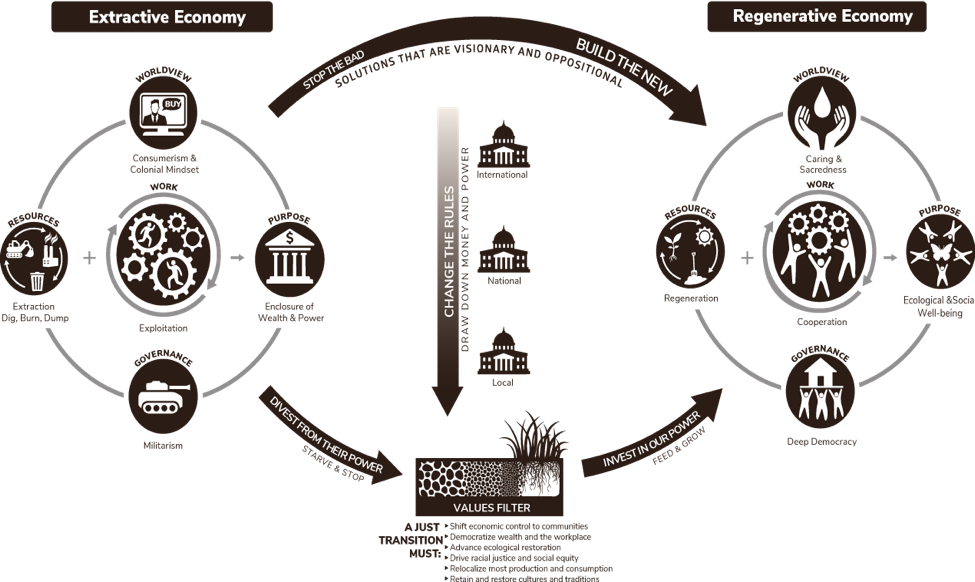
    The figure below offers a visualization of a Just Transition. On the left, the Extractive Economy is characterized by militaristic governance, the dig-burn-dump process of exploiting sources of life, consumerist and colonial mindsets, and the enclosure of power and wealth into the hands of a few. On the right, the Regenerative Economy entails deep democratic governance, the regeneration of ecosystems, a worldview of caring and sacredness, and the purpose of attaining social and ecological wellbeing. Stopping the bad and building the new require strategic actions that range from policy-making to the enhancement of workplace democracy.

    A Strategic Framework for a Just Transition. Source: Movement Generation’s zine From Banks and Tanks to Cooperation and Caring.


    Trade unions and environmental justice organizations developed the concept of Just Transition about twenty years ago, merging labor and social movement theory with practice rooted within low-income and marginalized communities. In the context of discontinuing harmful economic activity, Just Transition originally centered on the need for workers of polluting industries to secure safe, dignified employment in the new, green economies.

    Just Transition advocates have prioritized reparations to the peoples residing in sacrifice zones who most directly face the social and environmental costs of profit-driven extraction, such as forced displacement, pollution, and systemic poverty. As demonstrated by the Just Transition Alliance, coalition-building between workers, frontline communities, and fence-line communities has been fundamental to advancing a fair shift toward peaceful, healthy societies premised on respect for human rights and the rights of Mother Earth.

    Uniting Communities for a Just Transition

    After three years of deciding on a structure and vision, Climate Justice Alliance (CJA) launched in 2013 as a multi-racial, multi-sector coalition of nearly forty base-building frontline organizations and movement-support organizations dedicated to overcoming the root causes of climate change. Since then, their membership has increased to a total of sixty-seven participating organizations, alliances, and networks. 

    CJA has expanded the original definitions of Just Transition to embrace visions of transforming entire communities from militarized sites of extraction to economic of life. The Alliance’s Just Transition Principles coincide with many of the Indigenous Environmental Network’s  Indigenous Principles of Just Transition. CJA  promotes six interrelated meta-strategies to realize and defend Just Transitions:

    CJA’s Six Meta-Strategies. Source: https://climatejusticealliance.org/how-we-work/


    In the Alliance’s earlier years, members mostly devoted their energies into the Our Power Campaign, a national and broad-based social force constituted by Our Power Communities. Members of the Our Power Campaign have engaged in research, political education, camp-style gatherings, and mass mobilizations with the common goal of ensuring that workers and frontline communities participate as primary stakeholders in policy-making and governance at all levels. The campaign’s main goals have revolved around uniting geographically-dispersed activists and collectively cultivating translocal strategies for the activation of fundamental, justice-centered shifts from extractive economies to localized, regenerative modes of production and distribution.

    In the Our Power Plan: Charting a Path to Climate Justice (2015), CJA et al. affirms that the solutions needed to end the era of extreme energy arise from the resourcefulness, innovation, creativity, and determination of environmental justice communities, many of which interconnect due to histories of racialized and class-based oppression as well as legacies of successful organizing in defense of Mother Earth and communitarian values. CJA leaders underscore the imperative to enact comprehensive approaches that immediately stop pollution at source and uplift grassroots leadership. The Alliance’s strategic plan advocates for: renewable energy; clean water; agroecological food and fiber systems; durable housing; healthcare; public transportation; and zero waste.

    The steering committee of the Our Power Campaign identified Black Mesa, AZ, Detroit, MI and Richmond, CA as the pilot Hot Spots. Black Mesa Water Coalition anchored Our Power in Arizona. The Coalition hosted a training camp in 2013 for participants of the nascent collaboration to share skills and knowledge. The Ruckus Society assisted with the creation of action plans that expanded from past victories of Our Power members, and the Center for Story-based Strategy supported CJA to craft a grassroots narrative in the climate debate that communicates irresistible ideas about generating “power without pollution and energy without injustice.” By means of the Our Power Campaign, CJA has ultimately intended to establish a basis for federal legislation via Just Transition policy work at the local and state levels.

    For Part Two of this blog series, I will shed light on how Black Mesa Water Coalition has advanced a Just Transition among Navajo and Hopi communities. In particular, I will provide examples of popular education pertaining to food sovereignty and legal victories that further their energy democracy agenda. The third part of this series will describe and analyze the Food Sovereignty Brigades mobilized by Organización Boricuá de Agricultura Ecológica de Puerto Rico in the aftermath of Hurricane Maria.

    This post was updated on October 4 to clarify the difference between CJA’s Our Power Campaign and their working group project titled Reinvest in Our Power, which began more recently, functioning as part of the Reinvest in Our Power Network.