Category: Defense of Mother Earth

  • Food Sovereignty and Energy Democracy in Just Transitions: Part 2

    Food Sovereignty and Energy Democracy in Just Transitions: Part 2

    This post is written by Tyler Short of Sustainable Agriculture of Louisville, and is the second in a three part series. You can view part one here.

    Introduction

    At the USFSA’s IV National Membership Assembly in Bellingham, WA (October 12–15), the Alliance will award the 2018 Food Sovereignty Prize to Black Mesa Water Coalition and Organización Boricuá de Agricultura Ecológica de Puerto Rico. The ceremony will occur on Sunday, October 14 (5:30–7:30 PM Pacific). Please follow the USFSA’s Facebook page to view a livestream of the event.  

    This is the second post in a three-part series. Below, I spotlight Black Mesa Water Coalition (BMWC) and outline the Just Transition framework that underlies their restorative models of political economy.

    Part One of this blog series offered a background to Just Transition and Climate Justice Alliance. Part Three will analyze the notion of Just Recovery, specifically in terms of the Food Sovereignty Brigades mobilized by Organización Boricuá de Agricultura Ecológica de Puerto Rico in the aftermath of Hurricane Maria last year.

    Energy Democracy

    How has BMWC applied a Just Transition framework to their environmental justice program among Diné (Navajo) and Hopi communities in northern Arizona?

    The Coalition underscores that energy must be owned and controlled by communities, not large corporations. Since its formation almost twenty years ago, the organization has fought to stop the dig-burn-dump process of polluting industries that extract water, coal, oil, natural gas, and uranium from the region. In 2005 BMWC and their partners succeeded in shutting down the Mohave Generating Station, forcing the Black Mesa Mine and 273-mile slurry pipeline to close.

    With solidarity from Our Power Communities organized through Climate Justice Alliance (there are currently seven total, including Black Mesa), BMWC has targeted the coal-powered Navajo Generating Station, which exploits water from the Navajo Aquifer and supplies energy to the 300-mile canal known as the Central AZ Project (CAP). The Coalition argues that renewable sources can power CAP and provide energy for the estimated 18,000 Navajo and Hopi homes lacking electricity. In addition to calling for the Navajo Generating Station to shift entirely to solar energy, BMWC has pushed to reclaim former mine sites, install solar panels, and connect the new infrastructure to existing transmission lines.
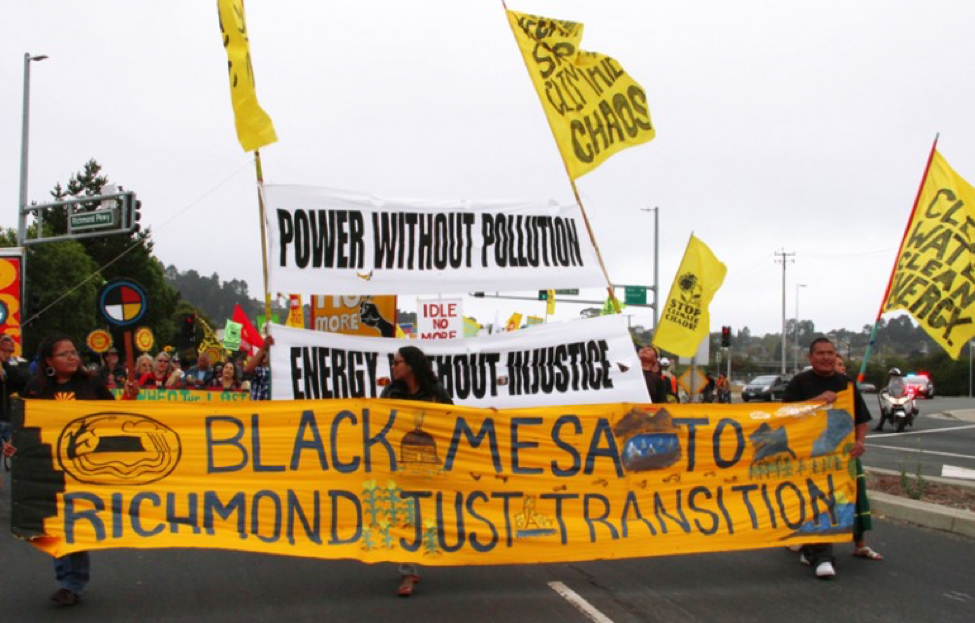
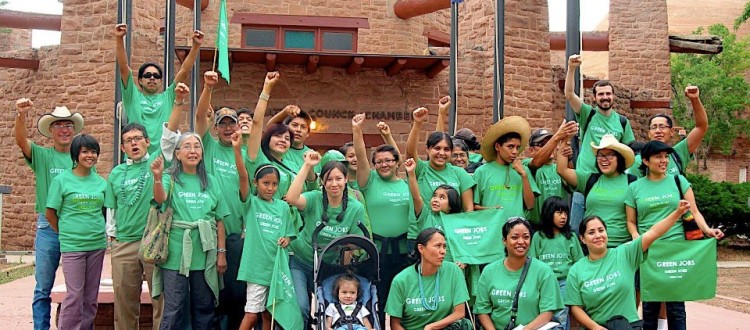
    Our Power Campaign march in 2014. Source: http://breakfreepnw.org/roots-shoots-just-transition/


    Jihan Gearon, the Executive Director of BMWC, commented on the topic of funding for Just Transition projects during a panel discussion at the 2018 Protecting Mother Earth Conference in Nisqually, WA (June 28–July 1, 2018), “Money helps but can cause problems if you’re always chasing it.” The Coalition cites the Navajo Green Economy Fund as a major achievement, although it has lacked proper support from the tribal government since the legislation passed in 2009. Legal interventions have proven successful as well; for example, the CA Public Utilities Commission’s 2013 decision to use revenues from the sale of sulfur dioxide allowances to create a revolving fund in support of renewable energy development.

    Local employment remains a crucial problem for BMWC to address as they organize for visionary economic alternatives away from the extractive economy. The Coalition understands that workers need access to income-generating activities as part of the fair shift towards a green economy. BMWC advocates for a holistic approach that would create meaningful employment in renewable energy production and also revitalize traditional food and fiber production lifestyles.

    Food Sovereignty

    BMWC directs a Restorative Economy Program that emphasizes resistance to extractive production, simultaneously enabling locally-driven models that meet human needs and revive ancestral values rooted in ecologically-sound, culturally-appropriate practices.

    The Navajo Wool Market Improvement Project directed by BMWC includes weaving workshops, trainings on increasing a herd, and demonstrations that involve shearing, sorting, and grading wool. By hosting an annual Wool Buy since 2012, the Coalition has contributed significantly to raising the incomes of traditional wool producers and processors, while strengthening intergenerational relationships for young practitioners to learn from elders and reproduce customs foundational to their place-based identities. BMWC’s objective to enhance the viability of small-scale wool production overlaps with the core purposes of their Food Sovereignty Project to ensure community wellbeing, reverse cultural erosion, and realize self-determination as indigenous peoples.
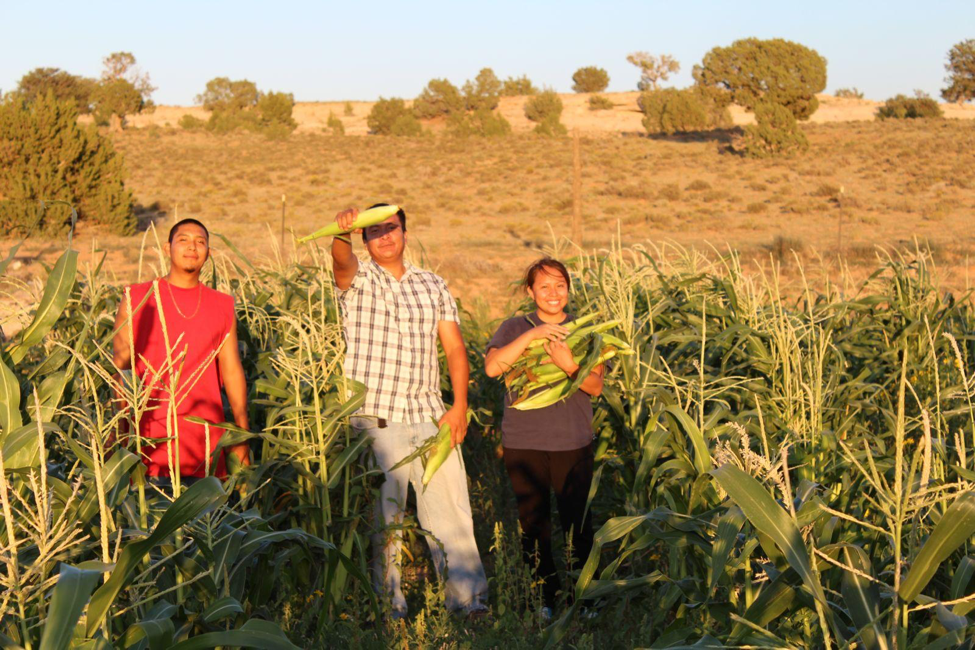
    Roberto Nutlouis (middle) and others harvesting corn in 2012. Source: BMWC’s Facebook page


    BMWC embraces food sovereignty as a platform for fighting to protect humans and other-than-human life from direct threats imposed by the structural forces of settler colonialism and capitalism. Based on a 2014 report, an alarming amount of Navajo Nation residents must drive hours to border-town stores off the reservation to access healthy and affordable food, which negatively affects reservation markets and undermines smallholder production for local consumption. BMWC promotes indigenous food sovereignty as a set of grassroots solutions to decommodify food and land, ending their use as weapons, while also creating a collective capacity to survive and enjoy the abundance of gifts from Mother Earth.

    Leaders of the Coalition call for policies that would propagate and protect local food systems, mainly by redistributing land, removing barriers to obtain grazing permits, providing farmers’ access to credit, ending subsidies to agribusiness, and halting the biopiracy and contamination of native seeds. Roberto Nutlouis – the Restorative Economy Program Coordinator – facilitates popular education at a thirteen-acre community farm in Piñon, AZ, where BMWC affiliates learn about native plants, traditional cultivation techniques, watershed management, and cooking. The Coalition recently hosted its first annual Harvesting Our Kinship Festival (October 4–5, 2018), an educational celebration for honoring past struggles and inspiring young people to become agents of social change.

    “After centuries of global plunder, the profit-driven, growth-dependent, industrial economy is severely undermining the life support systems of Mother Earth. An economy based on extracting from a finite system faster than the capacity of the Earth to regenerate will eventually come to an end… A Just Transition acknowledges Indigenous traditions that tell us that all economic activity must be rooted in an understanding and respect of our sacred relationships with Mother Earth and Father Sky… A Just Transition is our right to define our own food and indigenous agricultural systems. The right to food is sacred and cannot be constrained or recalled by colonial laws, policies and institutions.”  Source: Indigenous Environmental Network’s Indigenous Principles of Just Transition
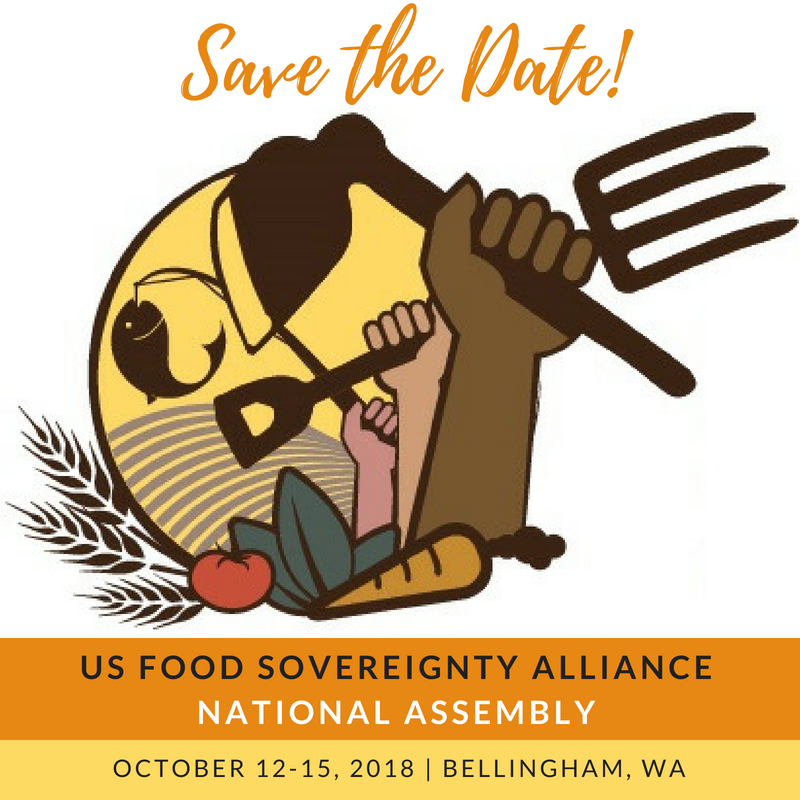
  • USFSA organizing its IV National Assembly

    USFSA organizing its IV National Assembly

    Our food is being used as a weapon, and we are living in a political moment that demands coordinated action.

    Currently, we are seeing how political borders are being used to attack workers and families. Whether it’s the more than 500,000 people who were cut from the food stamp program over the last 3 years, the fact that four of the six largest agribusiness corporations have merged, or that farmers across the country are losing their lands while food chain workers are working under exploitative and dangerous conditions, and often fear deportation.

    We must continue to dream of a better world and work to build a new food system. We need a system that respects communities and human rights and nourishes rather than ravages the land. That system is based on food sovereignty, the human right to food, and the rights of Mother Earth.

    On October 12 – 15, 2018, grassroots organizations, activists, faith-based community, scholars, union members, farmers and fisherfolk, and other food chain workers from around the US and the world will converge on Bellingham, WA, for the IV National Assembly of the US Food Sovereignty Alliance (USFSA). The Assembly will provide a space to learn about food sovereignty, share struggles and collective wins, and build solidarity.

    The USFSA has a goal of bringing together as many people as possible in a World Social Forum style gathering that will encompass a range of panels, political education, arts and other cultural exchanges to pave the way for stronger political action in the United States. The space will be an opportunity for mutual learning. Please stay tuned for information on how to submit a proposal for a panel, registration, and more. Together, we’ll deepen relationships across sectors and geographies to build a path for community liberation and reclaim our food system.

    The Assembly will also include the 2018 Food Sovereignty Prize awards ceremony honoring movements in the US and internationally. Lauded as an alternative to the World Food Prize, the Food Sovereignty Prize champions real solutions to hunger and is recognized by social movements, activists and community-based organizations around the world.

    Please save the date and sign up (or follow us on Facebook or Twitter) to get the latest updates on the organizing and registration process. If you are interested in participating in the planning of the Assembly, please email info (at) usfoodsovereigntyalliance (dot) org.

  • En La Lucha No Hay Fronteras (In the Struggle There Are No Borders)

    By Kathia Ramirez
    Organizer, CATA (Comite de Apoyo a los Trabajadores Agricolas/ The Farmworkers’ Support Committee) 

    Fifth in the South Africa-US Agroecology Exchange Article Series

    In October of 2017, I had the opportunity to travel with 7 other comrades on an Agroecology Exchange to South Africa. This Exchange was a continuation of a process that had initiated in 2015 which was the same year that I was introduced to the US Food Sovereignty Alliance. Although there was much traveling, it was an amazing experience to see and learn from farmers, farmworkers, activists, and people in the community who are struggling due to the current food system.

    usfsa1

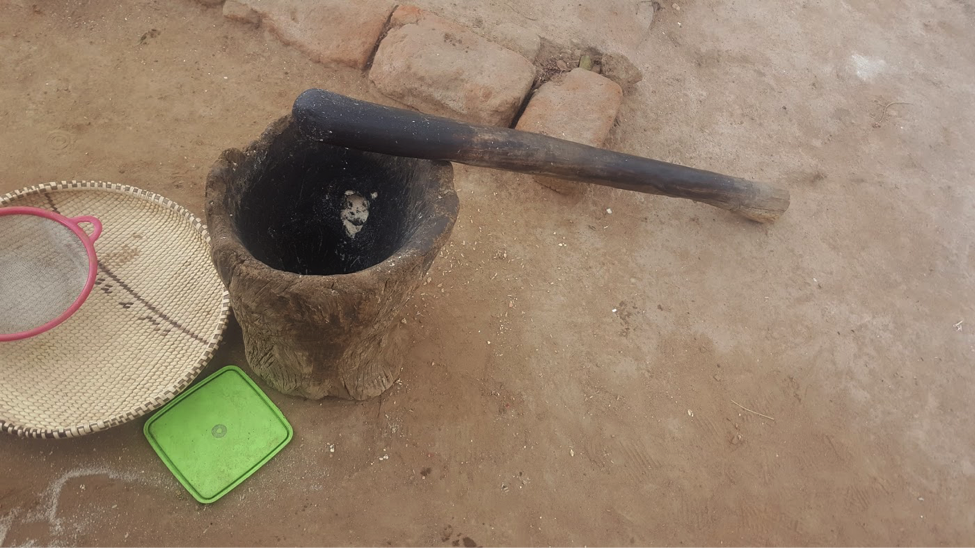
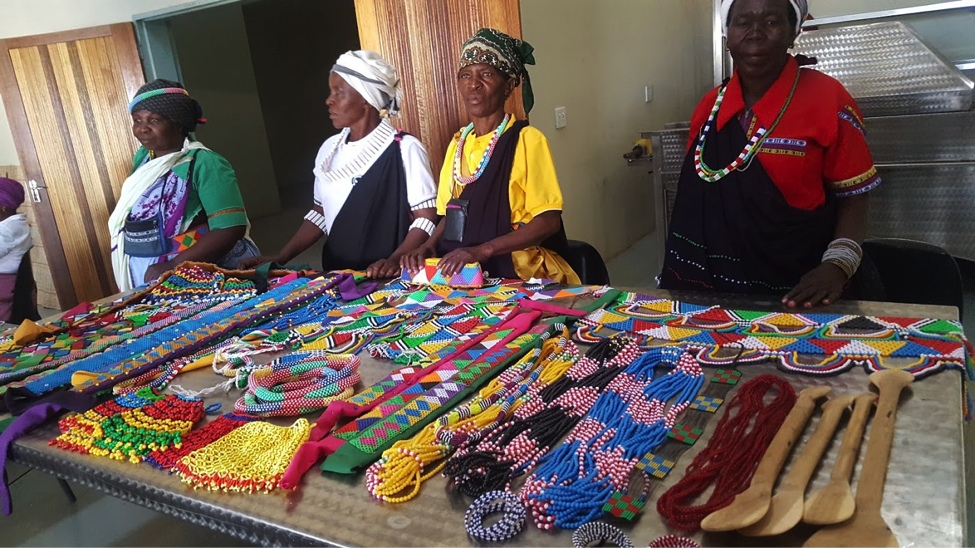
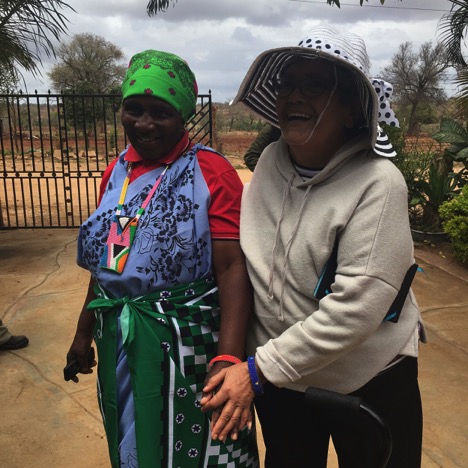
    During the trip, I had the opportunity to interpret for another delegate and feel the dynamic of how language is not a barrier to being able to relate across seas. The experience interpreting allowed me to relate and connect both with people in South Africa as well as to the stories that were shared with me from my same culture since I share a similar background to the delegate I was interpreting for. During our visit to Limpopo, members of the Mopani Farmers Association put together a cultural event just for us and once again, I felt the connection through dance and music despite our different backgrounds. It brought so much to mind for me: from appreciating the work that I am doing to learning more about my own culture from which at some point I have felt very disconnected.

    USFSA2

    When we arrived in Citrusdal, Cape Town and were hosted by the Surplus People’s Project, we honored International Rural Women’s Day through participating in a Day of Action for Food Sovereignty, and an assembly for the International Day of Eradication of Poverty. As members and allies of the US Food Sovereignty Alliance, we participated on the last day and had the opportunity to share about our experiences and also had the chance to be part of a panel discussion, where we had both Farmer and Farmworker delegates sharing their stories. Among those on the panel were member organizations from The Agrarian Reform for Food Sovereignty Campaign. It was amazing to see how even though we joined these organizations on the last day of their three-day meeting, we were easily able to engage because our struggles are very similar. We were also very welcomed to engage when we participated in a meeting with Urban Farmers in Cape Town, and again, we identified some of the same issues that are affecting us although we are from two different countries.

    USFSA3

    Based on the work I do at the ground level as the Food Justice Coordinator with CATA- El Comite de Apoyo a los Trabajadores Agricolas- or the Farmworkers Support Committee, I was able to connect with the work of farmworkers in South Africa.

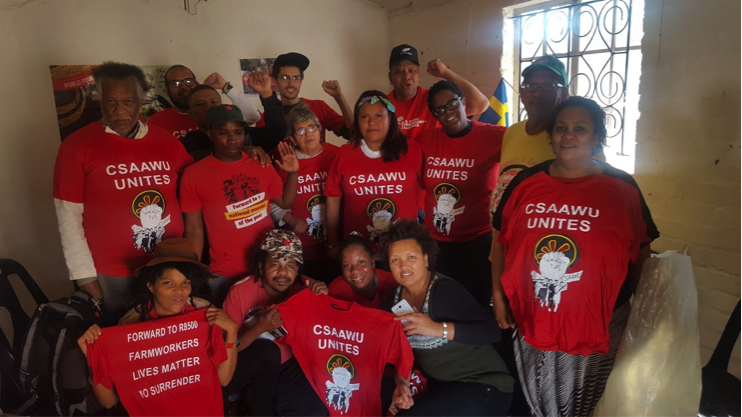
    CATA is a farmworker organization that has been working to improve workers’ conditions for quite some time. During our stay in the Western Cape, we had the opportunity to be in dialogue and hear the stories of farmworkers with the CSAAWU [Commercial, Stevedoring, Agricultural and Allied Workers Union] and the Rural Legal Center. The farmworker struggle is universal: as we were listening and learning about their experiences, it only reminded me of the struggles farmworkers face here in the USA. There are many parallels that vary from exploitation of work, intimidating the worker who speak up, not acquiring proper health care when injured, discrimination, etc.

    At CATA, we work with migrant farmworkers and the immigrant community many of whom are from Mexico and Central America. We see many injustices in their work lives but also their everyday lives. I am hopeful that we can create a global movement where farmworkers are on the frontlines advocating and fighting for a dignified life.

    Seeing the perspectives of farmers as well as from farmworkers during the exchange was really important and I am very grateful for this opportunity. . In order for us to change our current food system that is harming us all as people, small scale farmers and farmworkers are essential to this process. During our stay in the Western Cape Region we learned a chant that was shouted in various occasions and I would like to share with you all. It was a call and response type of chant.

    Someone would shout AMANDLA! with their fist held high. Amandla is a Zulu and Xhosa word (2 of the 11 official languages in South Africa). Then, the rest of the crowd would reply with: AWETHU! It is said that it was used during the days of resistance against the apartheid system.

    Amandla, meaning power, Awethu referring “to us” or the people.

    USFSA4

    Amandla!
    Awethu!

  • Thoughts on Intimacy with Food, Land, and Women from South Africa: “Where there are women you can never go wrong”

    By Alsie Parks, Field Organizer for Southeastern African American Farmers Organic Network (SAAFON)

    Third in the South Africa-US Agroecology Exchange Article Series

    Untitled.jpg1

    Black women possess knowledge that comes from a deep place of knowing and nurturing.

    “Innate agrarian artistry is the womanist praxis of using deep-rooted knowledge as a creatively healing, ancestrally honoring, and community self-determination act of land-based resistance, “ is a statement collectively written by Black Women farmers, activist, and scholars Kirtrina Baxter, Dara Cooper, Aleya Fraser, and Shakara Tyler.

    I carried this wisdom and deep knowing within before reading the words that articulated the truths I’ve felt and held in practice, gifted to me from my motherline. Acknowledging that the motherline of all Black folks part of the diaspora trace back to Africa is a precious process of reclamation and explorations of identity. So, the opportunity to journey to South Africa with our delegation, there as part of a learning exchange, I carried this wisdom with me as I ventured onto lands never touched and without expectation. My understandings of the U.S. Deep South and the Global South are ripe with connections as motherland.

    Untitled

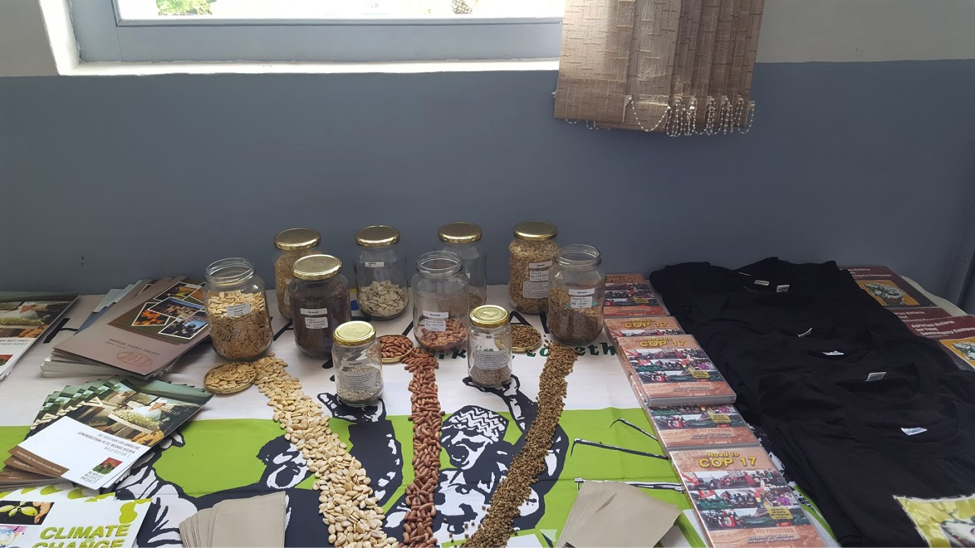
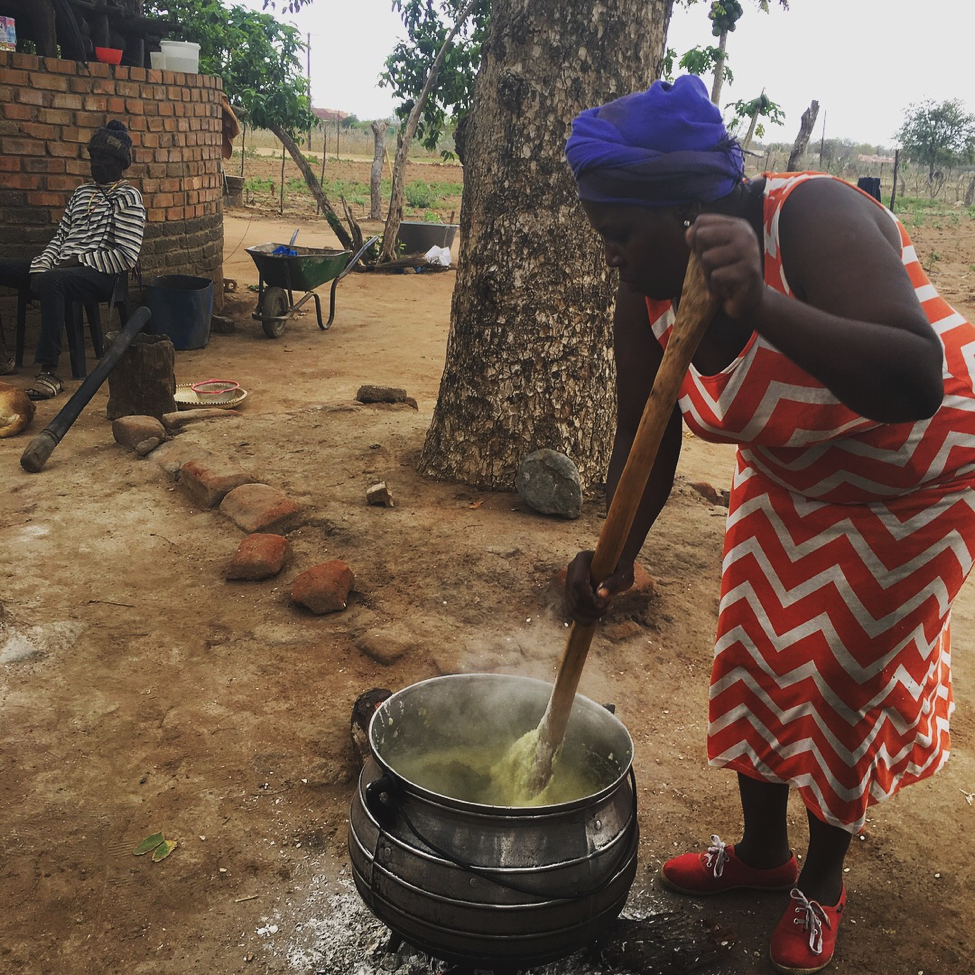
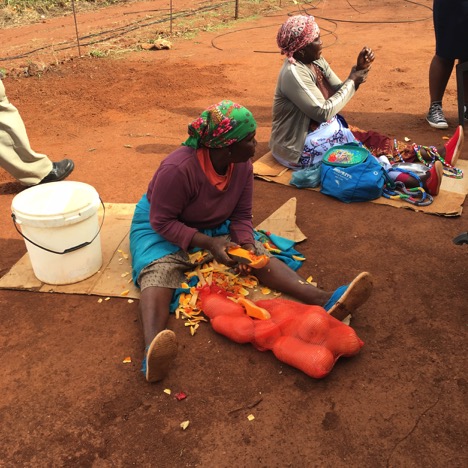
    Traveling to Limpopo and visiting with the farmers of the Mopani Farmers Association resonated most with my freedom dreams and longings for home sourced from spirit, ancestral memory and motherline. The preparation of traditional family dishes. The exchange of plants and herbal remedies. Mamas, daughters and granddaughters all tilling the fields. Tactical organizing through stirring the pot and turning the soil. Stories shared on the rivers drying up and celebrating the rain. Seed saving techniques I’ve never seen before. Gathering up clay for my altar. With each hand held, open arms extended, and knowing looks of love. The generosity is what heals and sustains us. The actions and rituals are what we have to practice. All wildly affirming.

    Untitled

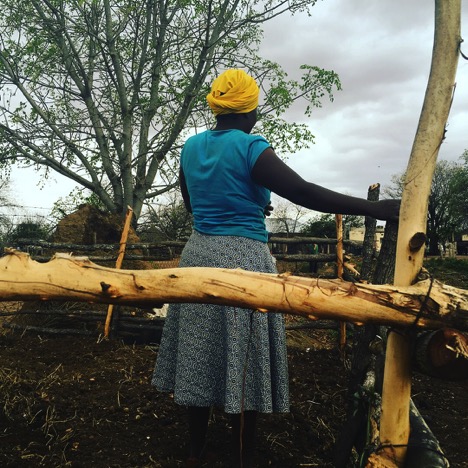
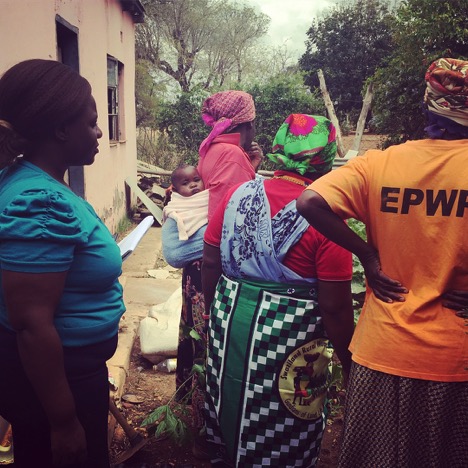
    The Mopani Farmers Association is made up of 1,300 farmers across villages in the District. Their land is communally stewarded and tribally governed. The lived experiences of the Women, of the families in this region were something I wanted to give careful consideration and collect stories to share. With 80% of the members as Women, nearly every farm we visited offered indication of how innate agrarian artistry was being practiced and shared reverence for the Women, the mothers, was woven throughout the organizing methodology of the association. As well, the belief that foundational in their work to empower community members was through a “cultural way of relating to our land and environment”.

    Untitled.jpg4

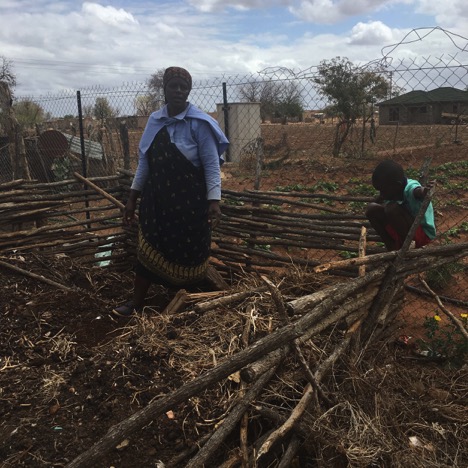
    On the executive committee was an elder affectionately known as “Mama” and considered the “organic intelligentsia” of the organization. This consideration acknowledges the wisdom that women offer to all of life’s work, but especially with respect and concern for nature and how we approach organizing in our communities. Her guidance and generosity was clearly foundational for the Mopani Farmers Association and the ways she brings people together and teaches was an honor to witness. With the Mopani Farmers Association there was clear leadership from women elders as the main demographic of farmers but also uplifting the divine wisdom held was woven into all the spaces, from meetings, farm visits and cultural offering spaces. Sharing this wisdom was embedded intentionally into every experience offered to us. Each farm visit we took invited us into the care and consideration women had for the land they tended and the seeds they saved.

    Untitled.png5

    Our hosts shared the critical issues of the area, unemployment, land access, access to water, lack of support, crime, and sustenance. The impacts of climate change being their biggest challenge, bringing new pest and diseases, rivers drying up, animals dying, 20 year old fruit trees no longer producing, a drought like they haven’t seen in the past 100 years. This experience left me with something to consider deeply, the social and political responsibility to curb climate change, because it is compromising the ability for our sisters and brothers abroad to live.

    Untitled.jpg6

    One of my most significant learnings is that there seemed to be intention and practice that created places for Women and youth to offer their inherent brilliance and contributions, and spaces that let them to shine. Promote women strongly. Create spaces for youth and Women to generate their own ideas and develop as leaders and transform organizations. This is necessary if we truly want to organize to build viable, vibrant, land-based futures.            

    Untitled.jpg8