Author: USFSA

  • USFSA’s Participation in the #PeoplesClimate March

    USFSA’s Participation in the #PeoplesClimate March

    The US Food Sovereignty Alliance, an alliance of food justice, anti-hunger, labor, environmental, faith-based, and food producer groups, is joining in solidarity with the It Takes Roots Coalition at the People’s Climate March in Washington D.C. on April 29, 2017 to stand for “the rights, actions, and leadership of communities who are at the frontlines of fighting for water, land, and home.”

    As a US-based organization, the USFSA upholds the right to food as a fundamental human right and works to connect our local and national struggles to global movements led by farmers, fishers and indigenous people. Corporate-controlled industrial agriculture and fishing are significant contributors to climate change and smallholder farmers producing and harvesting food build the resiliency of ecosystems which contribute to both nourishing people and cooling the planet.

    Humans have a right to the resources required to meet their basic needs and provide themselves with shelter, sustenance, and an adequate livelihood. The means of meeting these needs are often embedded in cultural practices that are vital for people’s sense of identity. Food feeds more than the body.

    Climate change increases hunger.  A sustainable and nutritious food supply is essential for the entire human population, but it’s also essential for the economic well-being of food producers.  People who produce food – like farmers and fishers – are often hardest hit by climate change, which directly affects their family’s food supply and sources of income.  With 78 percent of the world’s poor relying on farming to support their families, it’s important to develop sustainable ways of farming that support both the environment and those who rely on crops for economic stability.

    The industrial food system accelerates climate change.  The corporate-controlled, profit-driven industrial food system is responsible for 44-57% of all global greenhouse gas emissions.  Emissions from agriculture, forestry and fisheries have nearly doubled over the past fifty years and could increase an additional 30 percent by 2050.

    Industrial agriculture requires deforestation to make room for endless fields of soybeans, corn, grain, oil palm and sugar cane.  It requires the dispossession (often times violently) of indigenous peoples and smallholder farmers from their territories through land grabs to make room for resource intensive mega plantations and unsustainable resource extraction.  Today small farms account for 90% of all farms yet occupy less than a quarter of the agricultural land.

    The industrial food system relies heavily on the extraction and refinement of fossil fuels to produce chemical insecticides and herbicides which results in nutrient depleted soils in addition to contaminated bodies and ecosystems; the further removal of land from food production; and green gas emissions due to the transportation required for global trade.

    Industrial aquaculture depends on the fossil fuel driven harvest, processing and distribution of wild fish, often depleting resources and ecosystems that small scale fishers depend on while growing salmon and shrimp for first world markets.

    Food sovereignty is climate justice.  Cooling the planet and nourishing people go hand-in-hand.  We can cool the planet AND ensure adequate food and nutrition to the world’s human population by fighting the destructive and building the new.

    Food sovereignty rejects the false solutions of so-called Climate Smart Agriculture (methods that call for increased productivity and intensification) and tax incentivized conservation and reforestation and calls for the scaling out of agroecology.  Agroecology is a science and practice defined in the daily lives of millions worldwide that puts food sovereignty into action.  It represents both a form of agricultural production and a process for organizing and building community self-determination. Agroecology is a way of life and a pathway to end hunger, protect our natural environment and transform society. It is farming, feeding, restoring, preserving, protecting and democratizing, grounded in the ongoing accumulation of knowledge of those relying on nature’s resources to nourish their families and communities. And it begins with an intuitive understanding that ecology is about the interdependent relationships of natural organisms—including humans—to their local environment.

    Food sovereignty calls for the self-determination of indigenous communities, valuing women’s leadership, and the defense of territories, land, water and seeds.  A small fraction of lands and water are still in the possession of indigenous communities, farmers and fishers, nevertheless they continue to produce most of the world’s food, steward the land and defend the rights of Mother Earth. We need a food system that works for and nourishes everyone, not towards the capital gains of a small percentage of people.

    Food sovereignty calls for policies that support local economies and local markets.  Localizing production, processing and distribution of food cuts out the need for extensive food miles resulting in greenhouse gas emissions, and creates and supports jobs through the development of local businesses. This localization redistributes wealth, power, and decision-making into the hands of the people.

    Food sovereignty calls for a deepening and strengthening of democratic processes that puts people before profits and protects nutritious food as a fundamental human right. Food sovereignty is defined by communities’ control over the way food is produced, traded and consumed and protects their rights to define their own food and agriculture systems.

    Food Sovereignty and Climate Justice is only possible through a rural-urban, internationalist alliance led by working people. As resource poor people at home experience the effects of food deserts and people around the world are violently driven from their land in the name of profit, a global response is necessary. The presence of the US Food Sovereignty Alliance in alignment with the goals of the It Takes Roots delegation at the People’s Climate March is an important step in building towards such a broad-based alliance.

    Food Sovereignty and Climate Justice, NOW!

    The US Food Sovereignty Alliance (USFSA)
     

  • Nation-wide Day of Action on World Food Day

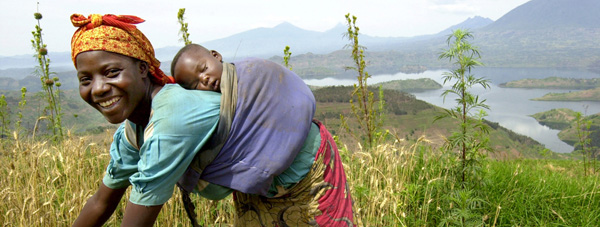
    Rwanda, Rukira, February 2005
    World Food Day and the Day of Action is October 16, which takes place during the Food Week of Action, October 9-17.

    People and groups across the U.S. and worldwide are taking back their food systems – fighting for their land and waterways, reclaiming vacant lots, teaching others how to grow food, and developing local distribution systems – while simultaneously creating jobs, providing healthy food, protecting Mother Earth, building rural-urban connections, campaigning for just policies, and revitalizing their communities.

    Take action to advance food sovereignty on October 16!  Learn about the Priority Actions for this year and find other resources.

    1)  Announce your event or action: bit.ly/29CPV9w

    2)  See the global list: bit.ly/action16list

    3)  Open the map of actions: bit.ly/wfdmap16

    Join the Food Week Webinar on ‘TIAA-CREF and Land Grabs’ on Thursday, October 13 at 8:00pm (ET) / 5:00pm (PT).  Register for free here

    The 2016 Food Sovereignty Prize Ceremony will be in Seattle this year.

    Save

    Save

    Save

    Save

    Save

    Save

    Save

    Save

    Save

  • Announcing 2016 Food Sovereignty Prize Honorees

    Announcing 2016 Food Sovereignty Prize Honorees

    The 8th annual Food Sovereignty Prize will be awarded at Town Hall Seattle on Saturday October 15 to Alliance for Food Sovereignty in Africa and Farmworker Association of Florida!  Register for the event

    FOR IMMEDIATE RELEASE
    International Allies Challenge Corporate Control of the Food System and False Solutions of Biotechnology Eighth Annual Food Sovereignty Prize, Honors Grassroots Organizations Calling Big Ag’s Bluff

    SEATTLE, WA, August, 31 2016 ­– The US Food Sovereignty Alliance (USFSA) is pleased to announce the honorees of the eighth annual Food Sovereignty Prize: the Alliance for Food Sovereignty in Africa (AFSA) and the Farmworker Association of Florida (FWAF). The honorees were selected for their success in promoting food sovereignty, agroecology and social justice to ensure that all people have access to fresh, nutritious food produced in harmony with the planet.
    Lauded as an alternative to the World Food Prize, the Food Sovereignty Prize champions real solutions to hunger and is recognized by social movements, activists and community-based organizations around the world. The 2016 honorees are strident in their resistance to the corporate control of our food system, including false solutions of biotechnology that damage the planet while exacerbating poverty and hunger. Their programs and policies support small-scale farmers and communities, build unified networks, and prioritize the leadership of food providers, including women, farmworkers, peasants, indigenous peoples and other marginalized communities within the system.

    “Hunger is not a technical problem, it’s a political problem,” said John Peck, Executive Director of Family Farm Defenders and US Food Sovereignty Alliance member. “Small farmers have had the solution to hunger for millennia in agroecology and food sovereignty.”

    “The Borlaug and Gates Foundations and multinational corporations like Monsanto promote biotechnology because they profit from it. Ask the millions of farmworkers, family farmers and family fishermen feeding their communities what they need and they will tell you: access to land, clean water and their own seeds,” noted Diana Robinson, Campaign and Education Coordinator at the Food Chain Workers Alliance and US Food Sovereignty Alliance member.

    About the Honorees

    The Alliance for Food Sovereignty in Africa (AFSA) was founded in 2008 by a group of activist networks and launched in Durban, South Africa, during the 2011 alternative people’s climate summit, organized to counter the UN Framework Convention on Climate Change Conference Of the Parties 17 talks (COP17). AFSA brings together organizations representing smallholder farmers, pastoralists and hunter/gatherers; indigenous peoples; youth, women and consumer networks; people of faith; and environmental activists from across Africa. Together they advocate for community rights and family farming, promote traditional knowledge systems, and protect natural resources. In the face of increased corporate agribusiness interests threatening their food systems, including massive land and water grabs, the criminalization of seed-saving practices, and false solutions to climate change such as so-called “Climate-Smart Agriculture”, AFSA unites the people most impacted by these injustices to advance food sovereignty through agroecological practices, policy work and movement-building efforts.

    Bern Guri, The Alliance for Food Sovereignty in Africa’s chairperson, noted, “Africa has a myriad of ways to feed her people and to keep her environment safe. However, a few international corporations from the global North have generated approaches strictly for their own profit by misleading our leaders and our people, stealing our seeds and culture, and destroying our environment.”

    For AFSA it is clear that the way forward will allow food producers, supported by consumers, to take control of production systems and markets to provide healthy and nutritious food. Facing the many ecological, economic and social challenges in today’s world requires an urgent transition to agroecology to establish the ecologically sustainable, socially just and nutritious food systems of the future, and it can be done through the collective, inclusive and democratic co-generation of the knowledge held by farmers, consumers, researchers and African governments, who are meant to serve the interests of their (farming) populations.

    The Farmworker Association of Florida (FWAF), founded in 1986, has a long-standing mission to build power among farmworker and rural low-income communities to gain control over the social, political, workplace, economic, health and environmental justice issues affecting their lives. Their guiding vision is a social environment in which farmworkers are treated as equals, not exploited and deprived based on race, ethnicity, immigrant status, or socioeconomic status. As members of the world’s largest social movement, La Via Campesina, FWAF is building collective power and a unified force for providing better living and working conditions, as well as equity and justice for farmworker families and communities. This includes building leadership and activist skills among communities of color who are disproportionately affected by pesticide exposure/health problems, environmental contamination, racism, exploitation and political under-representation while lifting up women’s wisdom and leadership.

    “Farmworker families pay the greatest price in the corporate food system of today. They work in fields of poison and exploitation so that people can easily access cheap foods,” explained Elvira Carvajal, Farmworker Association of Florida’s lead organizer in Homestead, Florida. “We have a vision to bring together the community around the art of healing with good food and herbs, which is part of our culture. We practice agroecology in the community by sharing the knowledge we bring from our grandparents, our mothers, our families, our ancestors. The meeting of cultures that happens in the gardens, where we grow our own food without chemicals, and sharing plants and traditions and knowledge across generations is a beautiful thing. I am proud of our own people practicing food and seed sovereignty.”

    US Food Sovereignty Alliance members Community to Community Development and Community Alliance for Global Justice will host the prize for the first time in the Northwest, welcoming the 2016 Honorees and Alliance partners from across the country to Seattle and Bellingham for several days of activities and actions. The prize ceremony will take place on Saturday, October 15th at 6pm at Town Hall at Eighth and Seneca in Seattle.

    For event updates and more information on the prize and this year’s winners visit www.foodsovereigntyprize.org, follow the Food Sovereignty Prize at facebook.com/FoodSovereigntyPrize and join the conversation on Twitter (#foodsovprize).

    ###

    About US Food Sovereignty Alliance

    The US Food Sovereignty Alliance (USFSA) is a US-based alliance of food justice, anti-hunger, labor, environmental, faith-based and food producer groups that upholds the right to food as a basic human right and works to connect our local and national struggles to the international movement for food sovereignty. The Alliance works to end poverty, rebuild local food economies and assert democratic control over the food system, believing that all people have the right to healthy, culturally appropriate food produced in an ecologically sound manner. Learn more at usfoodsovereigntyalliance.org.

    Media Contacts:

    Heather Day, Executive Director, Community Alliance for Global Justice
    Heather@cagj.org |206.724.2243
    Colette Cosner, Communications Coordinator, Community to Community Development
    Colettecosner@gmail.com | 206.250.2680

  • USFSA Hosts Learning Call on People’s Agrarian Reform

    On April 17, 2016, Via Campesina organized the International Conference on Agrarian Reform and developed a new way to shape and promote a society in which food producers are supported and everyone has access to healthy food and a secure livelihood. They issued the Marabá Declaration, which is a call for everyone around the world to engage in work to build People’s Agrarian Reform.

    This call, organized by the USFSA Land and Resource Reform Team on May 23, 2016, features farmers and activists sharing what People’s Agrarian Reform is, what it means for current and potential food producers, and how it affects rural and urban communities in the U.S.

    Speakers:

    • Saulo Araujo – WhyHunger
    • Dena Hoff – Northern Plains Resource Council, National Family Farm Coalition, Via Campesina ICC
    • Blain Snipstal – Black Dirt Farm Collective, Southeastern African-American Farmers Organic Network, Rural Coalition
    • Eric Holt-Giménez -Food First/Institute for Food and Development Policy

    Moderated by Lisa Griffth, National Family Farm Coalition