ABOUT THE IV ASSEMBLY
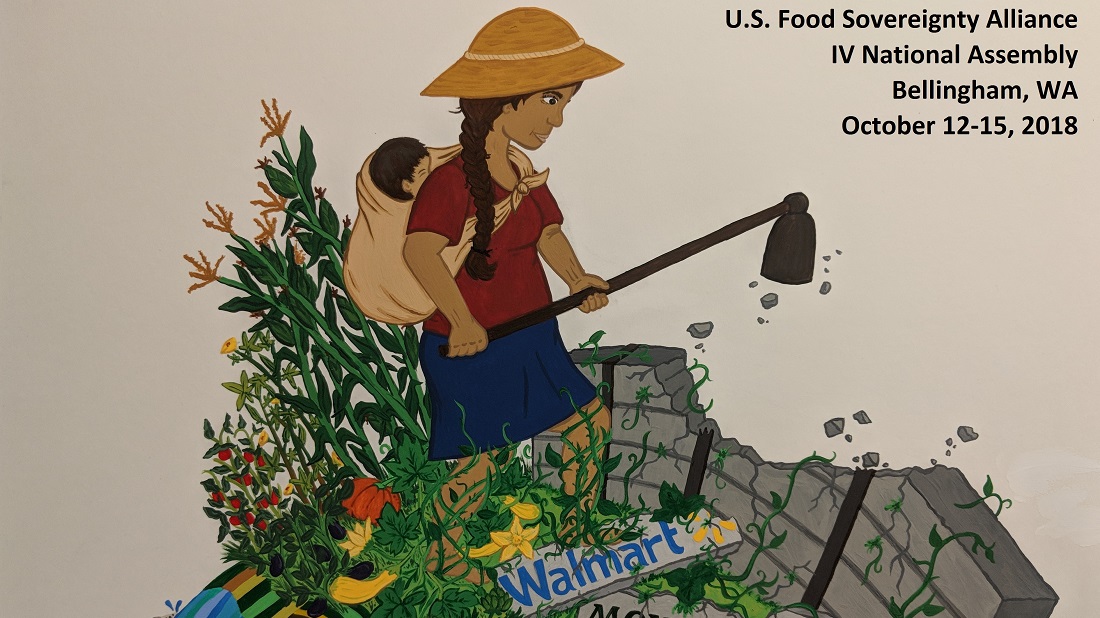
All four regions of the USFSA held regional assemblies this year, which involved members and allies, to discuss their priorities and objectives as well as to mobilize participants toward the IV National Assembly. This is the first national membership gathering since 2015 in Des Moines, Iowa.
The IV Assembly is a space for USFSA members, domestic allies, and international guests to reflect on our histories, build relationships, and increase collective strength to advance the food sovereignty movement in the U.S. and globally. USFSA members are expected to participate in decision-making processes concerning the creation of work plans to guide the Alliance until the V Assembly (projected for 2020).
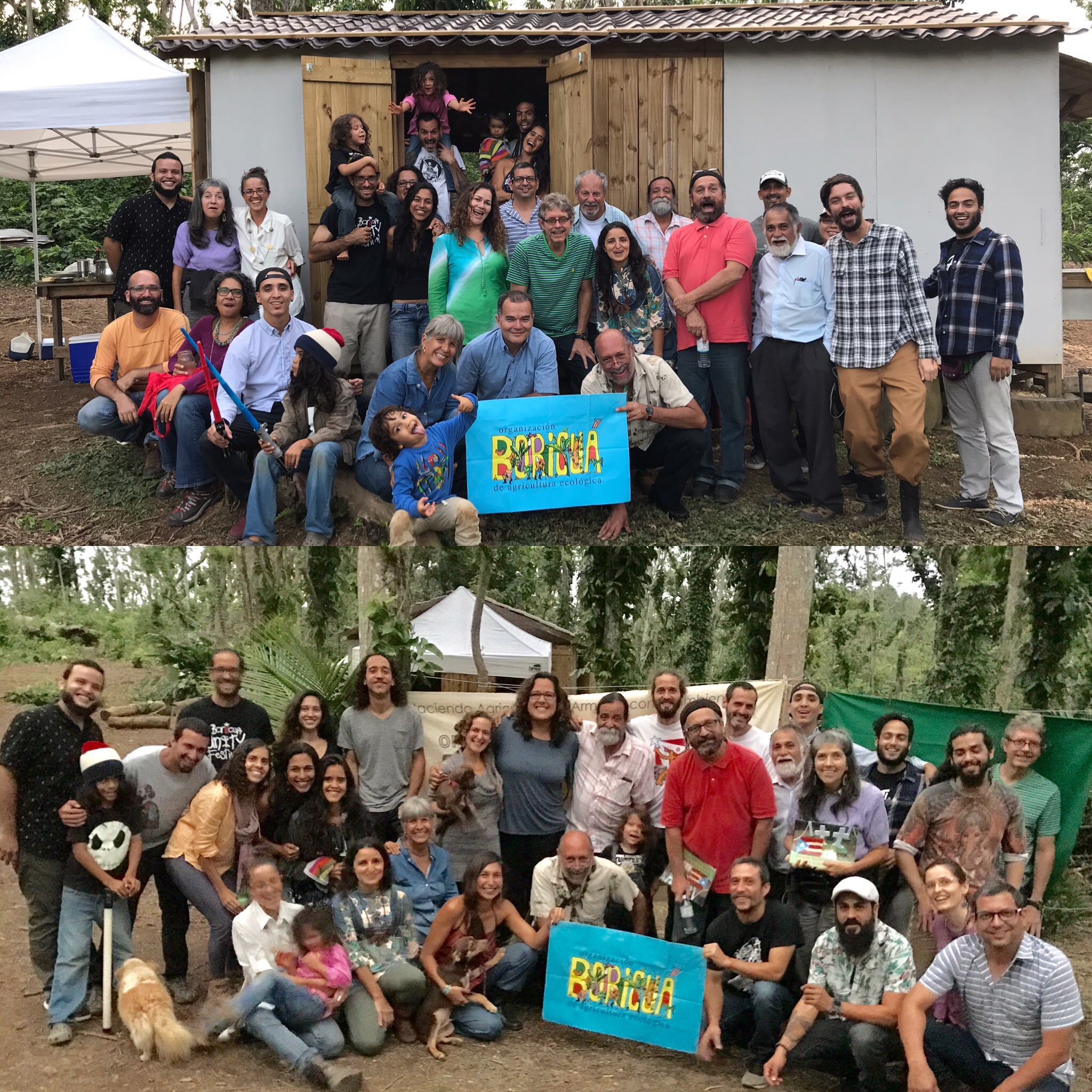
The tenth annual Food Sovereignty Prize ceremony will occur on Sunday evening (October 14). Representatives of Black Mesa Water Coalition and Organización Boricuá de Agricultura Ecológica de Puerto Rico, the domestic and international recipients of the 2018 Prize, will give presentations during the public event.
WHO CAN PARTICIPATE?
We welcome allies and we value your participation and perspectives. When it comes to making decisions, the Alliance is made up of organizational members, and their representatives are responsible to make decisions and determine the priorities and directions for the Alliance. That said, we invite you to explore becoming an organizational member, and we encourage you to be involved in working groups/collectives in the future, whether you are a member or not.
SCHEDULE (subject to change)
THURSDAY 10/11
Arrivals to Bellingham, WA
Registration at Community to Community Development (C2C) office at 203 West Holly Street, Suite 311; Bellingham, WA 98225
3:00 – 6:00 PM / Local Site Visits (led by C2C)
6:00 PM / Dinner at First Christian Church next to C2C Agroecology Garden (495 E Bakerview Rd)
FRIDAY 10/12
At the First Congregational Church from 8:00 AM to 4:00 PM (2401 Cornwall Ave)
7:00 AM / Breakfast at hotels
8:00 AM / Opening Mística and Welcome by Facilitators
9:00 AM / Introductions
10:00 AM / Plenary: Overview of the USFSA
10:30 AM / Questions and Answers
11:00 AM / Plenary: Regional Assembly Reports and the Youth Process
12:10 PM / Closing
12:30 PM / Lunch at the church
1:30 PM / Activity led by the Arts and Culture Group
2:00 PM / Regional Meetings
3:30 PM / Instructions about local solidarity action
4:00 PM / Solidarity Action in Bellingham
6:00 PM / Dinner at the Mountain Room of Boundary Bay (1103 Railroad Ave)
7:30 PM / Fundraiser Celebration for C2C’s 12th Anniversary at the Mountain Room of Boundary Bay
SATURDAY 10/13
At First Congregational Church from 8:00 AM to 7:30 PM (2401 Cornwall Ave)
7:00 AM / Breakfast at hotels
8:00 AM / Mística
9:00 AM / Panel: Building Food Sovereignty in the Crises of Capitalism
10:00 AM / Questions and Answers
10:30 AM / Break
10:45 AM / Building a Common Vision
12:30 PM / Lunch
1:30 PM / Activity led by the Arts and Culture Group
1:45 PM / Description of Workshops
2:00 PM / Workshops
(1) Access and Right to Food
(2) The Rights of Food Chain Workers
(3) Land and Farm Justice
(4) Agroecology and Food Sovereignty
3:30 PM / Break
4:00 PM / Workshops
(1) Political Education
(2) Alliance Excellence
(3) Communications
(4) Arts and Culture
(5) Connections to Global Movements and Allies
6:00 – 7:30 PM / Dinner at the church
8:00 PM / Cultural Night at the Mountain Room of Boundary Bay (1103 Railroad Ave)
SUNDAY 10/14
At the Crystal Room of the Leopold (1224 Cornwall Ave)
7:00 AM / Breakfast at hotels
8:00 AM / Mística
9:00 AM / Plenary: Review of Friday and Saturday
9:30 AM / Regional Meetings
10:45 AM / Break
11:00 AM / Summary of Regional Conversations, Membership, and Roles in the Alliance
12:30 PM / Lunch at the Leopold
1:30 PM / Activity led by the Arts and Culture Group
2:00 PM / Presentation of the New Work Plan; Recognition of Regional Coordinators, Collective Members, and the Secretariat
2:30 PM / Reading of the Final Declaration
3:00 PM / Comments and Decision on the Declaration
4:00 PM / Closing Mística
5:30 PM / Food Sovereignty Prize Ceremony at Happy Chap, Arts Space (1215 Cornwall Ave. Suite 101)
7:30 PM / Dinner and Celebration at Happy Chap, Arts Space
LOGISTICS
LOCATIONS OF ASSEMBLY MEETINGS AND EVENTS
(All locations are in Bellingham, WA)
THURSDAY
– Registration: Community to Community Development (C2C) office (203 West Holly Street, Suite 311)
– Dinner: First Christian Church, next to C2C Agroecology Garden (495 E Bakerview Rd)
FRIDAY
– Meetings and Lunch: First Congregational Church (2401 Cornwall Ave)
– Dinner and Fundraiser: Mountain Room, Boundary Bay (1103 Railroad Ave)
SATURDAY
– Meetings, Lunch, and Dinner: First Congregational Church
– Cultural Night: Mountain Room, Boundary Bay (1103 Railroad Ave)
SUNDAY
– Meetings and Lunch: Crystal Room at Leopold (1224 Cornwall Ave)
– Food Sovereignty Prize, Dinner, and Celebration: Happy Chap, Arts Space (1215 Cornwall Ave. Suite 101
FOOD
– Breakfast is served at your hotel on Friday–Monday mornings.
– Lunch will be catered during the Assembly on Friday–Sunday.
– Dinner will be served Thursday–Sunday night.
LODGING
– Those who requested lodging during online registration will stay at one of three hotels:
– Coachman Inn (120 N Samish Way, Bellingham, WA 98225; 360-671-9000)
– Bellingham Lodge (101 N Samish Way; Bellingham, WA 98225; 360-733-8280)
– GuestHouse Inn (805 Lakeway Dr.; Bellingham, WA 98229; 360-671-9600)
– We already have rooms assigned. We will give your rooms at registration check-in.
– Lodging check-in will be on Thursday. Check-out will be on Monday after breakfast.
TRANSPORTATION
– Shuttles will be organized for traveling between the Seattle airport (SeaTac) and Bellingham.
– All ground transportation to and from the Assembly sites will be covered Thursday – Monday.
– Heather Day (206-724-2243) and Simone Adler (215-873-4672) with Community Alliance for Global Justice are coordinating transportation. If you requested transportation from the Seattle airport, Heather and Simone will contact you via email to follow-up with information.
SITES FOR LEISURE
– Whatcom Falls Park (1401 Electric Avenue)
– Pickford Film Center (1318 Bay St.)
– Community Food Coop (1220 N Forest St.)
– Whatcom Art Market (1103 11th St.)
– Web Locker Restaurant (734 Coho Way)
– Waterfront Trail- Port of Bellingham
– Trove Coffee (228 N. Samish Way),
– Camber Coffee (221 W. Holly St.)
– Black Drop Coffee (300 W. Champion St.)
PERSONAL ITEMS TO BRING:
– water bottle and reusable cutlery
– snacks
– a notepad and pens
– warm clothes
– a rain jacket or umbrella
– comfortable shoes
– any medications you need
– cash for personal expenses
ADDITIONAL NOTES
– It has been requested that the Assembly remain a fragrance-free space.
(Resource: http://www.eastbaymeditation.org/accessibility/fragrancefree.html)
– The Assembly is a drug-free space. Alcohol is only permitted during evening celebrations.
– Please be respectful of the meeting sites. Assist with clean-up or other tasks if you are able.
– Please speak slowly and loud enough for the interpreters to hear you clearly.
2018 FOOD SOVEREIGNTY PRIZE
2018 RECIPIENTS
– Black Mesa Water Coalition
– Organización Boricuá de Agricultura Ecológica de Puerto Rico
PAST WINNERS
2017 – Northwest Atlantic Marine Alliance / Zimbabwe Smallholder Organic Farmers’ Forum
2016 – Farmworker Association of Florida / Alliance for Food Sovereignty in Africa
2015 – Federation of Southern Cooperatives / Black Fraternal Organization of Honduras
2014 – Community to Community Development / Union of Agriculture Work Committees, Palestine
2013 – Group of 4, Dessalines Brigade, La Via Campesina Haiti
BACKGROUND INFORMATION
USFSA STRUCTURE
– The USFSA began in 2010 (Please read the Alliance’s new publication, “Our History”).
– After the III Assembly in 2015, the Alliance transitioned to a regional structure.
– The National Coordination should consist of two coordinators from each region, one members of the Secretariat, and one representative from each working group.
REGIONAL COORDINATORS
– West / Pacific Northwest: Doria Robinson (Urban Tilth) / Edgar Franks (Community to Community Development)
– Midwest: John Peck (Family Farm Defenders) / Stephen Bartlett (Sustainable Agriculture of Louisville)
– Northeast: Kathia Ramirez (CATA Farmworker Support Committee) / Julianna Fisher (Northwest Atlantic Marine Alliance)
– Southeast: Ivan Vasquez (Farmworkers Association of Florida)
SECRETARIAT
– Members are from WhyHunger, Grassroots International, Pesticide Action Network, and Presbyterian Hunger Program.
WORKING GROUPS
– Land and Resource Grabs
– Immigrant Rights and Trade
– Rights of Mother Earth and Defense of the Commons
USFSA MISSION (based on Founding Documents)
– The USFSA works to end poverty, rebuild local food economies, and assert democratic control over food systems. We believe in the basic human rights to water and healthy, culturally appropriate food produced in an ecologically sound manner.
USFSA VISION (based on Founding Documents)
– Global Solidarity: We uphold the internationally-recognized principles of food sovereignty.
– Systems Change: We aim to transition away from the corporate-controlled food system.
– Social Transformation: Our solutions must dismantle systemic food injustice rooted in race, class, and gender-based oppression.
– Defense of Mother Earth: We strive to regenerate biodiversity and support ecological farming and fishing practices that protect life on Earth.
– Humanism and Cultural Diversity: We recognize our human commonalities and seek to restore traditional ways of growing, preparing, sharing, and eating food as a community.
– Respect for Life over Profit: We honor everyone’s work in food systems, including unpaid, underpaid, and devalued labor
NATIONAL MEMBERSHIP ASSEMBLIES
IV: Bellingham, WA 2018
III: Des Moines, IA 2015
II: Tampa Bay, FL 2013
I: Oakland, CA 2011
– The USFSA recognizes two categories of members:
Grassroots Organizations / Grassroots-Support Organizations
– Founding members included: Agricultural Missions Inc.; Community to Community Development; Food First; Food Chain Workers Alliance; Grassroots International; Maryknoll Office for Global Concerns; National Family Farm Coalition; Pesticide Action Network of North America; Presbyterian Hunger Program; and WhyHunger.
SEVEN PRINCIPLES OF FOOD SOVEREIGNTY
FOOD: A BASIC HUMAN RIGHT
Everyone must have access to safe, nutritious and culturally appropriate food in sufficient quantity and quality to sustain a healthy life with full human dignity. Each nation should declare that access to food is a constitutional right and guarantee the development of the primary sector to ensure the concrete realization of this fundamental right.
AGRARIAN REFORM
A genuine agrarian reform is necessary which gives landless and farming people – especially women – ownership and control of the land they work and returns territories to indigenous peoples. The right to land must be free of discrimination the basis of gender, religion, race, social class or ideology; the land belongs to those who work it.
PROTECTING NATURAL RESOURCES
Food Sovereignty entails the sustainable care and use of natural resources, especially land, water, and seeds and livestock breeds. The people who work the land must have the right to practice sustainable management of natural resources and to conserve biodiversity free of restrictive intellectual property rights. This can only be done from a sound economic basis with security of tenure, healthy soils and reduced use of agrochemicals.
REORGANIZING FOOD TRADE
Food is first and foremost a source of nutrition and only secondarily an item of trade. National agricultural policies must prioritize production for domestic consumption and food self-sufficiency. Food imports must not displace local production nor depress prices.
ENDING THE GLOBALIZATION OF HUNGER
Food Sovereignty is undermined by multilateral institutions and by speculative capital. The growing control of multinational corporations over agricultural policies has been facilitated by the economic policies of multilateral organizations such as the WTO, World Bank and the IMF. Regulation and taxation of speculative capital and a strictly enforced Code of Conduct for TNCs is therefore needed.
SOCIAL PEACE
Everyone has the right to be free from violence. Food must not be used as a weapon. Increasing levels of poverty and marginalization in the countryside, along with the growing oppression of ethnic minorities and indigenous populations, aggravate situations of injustice and hopelessness. The ongoing displacement, forced urbanization, repression and increasing incidence of racism of smallholder farmers cannot be tolerated.
DEMOCRATIC CONTROL
Smallholder farmers must have direct input into formulating agricultural policies at all levels. The United Nations and related organizations will have to undergo a process of democratization to enable this to become a reality. Everyone has the right to honest, accurate information and open and democratic decision-making. These rights form the basis of good governance, accountability and equal participation in economic, political and social life, free from all forms of discrimination. Rural women, in particular, must be granted direct and active decision-making on food and rural issues.
Source: Food Sovereignty. Family Farm Defenders. http://familyfarmers.org/?page_id=50
SIX PILLARS OF FOOD SOVEREIGNTY
FOCUSES ON FOOD FOR PEOPLE
Food sovereignty puts the right to sufficient, healthy and culturally appropriate food for all individuals, peoples and communities, including those who are hungry, under occupation, in conflict zones and marginalized, at the center of food, agriculture, livestock and fisheries policies; and rejects the proposition that food is just another commodity or component for international agri-business.
VALUES FOOD PROVIDERS
Food sovereignty values and supports the contributions, and respects the rights, of women and men, peasants and small-scale family farmers, pastoralists, artisanal fisherfolk, forest dwellers, indigenous peoples and agricultural and fisheries workers, including migrants, who cultivate, grow, harvest and process food; and rejects those policies, actions and programs that undervalue them, threaten their livelihoods and eliminate them.
LOCALIZES FOOD SYSTEMS
Food sovereignty brings food providers and consumers closer together; puts providers and consumers at the center of decision-making on food issues; protects food providers from the dumping of food and food aid in local markets; protects consumers from poor quality and unhealthy food, inappropriate food aid and food tainted with genetically modified organisms; and resists governance structures, agreements and practices that depend on and promote unsustainable and inequitable international trade and give power to remote and unaccountable corporations.
PUTS CONTROL LOCALLY
Food sovereignty places control over territory, land, grazing, water, seeds, livestock and fish populations on local food providers and respects their rights. They can use and share them in socially and environmentally sustainable ways which conserve diversity; it recognizes that local territories often cross geopolitical borders and ensures the right of local communities to inhabit and use their territories; it promotes positive interaction between food providers in different regions and territories and from different sectors that helps resolve internal conflicts or conflicts with local and national authorities; and rejects the privatization of natural resources through laws, commercial contracts and intellectual property rights regimes.
BUILDS KNOWLEDGE AND SKILLS
Food sovereignty builds on the skills and local knowledge of food providers and their local organizations that conserve, develop and manage localized food production and harvesting systems, developing appropriate research systems to support this and passing on this wisdom to future generations; and rejects technologies that undermine, threaten or contaminate these, e.g. genetic engineering.
WORKS WITH NATURE
Food sovereignty uses the contributions of nature in diverse, low external input agroecological production and harvesting methods that maximize the contribution of ecosystems and improve resilience and adaptation, especially in the face of climate change; it seeks to heal the planet so that the planet may heal us; and, rejects methods that harm beneficial ecosystem functions, that depend on energy intensive monocultures and livestock factories, destructive fishing practices and other industrialized production methods, which damage the environment and contribute to global warming.
Source: 6 Pillars. Synthesis Report. Forum for Food Sovereignty (2007) https://nyeleni.org/IMG/pdf/31Mar2007NyeleniSynthesisReport-en.pdf