Category: Local Food & Farming

  • Justina’s Reflections on the US-South Africa Agroecology Exchange

    By Justina Ramirez, Farmworker Association of Florida community leader in Homestead, Florida

    Fourth in the South Africa-US Agroecology Exchange Article Series

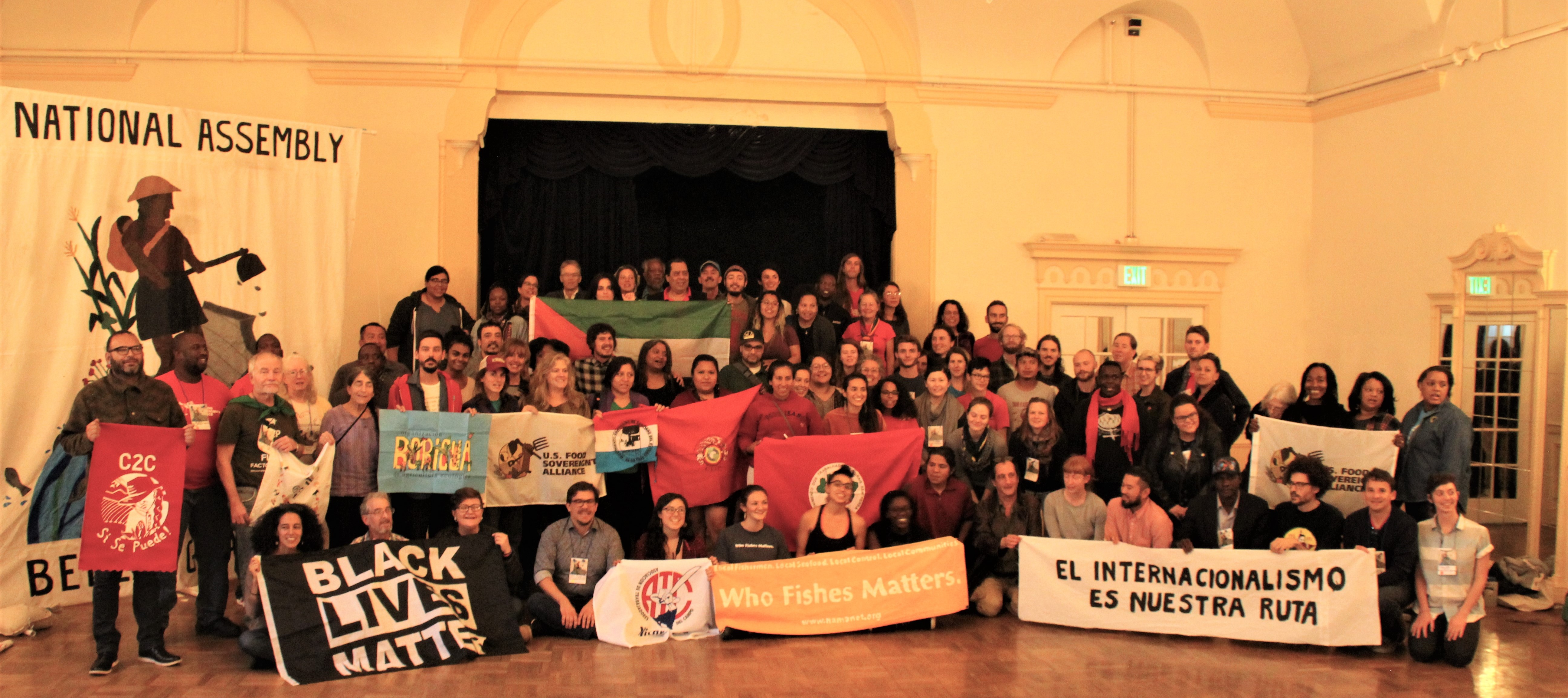
    IMG_2168In October 2017, I represented the Farmworker Association of Florida in a delegation of seven African American, Latinx, and Mexican farmers and farmworkers from the US arrive in Johannesburg, South Africa to participate in the second South Africa-US Agroecology Exchange. For 10 days, they traveled around urban and rural South Africa to meet with small farmers, farmworkers, Agroecologists, and organizers in the Food Sovereignty movement to learn and exchange social, political, and technical aspects of Agroecology.

    Farmers and farmworkers everywhere in the planet are going through similar struggles and fighting the same issues—mainly, the power and the violence of industrial agriculture. Their situation in South Africa is different than ours here in Florida in two big ways. First, they’ve been going through a major drought that has lasted since 2010. They’re struggling to keep their crops and their animals alive. Second, they have a lot of transnational corporations that are grabbing lands and sometimes stealing lands and the government supports the corporations, not its people. We struggle with transnational corporations here too, but in a different way.

    The people we met were so generous in the way they shared their wisdom, experience, struggles and joys with us. It was incredible to see how they persevere in the face of systemic oppression.

    I plan to teach my community how to make and use liquid biofertilizer to improve the health and vitality of our gardens and protect them from pests. Claudia from the Mopani Farmers Association showed us how to make it using leaves of the Moringa and papaya plants. We have these plants in all of our gardens and many of our homes! 

    IMG_2170

    I’m so grateful to the organizers and our hosts in South Africa for this incredible experience! I know we’re going to find way to unite our strengths and support each other as we struggle for food sovereignty here and in South Africa.

    IMG_2169

  • Nation-wide Day of Action on World Food Day

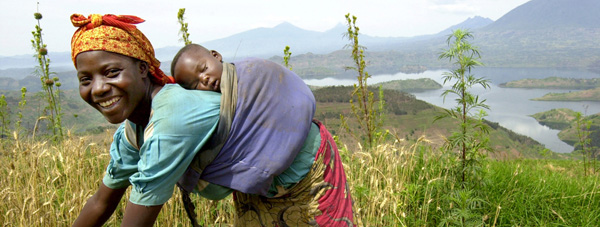
    Rwanda, Rukira, February 2005
    World Food Day and the Day of Action is October 16, which takes place during the Food Week of Action, October 9-17.

    People and groups across the U.S. and worldwide are taking back their food systems – fighting for their land and waterways, reclaiming vacant lots, teaching others how to grow food, and developing local distribution systems – while simultaneously creating jobs, providing healthy food, protecting Mother Earth, building rural-urban connections, campaigning for just policies, and revitalizing their communities.

    Take action to advance food sovereignty on October 16!  Learn about the Priority Actions for this year and find other resources.

    1)  Announce your event or action: bit.ly/29CPV9w

    2)  See the global list: bit.ly/action16list

    3)  Open the map of actions: bit.ly/wfdmap16

    Join the Food Week Webinar on ‘TIAA-CREF and Land Grabs’ on Thursday, October 13 at 8:00pm (ET) / 5:00pm (PT).  Register for free here

    The 2016 Food Sovereignty Prize Ceremony will be in Seattle this year.

    Save

    Save

    Save

    Save

    Save

    Save

    Save

    Save

    Save

  • Call to Action

    Call to Action

    The following Call to Action is adapted from the Call to Action to End the Food Crisis issued by the US Working Group on the Food Crisis in 2008 and endorsed by several thousand organizations and individuals. It is included here as a springboard for future action of the Alliance, with the understanding that it will evolve to reflect new ideas, voices, and perspectives as the Alliance develops.

    We call on people across the United States to use our political power and actions to fight poverty by rebuilding local food economies, and specifically for food system changes that:

    1) Stabilize prices for farmers and consumers locally, nationally and globally by:

    • Ending rampant financial speculation in food;
    • Establishing and strengthening publicly-owned domestic, regional, and international strategic food reserves;
    • Suspending international trade and investments in industrial-scale biofuels (a.k.a. agrofuels);
    • Transforming corporate-oriented food aid;
    • Ensuring fair prices to farmers, fishers, pastoralists and other food providers;
    • Establishing equitable regional and global trade arrangements that enable countries, communities, and all farmers, fishers, pastoralists and other food providers to meet food and livelihood needs.

    2) Balance power in the food system by:

    • Reducing the political influence of agrifood corporations on public policy, e.g., by strengthening antitrust enforcement on those corporations and reducing their unregulated market power;
    • Convening multi-stakeholder, representative food policy councils at state and local levels.

    3) Make agriculture environmentally sustainable by:

    • Supporting family farms’ transition to agroecological practices through incentives, purchasing and procurement;
    • Halting expansion of government-supported agrofuels (biofuels) and transgenic seeds programs, mandates, and tax incentives and other subsidies
    • Directing state and national farm policy, R&D, education and investment toward agroecological farming and sustainable food businesses.

    4) Guarantee the right to healthy food by building local and regional food systems and fostering social, ecological and economic justice by:

    • Calling on the US to join the community of nations to support the human right to food;
    • Supporting domestic food production and independent, community-based food cooperatives and businesses in the United States and around the world;
    • Establishing living wages, so that everyone can afford healthy food;
    • Implementing full workers’ rights for farm workers and other food system workers;
    • Implementing agrarian reform that takes land out of the hands of large corporations and puts it in the hands of communities for local food production.
    • Strengthening the social safety net for low-income people across the US;
    • Creating a solidarity economy that puts people before corporate profit in the US and around the world.

    Through food sovereignty, the Earth can feed all living things.