Category: Food Sovereignty

Contains all pages under the Food Sovereignty menu item.

  • A medida que COVID se convierte en una crisis de hambre, el premio reconoce las soluciones transformadoras

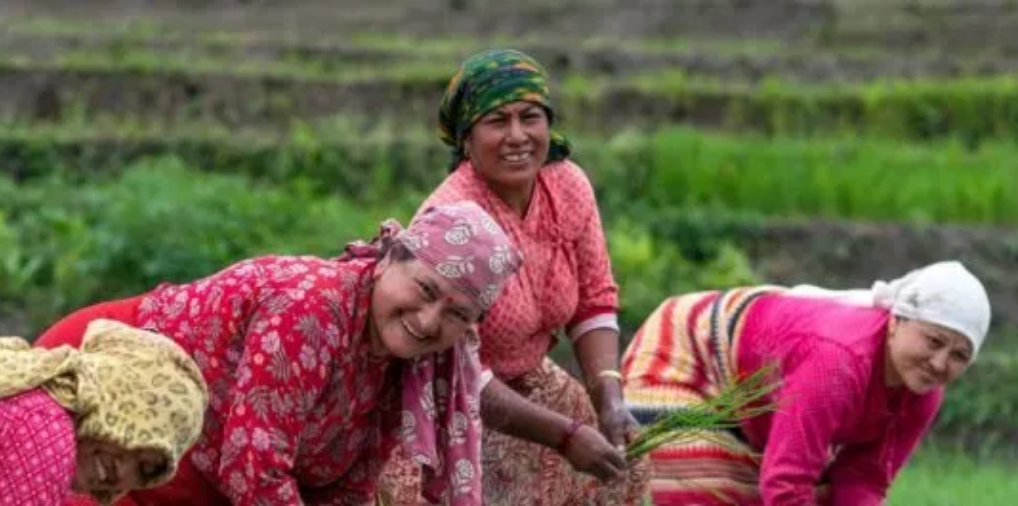
    El duodécimo Premio Anual de Soberanía Alimentaria honra a la Asociación Comunitaria Bantú de Maine y a la Federación de Campesinos de Todo Nepal

    LOUISVILLE, KY, 16 de octubre de 2020 – Mientras que la pandemia COVID-19 añade 83-132 millones de personas a los hambrientos del mundo este año, el Premio a la Soberanía Alimentaria destaca los esfuerzos de base que satisfacen las necesidades urgentes al mismo tiempo que promueven soluciones transformadoras. Organizado por la Alianza para la Soberanía Alimentaria de los Estados Unidos (USFSA), el Premio a la Soberanía Alimentaria se anuncia el Día Mundial de la Alimentación. El Premio a la Soberanía Alimentaria se reconoce como un contrapeso al Premio Mundial de la Alimentación, que los críticos denuncian por su singular enfoque en la producción de alimentos basada en los planteamientos de la Revolución Verde.

    Como explicó Lisa Griffith, de la Coalición Nacional de Granjas Familiares, organización miembro de la USFSA, “Incluso antes de que se produjera la pandemia el invierno pasado, el hambre en el mundo había aumentado en 60 millones de personas en los últimos cinco años, y 750 millones de personas padecen una grave inseguridad alimentaria en 2019, mientras que la mayoría de los cultivos básicos han alcanzado niveles de producción sin precedentes. A medida que COVID-19 se fue extendiendo por todo el mundo, fueron los esfuerzos de la comunidad -no el sistema alimentario industrializado- los que distribuyeron los alimentos y protegieron a los trabajadores agrícolas y de la alimentación. El Premio Mundial de la Alimentación perpetúa el mito de que un sistema industrializado puede producir su salida del hambre cuando lo que realmente se necesita es un sistema alimentario justo y sostenible”.

    Crédito de la foto: Sijie Yuan

    Los galardonados con el Premio de Soberanía Alimentaria 2020 son la Asociación de la Comunidad Bantú Somalí (SBCA) de Maine y la Federación de Campesinos de Todo Nepal (ANPFa). Las granjas de liberación de la Asociación de la Comunidad Bantú Somalí han servido de salvavidas para la seguridad alimentaria y financiera de más de 200 agricultores refugiados cuyas comunidades se ven desproporcionadamente afectadas tanto por COVID como por el hambre, al tiempo que sirven a la comunidad en general, incluyendo el suministro de alimentos frescos y saludables a las escuelas locales. Según Jennifer Taylor, de la Granja Orgánica de Lola en Georgia, también de la USFSA, “Al tiempo que lidera la transformación de los sistemas alimentarios en Maine, la Asociación de la Comunidad Bantú Somalí se ha enfrentado tanto al penetrante racismo estructural expuesto por el movimiento Black Lives Matter como a las políticas de inmigración inhumanas unidas al sentimiento antiinmigratorio”. Particularmente inspirador es el nuevo Little Jubba Central Maine Agrarian Commons de la SBCA, un innovador modelo de propiedad colectiva de la tierra y de agricultura, inspirado en el tradicional modelo somalí ishkashito de compartir cooperativamente”.

    Foto cortesía de ANPFa

    Con más de dos millones de miembros, la Federación de Campesinos de Todo Nepal también está a la vanguardia de la transformación de los sistemas alimentarios. Al igual que la SBCA se esfuerza por desmantelar el racismo en el sistema alimentario y más allá de él, la ANFPa se esfuerza por desmantelar el sistema de castas, así como el sexismo y la discriminación por motivos de edad, con ramas especiales dedicadas al empoderamiento de los dalits (“intocables” en el sistema de castas), las mujeres y los jóvenes. Reconociendo que la realización de los derechos humanos es esencial para poner fin al hambre, la ANFPA ha desempeñado un papel activo en el proceso de democratización de Nepal, logrando la consagración de la soberanía alimentaria en la nueva constitución del país. Nepal es ahora uno de los varios países del mundo que han adoptado la soberanía alimentaria en su legislación, y la ANFPA ha estado dirigiendo los esfuerzos nacionales en materia de aplicación. El ANFPa también ha participado activamente en las actividades de socorro de COVID, incluida la distribución de materiales de socorro, la coordinación con los gobiernos locales en la gestión de los suministros de alimentos y la labor de promoción de políticas.

     El enfoque del Premio de Soberanía Alimentaria en la acción colectiva y la construcción de movimientos contrasta fuertemente con el Premio Mundial de la Alimentación, según Chung-Wha Hong, de Grassroots International, miembro de la USFSA, quien añade: “Frente a COVID, los movimientos sociales han sido los primeros en responder, especialmente entre las comunidades más olvidadas por los gobiernos, al mismo tiempo que han hecho demandas visionarias para superar las injusticias estructurales que impulsan el hambre”.

    La Asociación de la Comunidad Bantú de Somalia y la Federación de Campesinos de Nepal serán reconocidas en una ceremonia virtual a principios de diciembre, que estará abierta al público. En www.usfoodsovereigntyalliance.org y www.facebook.com/USFoodSovAlliance se publicará más información sobre los galardonados y la ceremonia de entrega de premios.

    Acerca de la Alianza para la Soberanía Alimentaria de los Estados Unidos

    La Alianza para la Soberanía Alimentaria de los Estados Unidos (USFSA) es una alianza con sede en los Estados Unidos de grupos de justicia alimentaria, antihambre, laborales, ambientales, religiosos y de productores de alimentos que defiende el derecho a la alimentación como derecho humano básico y trabaja para conectar nuestras luchas locales y nacionales con el movimiento internacional para la soberanía alimentaria. La Alianza trabaja para acabar con la pobreza, reconstruir las economías alimentarias locales y afirmar el control democrático sobre el sistema alimentario, creyendo que todas las personas tienen derecho a una alimentación sana y culturalmente apropiada, producida de forma ecológica. Más información en usfoodsovereigntyalliance.org.

    Traducción realizada con la versión gratuita del traductor www.DeepL.com/Translator
  • Alors que COVID se développe dans la crise de la faim, le prix récompense les solutions transformatrices

    Le douzième prix annuel de la souveraineté alimentaire honore l’Association de la communauté bantoue somalienne du Maine et la Fédération des paysans du Népal

    LOUISVILLE, KY, 16 octobre 2020 – Alors que la pandémie COVID-19 ajoute 83 à 132 millions de personnes à la population mondiale affamée cette année, le Prix de la souveraineté alimentaire met en lumière les efforts déployés par les populations locales pour répondre aux besoins urgents tout en faisant avancer des solutions transformatrices. Organisé par l’Alliance américaine pour la souveraineté alimentaire (USFSA), le Prix de la souveraineté alimentaire est annoncé lors de la Journée mondiale de l’alimentation. Le Prix de la Souveraineté Alimentaire est reconnu comme un contrepoids au Prix Mondial de l’Alimentation, que les critiques décrient pour son accent singulier sur la production alimentaire basée sur les approches de la Révolution Verte.

    Comme l’explique Lisa Griffith de la National Family Farm Coalition, une organisation membre de l’USFSA, “Même avant que la pandémie ne frappe l’hiver dernier, la faim dans le monde avait augmenté de 60 millions de personnes au cours des cinq dernières années, 750 millions de personnes connaissant une grave insécurité alimentaire en 2019, alors que la plupart des cultures de base ont atteint des niveaux de production record. Alors que COVID-19 s’est répandu dans le monde entier, ce sont les efforts communautaires – et non le système alimentaire industrialisé – qui ont permis de distribuer la nourriture et de protéger les travailleurs agricoles et alimentaires. Le Prix mondial de l’alimentation perpétue le mythe selon lequel un système industrialisé peut produire pour se libérer de la faim alors qu’un système alimentaire juste et durable est ce dont on a vraiment besoin”.

    Crédit photo: Sijie Yuan

    Les lauréats du Prix de la souveraineté alimentaire 2020 sont la Somali Bantu Community Association (SBCA) du Maine et la All Nepal Peasants’ Federation (ANPFa). Les fermes de libération de la Somali Bantu Community Association ont servi de bouée de sauvetage pour la sécurité alimentaire et financière de plus de 200 fermiers réfugiés dont les communautés sont touchées de manière disproportionnée par le COVID et la faim, tout en servant la communauté au sens large, notamment en fournissant des aliments frais et sains aux écoles locales. Selon Jennifer Taylor de Lola’s Organic Farm en Géorgie, également de l’USFSA, “Tout en étant à l’avant-garde de la transformation des systèmes alimentaires dans le Maine, l’Association de la communauté bantoue somalienne a fait face à la fois au racisme structurel omniprésent exposé par le mouvement Black Lives Matter ainsi qu’à des politiques d’immigration inhumaines associées à un sentiment anti-immigrant. Le nouveau Little Jubba Central Maine Agrarian Commons de la SBCA est particulièrement inspirant. Il s’agit d’un modèle novateur de propriété foncière et d’agriculture collective, inspiré du modèle traditionnel somalien d’ishkashito de partage coopératif”.

    Photo gracieuseté de l’ANFPa

    Forte de plus de deux millions de membres, la Fédération des paysans du Népal est également à la pointe de la transformation des systèmes alimentaires. Tout comme la SBCA s’efforce de démanteler le racisme dans le système alimentaire et au-delà, l’ANFPa s’efforce de démanteler le système des castes, ainsi que le sexisme et l’âgisme, avec des branches spéciales consacrées à l’autonomisation des Dalits (“intouchables” dans le système des castes), des femmes et des jeunes. Reconnaissant que la réalisation des droits de l’homme est essentielle pour mettre fin à la faim, l’ANFPa a joué un rôle actif dans le processus de démocratisation du Népal, en obtenant l’inscription de la souveraineté alimentaire dans la nouvelle constitution du pays. Le Népal est maintenant l’un des nombreux pays du monde à avoir adopté la souveraineté alimentaire dans la loi, et l’ANPFa a dirigé les efforts nationaux de mise en œuvre. L’ANPFa a également été active dans les efforts de secours de COVID, notamment la distribution de matériel de secours, la coordination avec les gouvernements locaux sur la gestion des approvisionnements alimentaires et le travail de plaidoyer politique.

    L’accent mis par le Prix de la souveraineté alimentaire sur l’action collective et la création de mouvements contraste fortement avec le Prix mondial de l’alimentation, selon Chung-Wha Hong de Grassroots International, membre de l’USFSA, qui ajoute : “Face à COVID, les mouvements sociaux ont été les premiers à réagir le plus efficacement, surtout parmi les communautés les plus négligées par les gouvernements, tout en formulant des demandes visionnaires pour surmonter les injustices structurelles qui alimentent la faim”.

    L’Association de la communauté bantoue de Somalie et la Fédération de tous les paysans du Népal seront reconnues lors d’une cérémonie virtuelle début décembre, qui sera ouverte au public. De plus amples informations sur les lauréats et la cérémonie de remise des prix sont disponibles sur les sites www.usfoodsovereigntyalliance.org et www.facebook.com/USFoodSovAlliance.

    À propos de l’Alliance pour la souveraineté alimentaire des États-Unis

    L’Alliance américaine pour la souveraineté alimentaire (USFSA) est une alliance basée aux États-Unis de groupes de justice alimentaire, de lutte contre la faim, de syndicats, d’écologistes, de groupes confessionnels et de producteurs d’aliments qui défendent le droit à l’alimentation comme un droit humain fondamental et s’efforcent de relier nos luttes locales et nationales au mouvement international pour la souveraineté alimentaire. L’Alliance travaille pour mettre fin à la pauvreté, reconstruire les économies alimentaires locales et affirmer le contrôle démocratique sur le système alimentaire, en croyant que tous les peuples ont le droit à une alimentation saine, culturellement appropriée et produite de manière écologique. Pour en savoir plus, consultez le site usfoodsovereigntyalliance.org.

    ###
  • As COVID unfolds into hunger crisis, Food Sovereignty Prize recognizes transformative solutions

    FOR IMMEDIATE RELEASE   [ Español | Français ]

    Contact: Andrew Kang Bartlett, Presbyterian Hunger Program (PCUSA)
    Phone: (502) 608-5023
    Email: andrew.kangbartlett@pcusa.org

    As COVID unfolds into hunger crisis, prize recognizes transformative solutions

    Twelfth Annual Food Sovereignty Prize honors the Somali Bantu Community Association of Maine and the All Nepal Peasants’ Federation


    LOUISVILLE, KY, October 16, 2020 — As the COVID-19 pandemic adds 83–132 million people to the world’s hungry this year, the Food Sovereignty Prize highlights grassroots efforts meeting urgent needs while advancing transformative solutions. Organized by the US Food Sovereignty Alliance (USFSA), the Food Sovereignty Prize is announced on World Food Day. The Food Sovereignty Prize is recognized as a counterweight to the World Food Prize, which critics decry for its singular focus on food production based on Green Revolution approaches. 

    As explained by Lisa Griffith of the National Family Farm Coalition, a USFSA member organization, “Even before the pandemic struck last winter, global hunger had risen by 60 million people over the past five years, with 750 million people experiencing severe food insecurity in 2019, while most commodity crops have reached record production levels. As COVID-19 spread around the globe, it was community efforts – not the industrialized food system – that distributed food and protected farm and food workers. The World Food Prize perpetuates the myth that an industrialized system can produce its way out of hunger when a just and sustainable food system is what is truly needed.”
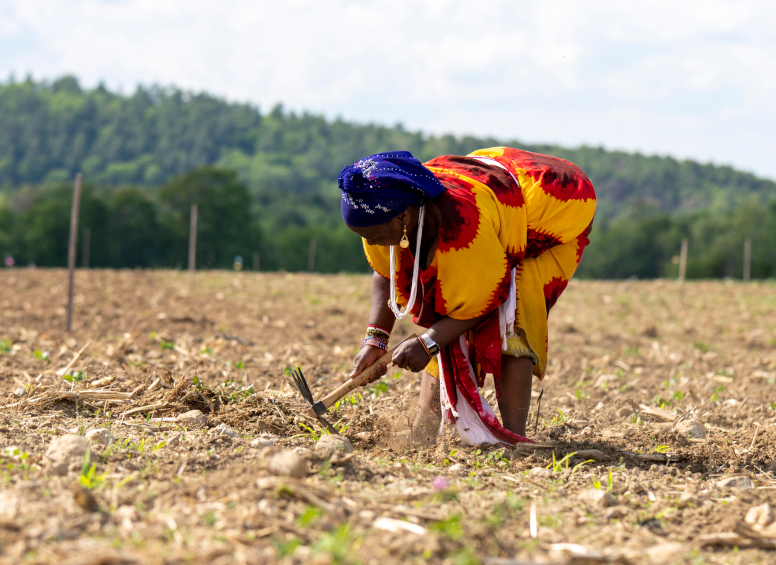
    Photo credit: Sijie Yuan

    The 2020 Food Sovereignty Prize awardees are the Somali Bantu Community Association (SBCA) of Maine and the All Nepal Peasants’ Federation (ANPFa). The Somali Bantu Community Association’s Liberation Farms have served as a lifeline of food and financial security to more than 200 refugee farmers whose communities are disproportionately hit by both COVID and hunger, while also serving the broader community, including provision of fresh, healthy foods to local schools.

    According to Jennifer Taylor of Lola’s Organic Farm in Georgia, also of the USFSA, “While leading the way in food systems transformation in Maine, the Somali Bantu Community Association has confronted both the pervasive structural racism exposed by the Black Lives Matter movement as well as inhumane immigration policies coupled with anti-immigrant sentiment. Particularly inspiring is SBCA’s new Little Jubba Central Maine Agrarian Commons, an innovative model of collective land ownership and farming, inspired by the traditional Somali ishkashito model of cooperative sharing.”
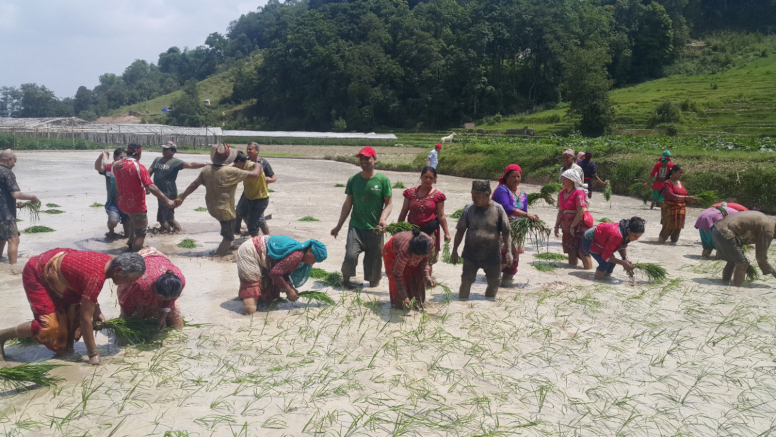
    Photo courtesy of ANFPa

    Standing at over two million members, the All Nepal Peasants’ Federation is also on the cutting edge of food systems transformation. Just as SBCA is working to dismantle racism in the food system and beyond, ANFPa is working to dismantle casteism, as well as sexism and ageism, with special branches dedicated to the empowerment of Dalits (“untouchables” in the caste system), women and youth. Recognizing the realization of human rights as essential to ending hunger, ANFPa has played an active role in Nepal’s democratization process, achieving the enshrining of food sovereignty in the country’s new constitution. Nepal is now one of several countries in the world to have adopted food sovereignty into law, and ANPFa has been leading national efforts on implementation. ANFPa has also been active in COVID relief efforts, including distribution of relief materials, coordinating with local governments on managing food supplies, and policy advocacy work. 

    The Food Sovereignty Prize’s focus on collective action and movement building stands in stark contrast to the World Food Prize, according to Chung-Wha Hong of USFSA member Grassroots International, who adds: “In the face of COVID, social movements have been the most effective first responders, especially among communities most overlooked by governments, while also making visionary demands to overcome the structural injustices driving hunger.”

    The Somali Bantu Community Association and All Nepal Peasants’ Federation will be recognized at a virtual ceremony in early December, which will be open to the public. Further information on the honorees and the award ceremony are forthcoming at www.usfoodsovereigntyalliance.org and www.facebook.com/USFoodSovAlliance

    About the US Food Sovereignty Alliance

    The US Food Sovereignty Alliance (USFSA) is a US-based alliance of food justice, anti-hunger, labor, environmental, faith-based and food producer groups that upholds the right to food as a basic human right and works to connect our local and national struggles to the international movement for food sovereignty. The Alliance works to end poverty, rebuild local food economies and assert democratic control over the food system, believing that all people have the right to healthy, culturally appropriate food produced in an ecologically sound manner. Learn more at usfoodsovereigntyalliance.org.

    ###


  • Press Release: USFSA Statement in Defense of Agroecology and the Right to Food

    For Immediate Release

    October 1, 2020


    Contact:

    Jordan Treakle, 202-543-5675, jordan@nffc.net

    Ahna Kruzic, 510-927-5379, ahna@panna.org


    U.S. Farmers Call Out U.S. Ambassador for Pushing Agribusiness Agenda and Attacking Agroecology at the United Nations

    A national alliance of farmers, workers, and fishers says agroecology and the human right to food are needed now more than ever to stop climate change and ensure that everyone has access to healthy, nutritious food.

    The U.S. Food Sovereignty Alliance (USFSA), a network of 50+ grassroots organizations and grassroots supportive organizations, has just published an open letter denouncing the U.S. Ambassador to the United Nations (U.N.) Agencies for Food and Agriculture, Indiana agribusiness baron Kip Tom, for his unprecedented attacks on agroecology –  a science, practice, and organizing tool for farmers and food producers that bases food production on ecological principles – and on the U.N. itself. In its letter, the USFSA asserted that food producers around the world and in the United States need  agroecology to support their communities, protect the planet, and ensure everyone has access to healthy food.

    Ambassador Tom asserted in a speech to the US Department of Agriculture in early 2020 and in a recent editorial that agroecology is “anti-science,” and he has made fear-mongering comments that  hunger and poverty will be much worse if farmers stop using the toxic pesticides, genetically modified seeds, and expensive machinery and technologies that are controlled by agribusiness. 

    “Ambassador Tom’s disdain for agroecology reveals that he indeed has a minimal understanding of the concept of agroecology,” said Patti Naylor, a farmer from Iowa who represented the USFSA and the North American region at the U.N. Committee on World Food Security (CFS) for when it discussed agroecology in 2019, where she met Ambassador Tom. “Agroecology is not simply a set of farming practices but instead comes out of people’s movements, in which social commitments and political education make agroecology the pathway to food sovereignty. All of this is a threat to the power and influence of a global agrifood industry. The Ambassador’s role at the U.N. is to defend and expand the dominance of the agrifood industry, but his task is becoming more and more difficult as the global health pandemic has revealed a fragile food supply chain, dependent on the exploitation of people and nature.” 

    Ambassador Tom also blames a key U.N. agency, the U.N. Food and Agriculture Organization (FAO) whose governing committee endorsed agroecology two years ago, for being “against American values” and used his history growing up on a family farm to posture as if he represents the interests of family farmers. Ambassador Tom now operates agribusiness firm Tom Farms, which manages 25,000 acres in the U.S. and Latin America and produces seed for companies like Bayer-Monsanto and Syngenta. 

    Member organizations of the USFSA denounced Tom for attempting to speak for American family farmers and food producers, the majority of whom want and demand agroecology, food sovereignty, and the human right to food.

    “Most farmers in the world do not farm 20,000 acres like Mr. Tom, nor would they want to,” said Jim Goodman, retired dairy farmer from Wisconsin and current President of the National Family Farm Coalition. “Farmers want to farm within their means, matching their local context and diets. The Green Revolution, which Mr. Tom says we need instead of agroecology, has played havoc with people’s lives and the environment across the world.” 

    Goodman added that practitioners of agroecology embrace science and technology but ensure that they serve farmers, workers, and all food producers by prioritizing greater social equity, the restoration of ecosystems, and more sustainable food systems and trade and by making research and development processes participatory, collaborative, and community-based.

    Jennifer Taylor, an organic family farmer, Associate Professor at the Florida Agricultural and Mechanical University, and one of the national coordinators of the USFSA, said that “agroecological farming systems promote soil fertility, soil and water conservation, biodiversity, healthy environments, mitigate pest damage and climate change. Agroecological practices develop sustainable farming systems that benefit our communities by generating employment, providing essential services, and distributing healthy produce.” 

    Taylor also noted that organic farmers “support the avoidance of synthetic hormones and antibiotics, and we oppose the use of sewage sludge, irradiation, GMO/genetic engineering materials, and GMO agricultural strategies. Some of our key practices include: growing a healthy farm through gaining knowledge to support what grows best in our farm environment; building healthy soils, selecting organic seeds and transplants, integrating mulches, crop rotations, cover crops; compost use; enabling pollinator and beneficial insect habitats; selecting viable locally adapted varieties; and seed saving.”

     The USFSA also issued a strong repudiation of the U.S. Department of Agriculture’s decades-long support for extractive, “fencerow-to-fencerow” agriculture and a pro-agribusiness “get-big-or-get-out” policy framework. These policies have pushed millions of family farmers out of business and have polluted and poisoned rural communities. The USFSA called for systemic changes in U.S. food and agriculture policy and a Green New Deal that centers the needs and voices of frontline communities and is based in environmental and climate justice.

     Finally, the USFSA denounced the long history of the U.S. government disrupting and obstructing democratic policy-making at the United Nations and in other countries and selling out rural and urban communities in favor of transnational corporations. The letter calls on Ambassador Tom to support democratic U.N. processes and to listen to U.S. food producers, not U.S. agribusiness corporations, and support agroecology. “Family farmers, food and farm workers, and rural communities need to be at the center of policy-making, especially at the global level,” said Tristan Quinn-Thibodeau, national campaigner with ActionAid USA and part of the USFSA’s International Relations Collective. “U.N. spaces like the Committee on World Food Security (CFS) center the ‘holders’ of human rights – the frontline, grassroots communities who are entitled to human rights – and so it is critical that governments and all stakeholders prioritize and protect the participation of grassroots organizations, especially from communities that have been historically excluded.”

     “The conflict between the corporate model of agriculture – based on profits – and agroecology – based on the human rights, the rights of peasants, the protection of nature, and food sovereignty – will determine the kind of world we will leave the next generations,” said Patti Naylor. “Agroecology is the only choice that can support farmer livelihoods and meet the challenges of climate change, food insecurity, and environmental collapse.” 

    The full letter can be downloaded HERE.