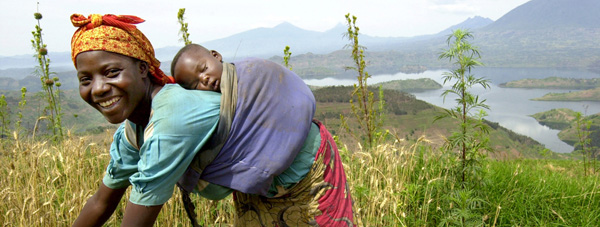
Food Week of Action – Sunday Oct. 11 through Sunday Oct. 18 – includes World Food Day (October 16) as well as the International Day for Rural Women (October 15) and the International Day for the Eradication of Poverty (October 17).
Let the US Food Sovereignty Alliance and people near and far know what you have planned for October, the Food Week or World Food Day! Fill out the easy form below to get on the map.
People in the U.S. and worldwide are taking back their food systems – fighting for their land and waterways, reclaiming vacant lots, teaching others how to grow food, and developing local distribution systems – while simultaneously creating jobs, providing fresh food, preserving the environment, building rural-urban connections, advocating for just policies, and revitalizing their communities. Local control of seeds—by farmers, gardeners and seed keeping groups—is crucial for food security and food sovereignty.
2015 Priority Actions
1) With Farmworkers! Begin by Boycotting Sakuma Berries! Support Familias Unidas por la Justicia in their struggle for a union contract. boycottsakumaberries.com. 2) With Family Farmers! The Trans-Pacific Partnership will likely hurt small-scale family farmers, the environment and democracy. Learn more and stay tuned for actions. 3) With Food Workers! Watch for workers organizing in your area and support them. UCC has a great list of groups and ways to ‘Stand with Workers’. 4) 2015’s Climate Negotiations are critical to the health of the planet and the livelihoods of tens of millions of people. Learn about climate & food/farm connections and join with communities united for a just transition. Learn here 1 2 3 4 and take action here.
Join the Zero Hunger Challenge Individuals and groups can join ZHC, an initiative of the United Nations to raise awareness and build a movement around eliminating hunger.
Share your food story with a captioned photo, video or written social media post (e.g. YouTube, Twitter, Instagram and Facebook), using the hashtag #myfoodstory via @e_alliance and @presbyhunger.
Get your hands in the dirt: Plan a trip to your nearest farm to meet (and help!) the farmer and learn more about the challenges and joys of food production. Consider joining or starting a community garden. How-to and other ideas here: bit.ly/phpfoodfaith
Celebrate local foods and knowledge: Organize a community fair that showcases local food producers and shares the stories of farmers and people involved in food justice.
To extend the Food Week of Action, join with others focusing on U.S. food issues on October 24.
Ecumenical Advocacy Alliance – Nourishing the World Sustainably: Scaling Up Agro-ecology
This draft discussion document presents the Ecumenical Advocacy Alliance’s views and recommendations for Rio +20 on the need for further recognition of the full range of benefits of agro-ecological methods of food production and the support that is needed to use them on a wider scale.
Food Chain Avengers: A Food Justice & Worker Justice Comic Book 20 million people work in the food system in the U.S., joining millions around the world who labor on farms and in meat, poultry and food processing facilities, warehouses, grocery stores and restaurants. The food system is the largest employer in the U.S. and the majority of frontline food workers earn poverty wages. In the U.S., a third of food workers suffer from food insecurity and hunger.
Climate and Food Center Spread from the PHP Post (Presbyterian Hunger Program Justice Journal) -Infographic on how climate change impacts hunger and poverty.
International Assessment of Agricultural Knowledge, Science, and Technology for Development (IAASTD) Fact Sheet
The IAASTD, a major international scientific report, concludes that in order to feed 9 billion people in 2050, we urgently need to adopt the most effective and sustainable farming systems, and recommends a shift towards agro-ecology as a means of sustainably boosting food production and improving the situation of the poorest people and communities.
Winners of the 5th Annual Food Sovereignty Prize—an alternative to the World Food Prize—announced today, Aug. 13, 2013, by the US Food Sovereignty Alliance (USFSA).
This year’s Honorees are producing sustainable anti-hunger solutions around the world and stand in sharp contrast to this year’s World Food Prize winners, Monsanto and Syngenta. Food Sovereignty Prize winners are grassroots initiatives that are building solutions to poverty and hunger, and resisting the corporate control of food and trade systems.
Winner:
Group of 4, Dessalines Brigade/Via Campesina, Haiti & South America
Honorable Mentions:
Basque Country Peasants’ Solidarity (EHNE), Basque Country
Coordination of Peasant Organizations (CNOP), Mali
Tamil Nadu Women’s Collective (TNWC), India
The US Food Sovereignty Alliance will honor these four inspiring groups at the Fifth Annual Food Sovereignty Prize Ceremony on Oct 15, 2013, in NYC. Shirley Sherrod, former USDA regional director and long-time advocate for family farmers, will give the keynote address. Register by clicking here or on the graphic below!
U.S. Food Sovereignty Alliance Statement
June 20, 2013
Honoring executives of biotechnology giants Monsanto and Syngenta with this year’s World Food Prize sends precisely the wrong message about sustainable solutions to hunger and poverty. Proprietary genetically manipulated seeds are the problem, not the answer to world hunger. The proven solutions lie in rebuilding food sovereignty—the ability of farmers and communities to nourish themselves while creating sustainable paths out of poverty and hunger.
The World Food Prize has disregarded well-documented evidence from the United Nations and other sources that small-scale diversified farming is the most effective way to end hunger, the Alliance argued. Reliance on genetically modified crops and industrial agriculture creates crippling debt for farmers, produces herbicide-resistant ‘superweeds,’ and keeps control of our food system in the hands of large corporations.
Information and updates on the prize and the US Food Sovereignty Alliance are available at: http://foodsovereigntyprize.org/ and http://usfoodsovereigntyalliance.org/
Honoring executives of biotechnology giants Monsanto and Syngenta with this year’s World Food Prize “sends precisely the wrong message about sustainable solutions to hunger and poverty,” the U.S. Food Sovereignty Alliance said in a statement today. The Alliance includes faith-based, labor, anti-hunger, and grassroots groups from across the US.
“Proprietary genetically manipulated seeds are the problem, not the answer to world hunger,” the Alliance said. “The proven solutions lie in rebuilding food sovereignty—the ability of farmers and communities to nourish themselves while creating sustainable paths out of poverty and hunger.”
The World Food Prize has disregarded well-documented evidence from the United Nations and other sources that small-scale diversified farming is the most effective way to end hunger, the Alliance argued. Reliance on genetically modified crops and industrial agriculture creates crippling debt for farmers, produces herbicide-resistant ‘superweeds,’ and keeps control of our food system in the hands of large corporations.
In July, the Alliance will announce the winners of the fifth annual Food Sovereignty Prize, highlighting grassroots efforts to build a more democratic and sustainable food system. In honoring communities that are reclaiming their food systems, the prize shows how democratic access to land, water, and fair wages are central to ensuring sustainability and ending world hunger.
Unlike the World Food Prize, which promotes increased industrial food production through technologies such as genetically engineered seeds, the Food Sovereignty Prize champions proven solutions to hunger that empower those most impacted by the injustices of the global food system. While the World Food Prize recognizes individuals, the grassroots organizations honored by the Food Sovereignty Prize are led by their members, and most organizations count over 20,000 families as members and leaders.
The 2013 nominees include grassroots organizations in Haiti, Uruguay, India, Mexico, Mali, the U.S., and elsewhere. “All of these nominees are doing remarkable work against steep odds, creating innovative and courageous solutions to hunger and poverty by taking back control over their food systems,” said Eric Holt-Gimenez, director of Food First, a member of the US Food Sovereignty Alliance.
“Food sovereignty is the right of peoples to healthy and culturally appropriate food produced through ecologically sound and sustainable methods, and their right to define their own food and agriculture systems. It puts the aspirations and needs of those who produce, distribute and consume food at the heart of food systems and policies rather than the demands of markets and corporations.” – Declaration of Nyéléni, the first global forum on food sovereignty, Mali, 2007
(all donations are made through our fiscal agent, Agrarian Land Trust)
…and…
Donate to USFSA member groups to strengthen the food sovereignty movement in the United States.
Your gift will help ensure that all people have the right to healthy, culturally appropriate food, produced in an ecologically sound manner.
As a volunteer, member-based organization, you can be sure that your gift will be used where it is needed most. Donations will be used to support the Alliance’s Annual Assembly, to fund scholarships to ensure full participation in the Assembly, to plan and implement actions, events and campaigns emerging from the Alliance Teams, as well as to cover administrative support.
Equally important is your engagement in the Alliance. Consider organizational membership in the Alliance. Even if you are not a USFSA member, you can participate in the Alliance Teams, which you can learn about here.