
PRESS RELEASE
Contact:
Christina Schiavoni
cms@grassrootsonline.org
617-690-4079
17th Annual Food Sovereignty Prize Awarded by US Food Sovereignty Alliance & Climate Justice Alliance
Organizations from New Mexico and Burkina Faso to Be Honored in Virtual Prize Ceremony
WASHINGTON, DC, October 15, 2025 — The US Food Sovereignty Alliance (USFSA) and the Climate Justice Alliance are thrilled to award the annual Food Sovereignty Prize to two outstanding organizations: New Mexico Acequia Association in Santa Fe, NM, and Association Nourrir Sans Détruire in Burkina Faso.
Each year, the Food Sovereignty Prize is given to two organizations—one domestic and one international—for their exemplary work to advance food sovereignty. This year’s honorees are both notable for their integration of traditional cultural practices and agricultural methods in their restoration of land, water, and community. By organizing local communities to resist poverty and displacement, they are shining beacons of hope amidst a rising tide of global authoritarianism and political violence. They are also the first organizations to receive the prize in their respective state and country.
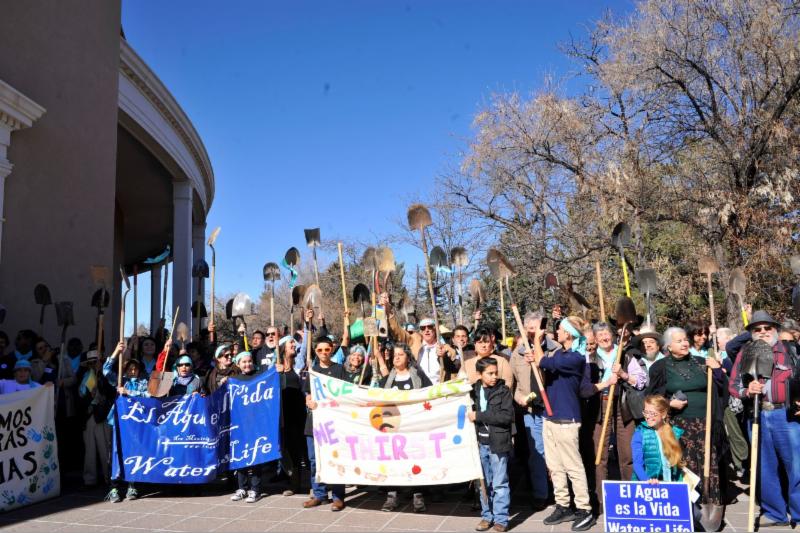
New Mexico Acequia Association (NMAA) is a grassroots organization that has been advocating for the protection of local acequias since 1988. Acequias are the centuries-old communal irrigation systems that have sustained traditional agriculture in the high desert for many generations, long before New Mexico became a state. NMAA’s model of water and small-scale governance is an antidote to the continued pressures of industry and corporations to commodify or pollute the water of New Mexico’s communities. Their advocacy for over 30 years has been focused on protecting water as a community resource by defending water rights and farmland from development pressures, by revitalizing small-scale farming and ranching through training and youth engagement, and by working to recover and adapt to climate disruptions such as the intense wildfires and flooding that are increasingly common in the Southwest.
Paula Garcia, Executive Director of NMAA, will accept the award during the prize ceremony. She stated:
“It is an honor to accept the 2025 Domestic Food Sovereignty Award on behalf of the New Mexico Acequia Association and to be included in the company of so many amazing awardees. We stand in solidarity with people around the world working to protect sacred lands and waters and to build community self-determination through food sovereignty. Land-based and Indigenous Peoples continue to be the caretakers for some of the most vibrant and biodiverse places in the world. This award uplifts the people and communities who are leading the way for a more just, equitable, and resilient future. El Agua es Vida! Que Vivan las Acequias!”(Water is Life, Long Live Acequias).

Association Nourrir Sans Détruire (ANSD), whose name translates to ‘Nourish without Destroying Association,’ is a non-profit organization created in 2011 in the West African country of Burkina Faso. It works to combat poverty, hunger, and social injustice by promoting agroecology and other sustainable means of subsistence, both agricultural and non-agricultural. ANSD’s main objective is to strengthen the capacities of small-scale farmers and their organizations so that they can contribute to food security and improve their incomes, while protecting natural resources. ANSD carries out its activities in 126 villages spread across eight municipalities through five main program areas: agroecological transition; empowerment of women and access to resources; access of agroecological products to the local market; nutrition and community health; and creating an environment conducive to agroecological health. A recent impact study calculated that close to a quarter of the farmland in Eastern Burkina Faso is now farmed using agroecological practices, in large part thanks to ANSD’s organizing.
ANSD’s award will be accepted on behalf of the organization by Board Chairman, Tsuamba Bourgou, who declared:
“This award highlights and recognizes the efforts of so many men, women, and young people who have worked tirelessly for more than ten years now to push back the boundaries of hunger, poverty, and ignorance for the good of their households and their communities. Refusing to accept their fate as inevitable, these people have stood up, fought, and continue to fight, resisting headwinds, confident in themselves to contribute to the construction of an effective and resilient food system, rooted in their specific context and promising a better tomorrow for themselves and for future generations. This award reinforces ANSD’s conviction that by trusting communities, working with them in a spirit of co-creation of knowledge, synergy in resource mobilization, and shared responsibility, tangible and sustainable results in terms of food security and sovereignty can be achieved quickly.”
The Food Sovereignty Prize serves as a counterweight to the World Food Prize, created by Norman Borlaug, the controversial ‘father of the Green Revolution,’ whose initiatives have led to devastating environmental and social impacts worldwide. Typically, the World Food Prize rewards the expansion in production of single crops through expensive, large-scale technology. In contrast, the Food Sovereignty Prize champions grassroots, agroecological solutions from the people most harmed by the injustices of the global food system. This is the 17th year that the Food Sovereignty Prize has been awarded. Honorees from previous years are listed on USFSA’s website.
The two honorees will be recognized at a virtual prize ceremony on Wednesday, December 3rd, at 11:00am PST (UTC -8) / 2:00pm EST (UTC -5). The ceremony is free and open to the public; register online here. Spanish and French interpretation will be available.
###
The US Food Sovereignty Alliance (USFSA) is composed of food justice, anti-hunger, labor, environmental, faith-based, and food producer groups that work to connect our local and national struggles to the international movement for food sovereignty. The Alliance strives to end poverty, rebuild local food economies and assert democratic control over the food system, believing that all people have the right to healthy, culturally appropriate food produced in an ecologically sound manner.
Climate Justice Alliance (CJA) is a growing member alliance of close to 100 urban and rural frontline communities, organizations and supporting networks in the climate justice movement. Member organizations lead CJA by anchoring major Just Transition projects focused on the social, racial, economic and environmental justice issues of climate change.
COMMUNIQUÉ DE PRESSE
Contact:
Christina Schiavoni
cms@grassrootsonline.org
617-690-4079
17e Prix annuel de la souveraineté alimentaire décerné par l’Alliance américaine pour la souveraineté alimentaire et l’Alliance pour la justice climatique
Des organisations du Nouveau-Mexique et du Burkina Faso seront honorées lors d’une cérémonie de remise des prix virtuelle
WASHINGTON, DC, 15 octobre 2025 — L’Alliance américaine pour la souveraineté alimentaire (USFSA) et l’Alliance pour la justice climatique sont ravies de décerner le Prix annuel de la souveraineté alimentaire à deux organisations exceptionnelles : L’Association Acequia du Nouveau-Mexique (NMAA en anglais-New Mexico Acequia Association) à Santa Fe, au Nouveau-Mexique, et l’Association Nourrir Sans Détruire au Burkina Faso.
Chaque année, le prix de la souveraineté alimentaire est décerné à deux organisations, l’une nationale et l’autre internationale, pour leur travail exemplaire en faveur de la souveraineté alimentaire. Les lauréats de cette année se distinguent tous deux par leur intégration des pratiques culturelles traditionnelles et des méthodes agricoles dans la restauration des terres, de l’eau et des communautés. En organisant les communautés locales pour lutter contre la pauvreté et les déplacements de population, elles sont des lueurs d’espoir dans un contexte mondial marqué par la montée de l’autoritarisme et de la violence politique. Elles sont également les premières organisations à recevoir ce prix dans leur État et leur pays respectifs.
L’Association Acequia du Nouveau-Mexique (NMAA) est une organisation locale qui milite depuis 1988 pour la protection des acequias locales. Les acequias sont des systèmes d’irrigation communautaires séculaires qui ont permis de maintenir l’agriculture traditionnelle dans le haut désert pendant de nombreuses générations, bien avant que le Nouveau-Mexique ne devienne un État. Le modèle de gouvernance de l’eau et à petite échelle de la NMAA est un antidote aux pressions continues de l’industrie et des entreprises pour commercialiser ou polluer l’eau des communautés du Nouveau-Mexique. Depuis plus de 30 ans, leur action vise à protéger l’eau en tant que ressource communautaire en défendant les droits sur l’eau et les terres agricoles contre les pressions du développement, en revitalisant l’agriculture et l’élevage à petite échelle grâce à la formation et à l’engagement des jeunes, et en œuvrant à la restauration et à l’adaptation aux perturbations climatiques telles que les incendies de forêt et les inondations intenses qui sont de plus en plus fréquents dans le sud-ouest.
Paula Garcia, directrice exécutive de la NMAA, recevra le prix lors de la cérémonie de remise des prix. Elle a déclaré :
« C’est un honneur d’accepter le prix 2025 de la souveraineté alimentaire nationale au nom de L’Association Acequia du Nouveau-Mexique et de figurer parmi tant d’autres lauréats exceptionnels. Nous sommes solidaires des personnes qui, partout dans le monde, œuvrent pour protéger les terres et les eaux sacrées et pour renforcer l’autodétermination des communautés grâce à la souveraineté alimentaire. Les peuples autochtones et ceux qui vivent en harmonie avec la terre continuent d’être les gardiens de certains des endroits les plus dynamiques et les plus riches en biodiversité du monde. Ce prix rend hommage aux personnes et aux communautés qui ouvrent la voie vers un avenir plus juste, plus équitable et plus résilient. El Agua es Vida ! Que Vivan las Acequias ! » (L’eau, c’est la vie ! Vive les acequias !).
L’Association Nourrir Sans Détruire (ANSD) est une organisation à but non lucratif créée en 2011 au Burkina Faso, en Afrique de l’Ouest. Elle lutte contre la pauvreté, la faim et les injustices sociales en promouvant l’agroécologie et d’autres moyens de subsistance durables, tant agricoles que non agricoles. L’objectif principal de l’ANSD est de renforcer les capacités des petits agriculteurs et de leurs organisations afin qu’ils puissent contribuer à la sécurité alimentaire et améliorer leurs revenus, tout en protégeant les ressources naturelles. L’ANSD mène ses activités dans 126 villages répartis dans huit municipalités à travers cinq grands domaines d’action : la transition agroécologique ; l’autonomisation des femmes et l’accès aux ressources ; l’accès des produits agroécologiques au marché local ; la nutrition et la santé communautaire ; et la création d’un environnement propice à la santé agroécologique. Une récente étude d’impact a calculé que près d’un quart des terres agricoles de l’est du Burkina Faso sont désormais cultivées selon des pratiques agroécologiques, en grande partie grâce à l’organisation de l’ANSD.
Le prix de l’ANSD sera remis au nom de l’organisation par le président du conseil d’administration, Tsuamba Bourgou, qui a déclaré :
« Ce prix met en lumière et récompense les efforts déployés par tant d’hommes, de femmes et de jeunes qui travaillent sans relâche depuis plus de dix ans pour repousser les limites de la faim, de la pauvreté et de l’ignorance, pour le bien de leurs familles et de leurs communautés. Refusant d’accepter leur sort comme une fatalité, ces personnes se sont levées, ont lutté et continuent de lutter, résistant aux vents contraires, confiantes en leur capacité à contribuer à la construction d’un système alimentaire efficace et résilient, ancré dans leur contexte spécifique et promettant un avenir meilleur pour elles-mêmes et pour les générations futures. Ce prix renforce la conviction de l’ANSD qu’en faisant confiance aux communautés, en travaillant avec elles dans un esprit de co-création de connaissances, de synergie dans la mobilisation des ressources et de responsabilité partagée, des résultats tangibles et durables en termes de sécurité et de souveraineté alimentaires peuvent être obtenus rapidement. »
Le Prix de la souveraineté alimentaire sert de contrepoids au Prix mondial de l’alimentation, créé par Norman Borlaug, le controversé « père de la révolution verte », dont les initiatives ont eu des conséquences environnementales et sociales dévastatrices dans le monde entier. En général, le Prix mondial de l’alimentation récompense l’expansion de la production de monocultures grâce à des technologies coûteuses et à grande échelle. En revanche, le Prix de la souveraineté alimentaire défend les solutions agroécologiques locales proposées par les personnes les plus touchées par les injustices du système alimentaire mondial. C’est la 17e année que le Prix de la souveraineté alimentaire est décerné. Les lauréats des années précédentes sont répertoriés sur le site web de l’USFSA.
Les deux lauréats seront récompensés lors d’une cérémonie virtuelle qui se tiendra le mercredi 3 décembre à 11 h PST (UTC -8) / 14 h EST (UTC -5). La cérémonie est gratuite et ouverte au public ; inscrivez-vous en ligne ici. Une interprétation en espagnol et en français sera disponible.
###
L’Alliance américaine pour la souveraineté alimentaire (USFSA) est composée de groupes œuvrant dans les domaines de la justice alimentaire, de la lutte contre la faim, du travail, de l’environnement, de la religion et de la production alimentaire, qui s’efforcent de relier nos luttes locales et nationales au mouvement international pour la souveraineté alimentaire. L’Alliance s’efforce de mettre fin à la pauvreté, de reconstruire les économies alimentaires locales et d’affirmer le contrôle démocratique sur le système alimentaire, convaincue que tous les peuples ont droit à une alimentation saine, culturellement appropriée et produite de manière écologique.
L’Alliance pour la justice climatique (CJA) est une alliance en pleine expansion qui regroupe près de 100 communautés urbaines et rurales de première ligne, organisations et réseaux de soutien engagés dans le mouvement pour la justice climatique. Les organisations membres dirigent la CJA en menant d’importants projets de transition juste axés sur les questions de justice sociale, raciale, économique et environnementale liées au changement climatique.
Comunicado de Prensa
Contact:
Christina Schiavoni
cms@grassrootsonline.org
617-690-4079
17° Premio Anual de Soberanía Alimentaria Otorgado por la Alianza Estadounidense por la Soberanía Alimentaria y la Alianza por la Justicia Climática
Organizaciones de Nuevo México y Burkina Faso serán reconocidas en una Ceremonia Virtual de Premiación
WASHINGTON, DC, 15 de octubre de 2025 — La Alianza Estadounidense por la Soberanía Alimentaria (USFSA, por sus siglas en inglés) y la Alianza por la Justicia Climática se complacen en otorgar el Premio Anual de Soberanía Alimentaria a dos organizaciones destacadas: Asociación Acequia de Nuevo México, con sede en Santa Fe, NM, y Asociación Nourrir Sans Détruire, de Burkina Faso.
Cada año, el Premio de Soberanía Alimentaria se entrega a dos organizaciones —una nacional y otra internacional—por su labor ejemplar en impulsar la soberanía alimentaria. Las organizaciones galardonadas de este año se destacan por su integración de prácticas culturales tradicionales y métodos agrícolas para la restauración de la tierra, del agua y de las comunidades. Al incidir en las comunidades locales para resistir la pobreza y el desplazamiento, estas organizaciones representan faros de esperanza en medio del ascenso del autoritarismo y la violencia política a nivel mundial. También son las primeras organizaciones en recibir este premio en su respectivo Estado y país.
La Asociación Acequia de Nuevo México (NMAA por sus siglas en inglés) es una organización de base comunitaria que ha abogado por la protección de las acequias locales desde 1988. Las acequias son sistemas comunales de riego con siglos de antigüedad que han sustentado la agricultura tradicional en el alto desierto durante muchas generaciones, mucho antes de que Nuevo México se convirtiera en Estado. El modelo de gobernanza hídrica y de pequeña escala de la NMAA representa un antídoto frente a las presiones constantes de las industrias y corporaciones que buscan mercantilizar o contaminar el agua de las comunidades de Nuevo México.
Durante más de 30 años, su incidencia se ha centrado en proteger el agua como un recurso comunitario mediante la defensa de los derechos sobre el agua y las tierras agrícolas frente a las presiones del desarrollo; revitalizando la agricultura y ganadería a pequeña escala a través de la capacitación y el involucramiento de jóvenes; y trabajando por la recuperación y adaptación ante perturbaciones climáticas como los incendios forestales e inundaciones cada vez más frecuentes en el suroeste de Estados Unidos.
Paula Garcia, directora ejecutiva de la NMAA, recibirá el premio durante la ceremonia de reconocimiento. Ella compartió unas palabras:
“Es un honor aceptar el Premio Nacional de Soberanía Alimentaria en nombre de la Asociación Acequia de Nuevo México y compartir este reconocimiento con tantos galardonados y galardonadas excepcionales. Nos solidarizamos con las personas que trabajan en todo el mundo por proteger tierras y aguas sagradas, y por fortalecer la autodeterminación comunitaria a través de la soberanía alimentaria. Los pueblos indígenas y las comunidades en territorio siguen siendo guardianes de algunos de los lugares más vibrantes y biodiversos del planeta. Este premio honra a las personas y comunidades que están abriendo el camino hacia un futuro más justo, equitativo y resiliente. ¡El Agua es Vida! ¡Que vivan las Acequias!”
La Asociación Nourrir Sans Détruire (ANSD por sus siglas en francés), cuyo nombre se traduce como “Asociación Alimentar Sin Destruir”— es una organización sin fines de lucro fundada en 2011 en Burkina Faso, África Occidental. Trabaja para combatir la pobreza, el hambre y la injusticia social mediante la promoción de la agroecología y otros medios sostenibles de subsistencia, tanto agrícolas como no agrícolas.
El objetivo principal de ANSD es fortalecer las capacidades de los pequeños agricultores y sus organizaciones para que puedan contribuir a la seguridad alimentaria y mejorar sus ingresos, y simultáneamente proteger los recursos naturales. ANSD desarrolla sus actividades en 126 aldeas distribuidas en ocho municipios, a través de cinco áreas programáticas principales: transición agroecológica; empoderamiento de las mujeres y acceso a los recursos; acceso de los productos agroecológicos a mercados locales; nutrición y salud comunitaria; y creación de un entorno favorable para la salud agroecológica.
Un estudio de impacto reciente calculó que cerca de una cuarta parte de las tierras agrícolas del este de Burkina Faso se cultivan actualmente con prácticas agroecológicas, en gran parte gracias al trabajo organizativo de ANSD.
El premio de ANSD será recibido en nombre de la organización por su presidente del consejo directivo, Tsuamba Bourgou, quien afirmó:
“Este premio resalta y reconoce los esfuerzos de tantos hombres, mujeres y jóvenes que han trabajado incansablemente durante más de diez años para superar los límites del hambre, la pobreza y la ignorancia, por el bienestar de sus hogares y comunidades. Negándose a aceptar que su destino es inevitable, estas personas se han levantado, han luchado y siguen luchando, resistiendo con confianza en sí mismas para contribuir a la construcción de un sistema alimentario eficaz y resiliente, arraigado en su propio contexto y prometiendo un futuro mejor para sí mismas y para las generaciones futuras. Este premio refuerza la convicción de ANSD de que, al confiar en las comunidades, trabajar con ellas desde el espíritu de co-creación del conocimiento, sinergia en la movilización de recursos y responsabilidad compartida, es posible lograr resultados tangibles y sostenibles en materia de seguridad y soberanía alimentaria en poco tiempo.”
El Premio de Soberanía Alimentaria actúa como contrapeso al Premio Mundial de la Alimentación, creado por Norman Borlaug, el controvertido “padre de la Revolución Verde”, cuyas iniciativas han tenido impactos ambientales y sociales devastadores en todo el mundo. Generalmente, el Premio Mundial de la Alimentación recompensa la expansión de la producción de monocultivos mediante el uso de tecnologías costosas y a gran escala. En contraste, el Premio a la Soberanía Alimentaria celebra soluciones agroecológicas de base, impulsadas por las personas más afectadas por las injusticias del sistema alimentario global.
Este es el 17º año en que se otorga el Premio a la Soberanía Alimentaria. La lista de los galardonados de años anteriores se encuentra en el sitio web de la USFSA.
Las dos organizaciones serán reconocidas en una ceremonia virtual de premiación el miércoles 3 de diciembre, a las 11:00 a. m. PST (UTC -8) / 2:00 p. m. EST (UTC -5). La ceremonia es gratuita y abierta al público; se puede realizar el registro en línea aquí. Interpretación simultánea en español y francés estarán disponibles.
###
La Alianza Estadounidense por la Soberanía Alimentaria (USFSA) está conformada por organizaciones de justicia alimentaria, que luchan contra el hambre, por los derechos laborales, por el medio ambiente, organizaciones de fe y grupos y redes de productores y productoras de alimentos que trabajan para vincular las luchas locales y nacionales con el movimiento internacional por la soberanía alimentaria. La Alianza trabaja para poner el fin a la pobreza, reconstruir las economías alimentarias locales y reafirmar el control democrático sobre el sistema alimentario, bajo la convicción de que todas las personas tienen derecho a una alimentación saludable, culturalmente apropiada y producida de manera ecológica.
Alianza por la Justicia Climática (CJA) es una alianza en crecimiento que cuenta con cerca de 100 comunidades urbanas y rurales de primera línea, organizaciones y redes de apoyo en el movimiento por la justicia climática. Las organizaciones miembros lideran la CJA impulsando importantes proyectos de Transición Justa centrados en las cuestiones de justicia social, racial, económica y medioambiental relacionadas con el cambio climático.