Tag: Food Sovereignty Prize

  • PRESS RELEASE: Food Sovereignty Prize Highlights Solutions to Worsening Hunger Crisis

    FOR IMMEDIATE RELEASE (español abajo)

    Contact: Antonio Tovar, National Family Farm Coalition
    Phone:  202-543-5675 (office); 954-260-4287 (cell)
    Email: antonio@nffc.net

    Prize Highlights Solutions to Worsening Hunger Crisis

    14th Annual Food Sovereignty Prize honors Western Organization of Resource Councils and Food Sovereignty Ghana


    WASHINGTON, DC, Oct. 5, 2022— With recent spikes in food, fuel, and fertilizer prices raising alarms of intensifying hunger globally, food and farm advocates are calling for lasting solutions to a food system in crisis.

    “This is the third food price crisis in fifteen years, pointing to an urgent need for system-wide change. This year’s Food Sovereignty Prize winners are paving the way toward a food system that’s democratically controlled and grounded in ecological principles,” said Alivia Moore of Eastern Woodlands Rematriation, a member of the US Food Sovereignty Alliance (USFSA) and last year’s recipient of the Prize.

    The 2022 Food Sovereignty Prize, sponsored by the USFSA, is going to the Western Organization of Resource Councils (WORC) and Food Sovereignty Ghana.

    Recognized internationally, the Food Sovereignty Prize serves as a counterweight to the World Food Prize initiated by Norman Borlaug, the controversial “father of the Green Revolution.” According to Darnella Winston of the Mississippi Association of Cooperatives, also of the USFSA, “Food and farm advocates initiated the Food Sovereignty Prize fourteen years ago to challenge the Green Revolution model espoused by the World Food Prize. Today, there is mounting evidence of the failures of this model.”

    Organizers of the Food Sovereignty Prize say that Food Sovereignty Ghana exemplifies vital alternatives to the Green Revolution being pushed on the African continent by the Bill and Melinda Gates-funded Alliance for a Green Revolution for Africa (AGRA) and others. Last month, AGRA announced that it would be dropping “Green Revolution” from its name, in response to increased backlash over its failure to deliver positive outcomes for African farmers. Rather than reducing hunger, AGRA and related initiatives have fostered dependency on the multinational corporations backing the initiative.

    According to Anne Maina of the Biodiversity and Biosafety Association of Kenya, who served on the 2022 Food Sovereignty Prize selection committee, “The Green Revolution model has made local agriculture dependent on imports, diverting the hard-to-find dollar that would have addressed a myriad of other needs.”

    By contrast, Food Sovereignty Ghana promotes alternatives grounded in agroecology, ancestral knowledge, and community autonomy. A major focus of the group’s efforts has been on seeds, including legal challenges against genetically modified crops and the criminalization of farmers for seed-saving practices.

    According to Edwin Baffour of Food Sovereignty Ghana, “this international award comes at a moment of reflection for us on the past decade and the contributions we have made to encourage and inspire responsible policy making which will benefit human health, animal life, and the environment.”

    Policies that put the rights of corporations over those of farmers and communities are also being challenged within the US. According to Kathryn Bedell, Chair of WORC’s Agriculture and Food Campaign team and a rancher from western Colorado, “Ranchers like myself cannot exist without healthy soil, clean water, natural grasslands, and fair markets. Today, a small handful of international corporations dominates the food supply, controls our markets, and has undue influence on food policy. Organizations like WORC help us form a broader movement to fight for the policies we need for economic and environmental sustainability.”

    WORC and Food Sovereignty Ghana will be recognized at a virtual ceremony held on October 13, 2022, at 12:00 PM Eastern Time/4:00 PM Ghanaian Time. The ceremony is free and open to the public, with simultaneous English-Spanish interpretation provided. Registration is required. The virtual ceremony will be anchored by an in-person reception in Washington, DC. Further information is available at www.usfoodsovereigntyalliance.org.

    ###

    About the US Food Sovereignty Alliance: The US Food Sovereignty Alliance (USFSA) is a US-based alliance of food justice, anti-hunger, labor, environmental, faith-based and food producer groups that upholds the right to food as a basic human right and works to connect our local and national struggles to the international movement for food sovereignty. The Alliance works to end poverty, rebuild local food economies and assert democratic control over the food system, believing that all people have the right to healthy, culturally appropriate food produced in an ecologically sound manner. Learn more at www.usfoodsovereigntyalliance.org


    PARA PUBLICACIÓN INMEDIATA

    Contacto: Antonio Tovar
    Teléfono: 954-260-4287 or 202-543-5675
    Correo electrónico: antonio@nffc.net

    El premio destaca las soluciones a la creciente crisis de hambre

    El 14º Premio Anual a la Soberanía Alimentaria honra a la Organización Occidental de Consejos de Recursos y a la Soberanía Alimentaria de Ghana


    WASHINGTON, DC, 5 de octubre de 2022 – Con las recientes alzas de los precios de los alimentos, el combustible y los fertilizantes que hacen sonar las alarmas de la intensificación del hambre en todo el mundo, los defensores de los alimentos y sus productores agrícolas piden soluciones duraderas para un sistema alimentario en crisis.

    “Esta es la tercera crisis en los precios de los alimentos en quince años, lo que apunta a la necesidad urgente de un cambio en todo el sistema. Los ganadores del Premio a la Soberanía Alimentaria de este año están allanando el camino hacia un sistema alimentario controlado democráticamente y basado en principios ecológicos”, dijo Alivia Moore de Eastern Woodlands Rematriation, miembra de la Alianza por la Soberanía Alimentaria de Estados Unidos (USFSA) y ganadora del premio del año pasado.

    El Premio a la Soberanía Alimentaria 2022, patrocinado por la USFSA, es para la Western Organization of Resource Councils (WORC) y Food Sovereignty Ghana.

    Reconocido internacionalmente, el Premio a la Soberanía Alimentaria sirve de contrapeso al Premio Mundial de la Alimentación iniciado por Norman Borlaug, el controvertido “padre de la Revolución Verde”. Según Darnella Winston de Mississippi Association of Cooperatives, también de la USFSA, “Los defensores de la alimentación y la agricultura iniciaron hace catorce años el Premio a la Soberanía Alimentaria para cuestionar el modelo de la Revolución Verde propugnado por el Premio Mundial de la Alimentación. Hoy en día, hay muchas pruebas de los fracasos de este modelo”.

    Los organizadores del Premio a la Soberanía Alimentaria afirman que la Soberanía Alimentaria de Ghana es un ejemplo de alternativas vitales contra una segunda Revolución Verde impulsada por la Alianza para una Revolución Verde para África (AGRA por sus siglas en inglés), financiada por Bill y Melinda Gates y otras entidades. El mes pasado, AGRA anunció que dejaría de llamarse “Revolución Verde”, en respuesta a las crecientes protestas por su incapacidad para obtener resultados positivos para los agricultores africanos. En lugar de reducir el hambre, AGRA y las iniciativas relacionadas han fomentado la dependencia a las empresas multinacionales que respaldan la iniciativa.

    Según Anne Maina, de la Asociación de Biodiversidad y Bioseguridad de Kenia, que formó parte del comité de selección del Premio a la Soberanía Alimentaria 2022, “El modelo de la Revolución Verde ha hecho que la agricultura local dependa de las importaciones, desviando los limitados fondos que habrían servido para atender otras necesidades”.

    Por el contrario, Food Sovereignty Ghana promueve alternativas basadas en la agroecología, el conocimiento ancestral y la autonomía comunitaria. Uno de los principales objetivos del grupo es la defensa de las semillas autóctonas, incluyendo los desafíos legales contra los cultivos modificados genéticamente y la criminalización de los agricultores por sus prácticas de conservación de semillas.

    Según Edwin Baffour, de Soberanía Alimentaria Ghana, “Este premio internacional llega en un momento de reflexión para nosotros sobre la última década y la contribución que hemos hecho para fomentar e inspirar la elaboración de políticas responsables que beneficiarán la salud humana, la vida animal y el medio ambiente.”

    Las políticas que anteponen los derechos de las empresas a los de los agricultores y las comunidades también están siendo cuestionadas dentro de los EE. UU. Según Kathryn Bedell, presidenta del equipo de la Campaña de Agricultura y Alimentación de WORC y ganadera del oeste de Colorado, dice que “Los ganaderos como yo no podemos existir sin un suelo sano, agua limpia, praderas naturales y mercados justos. Hoy en día, un pequeño puñado de empresas internacionales domina el suministro de alimentos, controla nuestros mercados y tiene una influencia indebida en la política alimentaria. Organizaciones como WORC nos ayudan a formar un movimiento más amplio para luchar por las políticas que necesitamos para la sostenibilidad económica y medioambiental.”

    WORC y Soberanía Alimentaria Ghana serán reconocidas en una ceremonia virtual que se celebrará el 13 de octubre de 2022, al mediodía hora del este/4 PM hora de Ghana. La ceremonia es gratuita y abierta al público, con interpretación simultánea inglés-español. Es necesario inscribirse. La ceremonia virtual se completará con una recepción en persona en Washington, DC. Puede obtener más información en www.usfoodsovereigntyalliance.org.

    ###

    Acerca de la Alianza por la Soberanía Alimentaria de EE.UU: La Alianza por la Soberanía Alimentaria de Estados Unidos (USFSA) es una alianza con sede en Estados Unidos de grupos de justicia alimentaria, lucha contra el hambre, laborales, medioambientales, religiosas y de productores de alimentos que defiende el derecho a la alimentación como un derecho humano básico y trabaja para conectar nuestras luchas locales y nacionales con el movimiento internacional por la soberanía alimentaria. La Alianza trabaja para acabar con la pobreza, reconstruir las economías alimentarias locales y afirmar el control democrático sobre el sistema alimentario, ya que cree que todas las personas tienen derecho a alimentos sanos y culturalmente apropiados producidos de forma ecológica. Más información en www.usfoodsovereigntyalliance.org.

  • 2020 Food Sovereignty Prize – Ceremony on Dec. 9

    2020 Food Sovereignty Prize – Ceremony on Dec. 9

    2020 Food Sovereignty Prize Ceremony ~ December 9 at 11:00am eastern

    ~ Español abajo ~

    REGISTER for the Ceremony at https://bit.ly/FSP12th

    This year we honor the Somali Bantu Community Association of Maine and the All Nepal Peasants’ Federation with the 12th Annual Food Sovereignty Prize!


    The one-hour event will take place virtually on Wednesday, December 9, beginning 8:00am PST / 11:00am EST / 7:00pm EAT / 9:45pm NPT. Closed captioning and Spanish, Somali, and Nepali interpretation will be available on the Zoom platform. The ceremony will also be livestreamed on the USFSA Facebook page.

    The 2020 Prize recipients are recognized for their commitment to civil and human rights, including the right to food. The honorees exemplify the achievement of community well-being through food sovereignty, particularly during the coronavirus pandemic.

    As the COVID-19 pandemic adds 83–132 million people to the world’s hungry this year, the Food Sovereignty Prize highlights grassroots efforts meeting urgent needs while advancing transformative solutions. Organized by the US Food Sovereignty Alliance (USFSA), the Food Sovereignty Prize is announced on World Food Day. The Food Sovereignty Prize is recognized as a counterweight to the World Food Prize, which critics decry for its singular focus on food production based on Green Revolution approaches.

    As explained by Lisa Griffith of the National Family Farm Coalition, a USFSA member organization, “Even before the pandemic struck last winter, global hunger had risen by 60 million people over the past five years, with 750 million people experiencing severe food insecurity in 2019, while most commodity crops have reached record production levels. As COVID-19 spread around the globe, it was community efforts – not the industrialized food system – that distributed food and protected farm and food workers. The World Food Prize perpetuates the myth that an industrialized system can produce its way out of hunger when a just and sustainable food system is what is truly needed.”

    Photo credit: Sijie Yuan

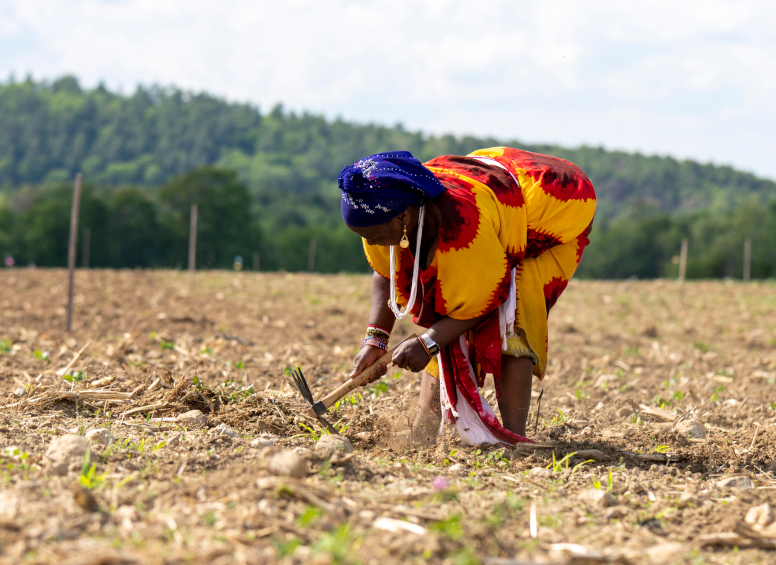
    The Somali Bantu Community Association’s Liberation Farms have served as a lifeline of food and financial security to more than 200 refugee farmers whose communities are disproportionately hit by both COVID and hunger, while also serving the broader community, including provision of fresh, healthy foods to local schools.

    According to Jennifer Taylor of Lola’s Organic Farm in Georgia, also of the USFSA, “While leading the way in food systems transformation in Maine, the Somali Bantu Community Association has confronted both the pervasive structural racism exposed by the Black Lives Matter movement as well as inhumane immigration policies coupled with anti-immigrant sentiment. Particularly inspiring is SBCA’s new Little Jubba Central Maine Agrarian Commons, an innovative model of collective land ownership and farming, inspired by the traditional Somali ishkashito model of cooperative sharing.”

    Photo courtesy of ANFPa

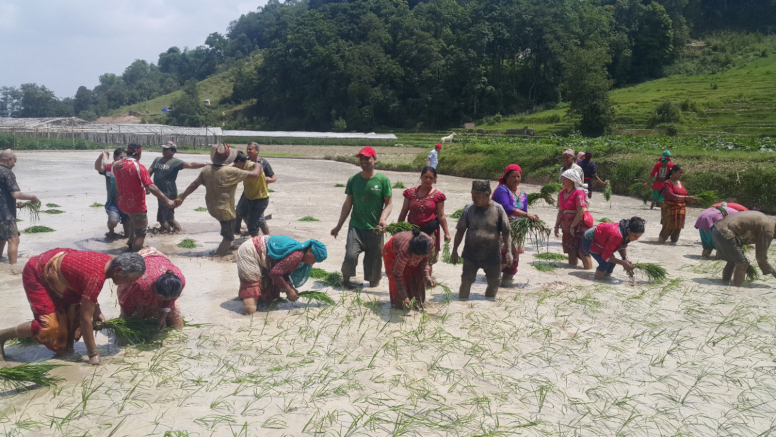
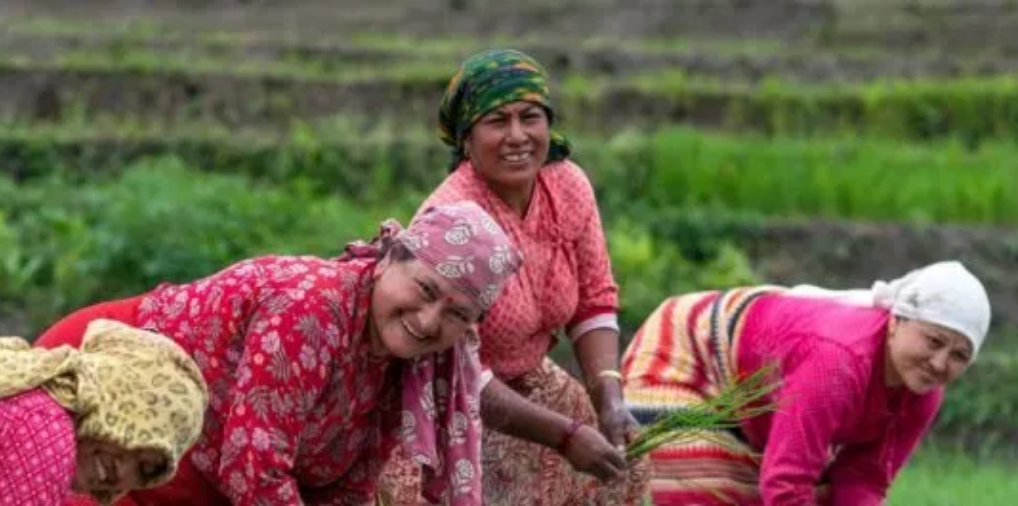
    Standing at over two million members, the All Nepal Peasants’ Federation is also on the cutting edge of food systems transformation. Just as SBCA is working to dismantle racism in the food system and beyond, ANFPa is working to dismantle casteism, as well as sexism and ageism, with special branches dedicated to the empowerment of Dalits (“untouchables” in the caste system), women and youth. Recognizing the realization of human rights as essential to ending hunger, ANFPa has played an active role in Nepal’s democratization process, achieving the enshrining of food sovereignty in the country’s new constitution. Nepal is now one of several countries in the world to have adopted food sovereignty into law, and ANPFa has been leading national efforts on implementation. ANFPa has also been active in COVID relief efforts, including distribution of relief materials, coordinating with local governments on managing food supplies, and policy advocacy work. [See also this article from La Via Campesina]

    The event is free and open to all. Register at https://bit.ly/FSP12th by Tuesday, December 8.

    For more information, contact info@usfoodsovereigntyalliance.org

    ______________________________

    Ceremonia del Premio a la Soberanía Alimentaria 2020 ~ 9 de diciembre a las 11:00am del este

    INSCRIBASE en https://bit.ly/FSP12th

    Este año honramos a la Asociación de la Comunidad Bantú Somalí de Maine y a la Federación de Campesinos de todo Nepal con el 12º Premio Anual de Soberanía Alimentaria!

    Por favor, únase a la Alianza de Soberanía Alimentaria de EE.UU. para honrar a la Asociación Comunitaria Bantú de Maine y a la Federación de Campesinos de Todo Nepal con el 12º Premio Anual de Soberanía Alimentaria!

    El evento de una hora tendrá lugar virtualmente el miércoles 9 de diciembre, comenzando a las 8:00am PST / 11:00am EST / 7:00pm EAT / 9:45pm NPT. Los subtítulos y la interpretación en español, somalí y nepalí estarán disponibles en la plataforma del Zoom. La ceremonia también será transmitida en vivo en la página de Facebook de la USFSA.

    Los galardonados con el Premio 2020 son reconocidos por su compromiso con los derechos civiles y humanos, incluido el derecho a la alimentación. Los galardonados ejemplifican el logro del bienestar de la comunidad mediante la soberanía alimentaria, en particular durante la pandemia de coronavirus.

    Dado que la pandemia COVID-19 añade este año entre 83 y 132 millones de personas a los hambrientos del mundo, el Premio a la Soberanía Alimentaria pone de relieve los esfuerzos de las comunidades de base para satisfacer las necesidades urgentes al tiempo que se promueven soluciones transformadoras. Organizado por la Alianza para la Soberanía Alimentaria de los Estados Unidos (USFSA), el Premio a la Soberanía Alimentaria se anuncia el Día Mundial de la Alimentación. El Premio a la Soberanía Alimentaria se reconoce como un contrapeso al Premio Mundial de la Alimentación, que los críticos denuncian por su singular enfoque en la producción de alimentos basada en los planteamientos de la Revolución Verde.

    Como explicó Lisa Griffith, de la Coalición Nacional de Granjas Familiares, organización miembro de la USFSA, “Incluso antes de que se produjera la pandemia el invierno pasado, el hambre en el mundo había aumentado en 60 millones de personas en los últimos cinco años, y 750 millones de personas padecen una grave inseguridad alimentaria en 2019, mientras que la mayoría de los cultivos básicos han alcanzado niveles de producción sin precedentes. A medida que COVID-19 se fue extendiendo por todo el mundo, fueron los esfuerzos de la comunidad -no el sistema alimentario industrializado- los que distribuyeron los alimentos y protegieron a los trabajadores agrícolas y de la alimentación. El Premio Mundial de la Alimentación perpetúa el mito de que un sistema industrializado puede producir su salida del hambre cuando lo que realmente se necesita es un sistema alimentario justo y sostenible”.

    Crédito de la foto: Sijie Yuan

    Las granjas de liberación de la Asociación de la Comunidad Bantú Somalí han servido de salvavidas para la seguridad alimentaria y financiera de más de 200 agricultores refugiados cuyas comunidades se ven desproporcionadamente afectadas tanto por el COVID como por el hambre, y al mismo tiempo sirven a la comunidad en general, incluyendo el suministro de alimentos frescos y saludables a las escuelas locales.

    Según Jennifer Taylor, de la Granja Orgánica de Lola en Georgia, también de la USFSA, “Al tiempo que lidera la transformación de los sistemas alimentarios en Maine, la Asociación de la Comunidad Bantú Somalí se ha enfrentado tanto al penetrante racismo estructural expuesto por el movimiento Black Lives Matter como a las políticas de inmigración inhumanas unidas al sentimiento antiinmigratorio”. Particularmente inspirador es el nuevo Little Jubba Central Maine Agrarian Commons de la SBCA, un innovador modelo de propiedad colectiva de la tierra y de agricultura, inspirado en el tradicional modelo somalí ishkashito de compartir cooperativamente”.

    Foto cortesía de ANFPa

    Con más de dos millones de miembros, la Federación de Campesinos de Todo Nepal también está a la vanguardia de la transformación de los sistemas alimentarios. Al igual que la SBCA está trabajando para desmantelar el racismo en el sistema alimentario y más allá, la ANFPa está trabajando para desmantelar el sistema de castas, así como el sexismo y la discriminación por motivos de edad, con ramas especiales dedicadas al empoderamiento de los dalits (“intocables” en el sistema de castas), las mujeres y los jóvenes. Reconociendo que la realización de los derechos humanos es esencial para poner fin al hambre, la ANFPA ha desempeñado un papel activo en el proceso de democratización de Nepal, logrando la consagración de la soberanía alimentaria en la nueva constitución del país. Nepal es ahora uno de los varios países del mundo que han adoptado la soberanía alimentaria en su legislación, y la ANFPA ha estado dirigiendo los esfuerzos nacionales en materia de aplicación. El ANFPa también ha participado activamente en las actividades de socorro de COVID, incluida la distribución de materiales de socorro, la coordinación con los gobiernos locales en la gestión de los suministros de alimentos y la labor de promoción de políticas. [Ver también este artículo de La Vía Campesina]

    El evento es gratuito y está abierto a todos. Inscríbase en https://bit.ly/FSP12th antes del martes 8 de diciembre.

    Ver el anuncio del premio del Día Mundial de la Alimentación

    Para obtener más información, comuníquese con info@usfoodsovereigntyalliance.org.

  • Grassroots Movements Celebrated for Building Solutions to Food and Climate Crises

    FOR IMMEDIATE RELEASE

    Black Mesa Water Coalition, Organización Boricuá de Agricultura Ecológica de Puerto Rico Win the Food Sovereignty Prize

    October 14, 2018 (Bellingham, Washington) – The U.S. Food Sovereignty Alliance (USFSA) honored Black Mesa Water Coalition and Organización Boricuá de Agricultura Ecológica de Puerto Rico on Sunday at the tenth annual Food Sovereignty Prize ceremony on Lummi and Nooksack land in Coast Salish Territory, in the city now called Bellingham, Washington.

    Black Mesa Water Coalition, the domestic honoree, was awarded the prize for restoring indigenous food sovereignty and uplifting youth leaders among Navajo and Hopi communities. Organización Boricuá de Agricultura Ecológica de Puerto Rico, the international honoree, was recognized particularly for mobilizing Food Sovereignty Brigades to assist farmers recover in the aftermath of Hurricane Maria.

    Presented as an alternative to the World Food Prize, the Food Sovereignty Prize honors steadfast commitment to food sovereignty. Social movements, community organizations, and activists around the world recognize the importance of the prize.

    “These grassroots organizations demonstrate how frontline communities most affected by social and ecological crises are the ones with solutions to society’s most pressing problems.” -Doria Robinson, Urban Tilth (coordinator of the Western Region of the US Food Sovereignty Alliance)

    Black Mesa Water Coalition utilizes green economic development and other diverse strategies, rooted in indigenous knowledge, to address issues of poverty, hunger, and environmental injustices driven by extractive industries and centuries of colonialism. “We need to notify humanity that we need to drastically change the way we do things, especially getting away from fossil fuels, and the food system is one way to begin that transition.” -Roberto Nutlouis, Black Mesa Water Coalition

    Organización Boricuá organizes farmers to transition to sustainable agriculture and sovereignty in Puerto Rico. “Agroecology as Puerto Ricans, coming from a colonial context, has given us a space to organize and deepen our struggles. This work is a vehicle of transformation for a sovereign, free, and just Puerto Rico.” –Jesus Vázquez, Organización Boricuá

    Media contacts:

    Liz Darrow (360) 220-9065, c2cmedia@foodjustice.org
    Ahna Kruzic, (510) 927-5379, ahna@panna.org

    ###

  • Food Sovereignty and Energy Democracy in Just Transitions: Part 2

    Food Sovereignty and Energy Democracy in Just Transitions: Part 2

    This post is written by Tyler Short of Sustainable Agriculture of Louisville, and is the second in a three part series. You can view part one here.

    Introduction

    At the USFSA’s IV National Membership Assembly in Bellingham, WA (October 12–15), the Alliance will award the 2018 Food Sovereignty Prize to Black Mesa Water Coalition and Organización Boricuá de Agricultura Ecológica de Puerto Rico. The ceremony will occur on Sunday, October 14 (5:30–7:30 PM Pacific). Please follow the USFSA’s Facebook page to view a livestream of the event.  

    This is the second post in a three-part series. Below, I spotlight Black Mesa Water Coalition (BMWC) and outline the Just Transition framework that underlies their restorative models of political economy.

    Part One of this blog series offered a background to Just Transition and Climate Justice Alliance. Part Three will analyze the notion of Just Recovery, specifically in terms of the Food Sovereignty Brigades mobilized by Organización Boricuá de Agricultura Ecológica de Puerto Rico in the aftermath of Hurricane Maria last year.

    Energy Democracy

    How has BMWC applied a Just Transition framework to their environmental justice program among Diné (Navajo) and Hopi communities in northern Arizona?

    The Coalition underscores that energy must be owned and controlled by communities, not large corporations. Since its formation almost twenty years ago, the organization has fought to stop the dig-burn-dump process of polluting industries that extract water, coal, oil, natural gas, and uranium from the region. In 2005 BMWC and their partners succeeded in shutting down the Mohave Generating Station, forcing the Black Mesa Mine and 273-mile slurry pipeline to close.

    With solidarity from Our Power Communities organized through Climate Justice Alliance (there are currently seven total, including Black Mesa), BMWC has targeted the coal-powered Navajo Generating Station, which exploits water from the Navajo Aquifer and supplies energy to the 300-mile canal known as the Central AZ Project (CAP). The Coalition argues that renewable sources can power CAP and provide energy for the estimated 18,000 Navajo and Hopi homes lacking electricity. In addition to calling for the Navajo Generating Station to shift entirely to solar energy, BMWC has pushed to reclaim former mine sites, install solar panels, and connect the new infrastructure to existing transmission lines.

    Our Power Campaign march in 2014. Source: http://breakfreepnw.org/roots-shoots-just-transition/


    Jihan Gearon, the Executive Director of BMWC, commented on the topic of funding for Just Transition projects during a panel discussion at the 2018 Protecting Mother Earth Conference in Nisqually, WA (June 28–July 1, 2018), “Money helps but can cause problems if you’re always chasing it.” The Coalition cites the Navajo Green Economy Fund as a major achievement, although it has lacked proper support from the tribal government since the legislation passed in 2009. Legal interventions have proven successful as well; for example, the CA Public Utilities Commission’s 2013 decision to use revenues from the sale of sulfur dioxide allowances to create a revolving fund in support of renewable energy development.

    Local employment remains a crucial problem for BMWC to address as they organize for visionary economic alternatives away from the extractive economy. The Coalition understands that workers need access to income-generating activities as part of the fair shift towards a green economy. BMWC advocates for a holistic approach that would create meaningful employment in renewable energy production and also revitalize traditional food and fiber production lifestyles.

    Food Sovereignty

    BMWC directs a Restorative Economy Program that emphasizes resistance to extractive production, simultaneously enabling locally-driven models that meet human needs and revive ancestral values rooted in ecologically-sound, culturally-appropriate practices.

    The Navajo Wool Market Improvement Project directed by BMWC includes weaving workshops, trainings on increasing a herd, and demonstrations that involve shearing, sorting, and grading wool. By hosting an annual Wool Buy since 2012, the Coalition has contributed significantly to raising the incomes of traditional wool producers and processors, while strengthening intergenerational relationships for young practitioners to learn from elders and reproduce customs foundational to their place-based identities. BMWC’s objective to enhance the viability of small-scale wool production overlaps with the core purposes of their Food Sovereignty Project to ensure community wellbeing, reverse cultural erosion, and realize self-determination as indigenous peoples.

    Roberto Nutlouis (middle) and others harvesting corn in 2012. Source: BMWC’s Facebook page


    BMWC embraces food sovereignty as a platform for fighting to protect humans and other-than-human life from direct threats imposed by the structural forces of settler colonialism and capitalism. Based on a 2014 report, an alarming amount of Navajo Nation residents must drive hours to border-town stores off the reservation to access healthy and affordable food, which negatively affects reservation markets and undermines smallholder production for local consumption. BMWC promotes indigenous food sovereignty as a set of grassroots solutions to decommodify food and land, ending their use as weapons, while also creating a collective capacity to survive and enjoy the abundance of gifts from Mother Earth.

    Leaders of the Coalition call for policies that would propagate and protect local food systems, mainly by redistributing land, removing barriers to obtain grazing permits, providing farmers’ access to credit, ending subsidies to agribusiness, and halting the biopiracy and contamination of native seeds. Roberto Nutlouis – the Restorative Economy Program Coordinator – facilitates popular education at a thirteen-acre community farm in Piñon, AZ, where BMWC affiliates learn about native plants, traditional cultivation techniques, watershed management, and cooking. The Coalition recently hosted its first annual Harvesting Our Kinship Festival (October 4–5, 2018), an educational celebration for honoring past struggles and inspiring young people to become agents of social change.

    “After centuries of global plunder, the profit-driven, growth-dependent, industrial economy is severely undermining the life support systems of Mother Earth. An economy based on extracting from a finite system faster than the capacity of the Earth to regenerate will eventually come to an end… A Just Transition acknowledges Indigenous traditions that tell us that all economic activity must be rooted in an understanding and respect of our sacred relationships with Mother Earth and Father Sky… A Just Transition is our right to define our own food and indigenous agricultural systems. The right to food is sacred and cannot be constrained or recalled by colonial laws, policies and institutions.”  Source: Indigenous Environmental Network’s Indigenous Principles of Just Transition